



Ebola disease in DRC: find out how we're responding
Learn more
4635 Results
 
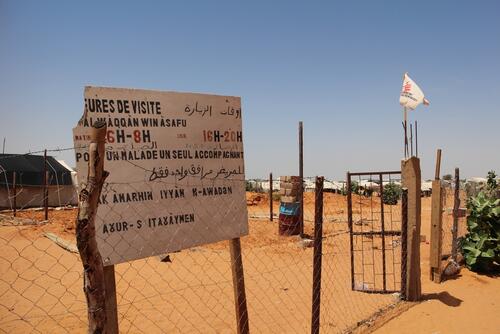
Entrance of the MSF Health Structure, Mbera camp, Mauritania. 
Tens of thousands of Malians, mainly ethnic Tuaregs, fled into Mauritania last year after a mixture of separatists and jihadi groups seized control of their home towns. Since january 2012, most of them are living in difficult conditions in this camp where around 70 000 refugees are believed to live: water, food, sanitation and shelters are still missing. 
Having set up 3 health posts and 1 health center in the camp, MSF provides every month between 8000 and 9000 consultations in the camp, treats around 300 severe malnourished children and has performed around 700 deliveries since the beginning of 2013.
Mauritania

Interview with Frederic Manantsoa Lai, MSF Head of Mission in Mauritania’s Mbera refugee camp

Interview with Frederic Manantsoa Lai, MSF Head of Mission in Mauritania’s Mbera refugee camp Voices from the Field - 12 May 2014
 
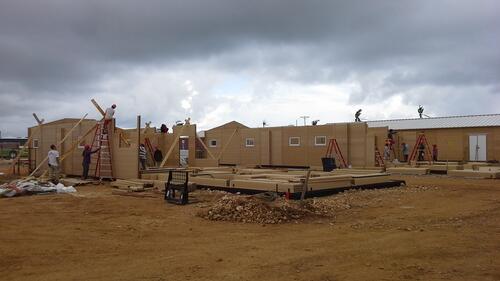
MSF as started building a prefabricated hospital in Guiuan which will take patients out of the tents – unsuitable in the rainy season – until a permanent hospital can be built. The hospital, designed to last up to five years, will provide maternity care and surgery as well as inpatient and outpatient services. It is due for completion in June, when MSF will leave Guiuan, handing the hospital over to the Ministry of Health to run.
Philippines

Six months after the typhoon

In the six months since Typhoon Haiyan, MSF provided care for emergency and everyday health problems Project Update - 8 May 2014
 
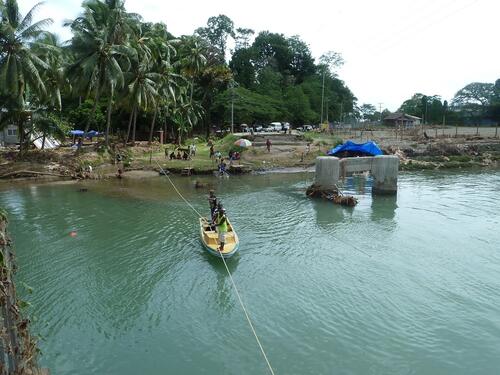
In early April 2014, floods in Honiara swept away riverside communities, brought down bridges and destroyed roads. Twenty-three people died, according to official sources.
Solomon Islands

MSF provides care to flash flood victims

MSF is providing medical care in the Solomon Islands to people displaced from their homes by floods Project Update - 8 May 2014
 
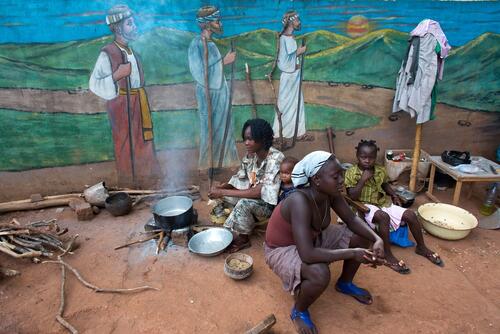
Displaced Christians who have fled the violence by Seleka Muslims take refuge in the catholic mission in Bossangoa, CAR
Central African Republic

Dispatch from Bossangoa: Doctor Florien Oudenaarden looks back at a time of extreme violence, displacement and change

Dr Florien Oudenaarden looks back at a time of extreme violence, displacement and change Voices from the Field - 7 May 2014
 
The Ebola epidemic confirmed by the Ministry of Health on March 22 is the first to affect Guinea. The priority of the teams on site is to identify patients with Ebola symptoms and isolate them, while providing high-quality care. In cooperation with the Ministry of Health, MSF created an isolation facility in Guéckédou and is setting up another in Macenta. Both towns are in the Forestière region of southern Guinea. Mobile teams are also evaluating the situation in Kissidougou and Nzérékoré and are monitoring bordering countries closely, particularly Sierra Leone and Liberia, where suspected cases have been reported.
Guinea

"Don’t leave them alone"

An op-ed written by Luis Encinas, MSF’s emergency coordinator in Macenta from the start of the Ebola epidemic Opinion - 6 May 2014
 
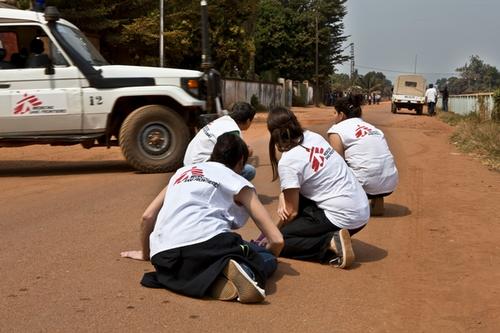
Access to hospitals and health centres has been a challenge for MSF teams in Bangui while fighting has been taking place in the city. In the pictures, a support team heading to Castors Health Centre has to take cover from gunfire.
Central African Republic

MSF calls upon government and all parties to the conflict to publicly condemn attacks against civilians and humanitarian workers

CAR: Following the massacre in Boguila and abuses against civilians, MSF reduces medical activities Press Release - 5 May 2014
 
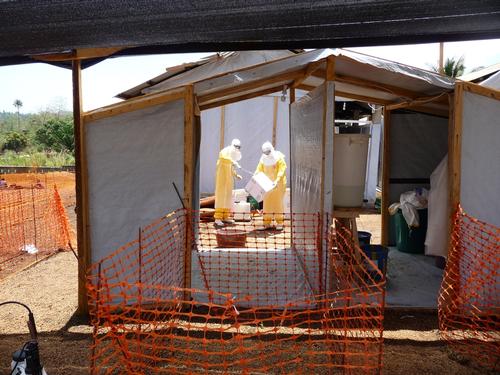
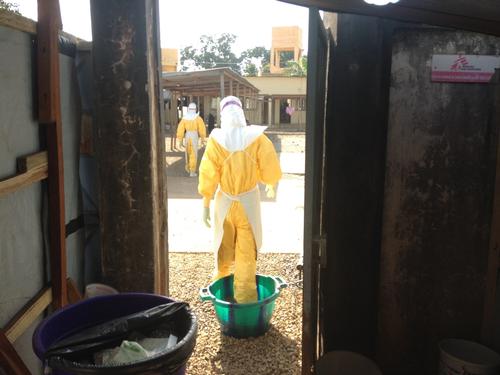
MSF staff walk into the area where there are patients who are either suspected or confirmed as having Ebola. Since late March MSF has been working in the south east of the country and in the capital, helping health authorities tackle the virus, which had not been seen in the West African country before the 2014 outbreak.
Ebola and haemorrhagic fevers

MSF remains vigilant in Ebola outbreaks in Guinea and Liberia

Although the Ebola epidemic has been contained, the outbreak is not yet over. Project Update - 2 May 2014
 
Violence in Anbar province, western Iraq, has caused some 380,000 people to flee their homes, with more than 18,000 people seeking refuge in Tikrit, the capital of neighbouring Salah al-Din province, over the past month. Despite a very volatile security situation in Tikrit, a MSF team is providing the displaced people with relief items and assessing their medical needs.
Iraq

MSF provides aid to people displaced by violence from Anbar province

MSF provides aid to people displaced by violence from Anbar province Project Update - 30 Apr 2014
 
Since the Amman Reconstructive Surgery Project was set up in 2006, over 3,000 patients from the region have arrived at project. The project has received patients from Iraq, Gaza, Yemen and Syria.
Jordan

MSF Reconstructive Surgery Project in Amman Continues to Support Victims of Violence from Iraq

Despite the complexity of the overall situation in Iraq, and particularly in Anbar province, MSF continues to offer reconstructive surgical care to victims of violence in Anbar and from all over Iraq. But the security situation is posing huge challenges. Project Update - 29 Apr 2014
 
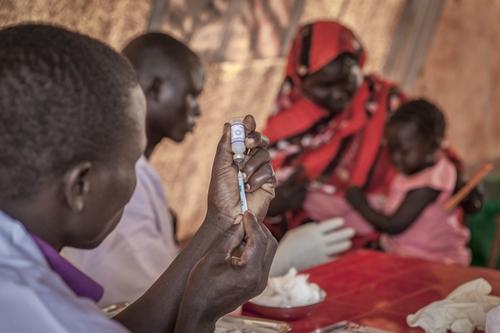
Sudanese refugees began streaming across the border into South Sudan in June 2011 when conflict erupted between the Khartoum government and the rebels of the Sudan People’s Liberation Movement-North (SPLM-N) in Sudan’s South Kordofan State. At the height of the crisis in Yida camp last summer, high mortality rates were reported among young children admitted to MSF’s hospital with respiratory tract infections, such as pneumonia, one of the leading causes of death. MSF determined that vaccinating with the pneumococcal conjugate vaccine (PCV) could result in a substantial mortality reduction in Yida. MSF has been working since September 2012 to procure PCV but faced significant delays due to lengthy negotiations and international legal procurement constraints. MSF was eventually able to obtain the vaccine from GSK at a reduced price, but delays have now pushed the planned vaccination into the logistically challenging rainy season.

The objective is to immunize approximately 5,000 children under the age of 2 against several pathogens, including haemophilus influenza type B and pneumococcus. This is the first time that PCV is being used in South Sudan and one of the first vaccines to be implemented in compliance with the new WHO emergency vaccination recommendations.
Access to medicines

Vaccinating Children beyond the 'Cold Chain'

More than 22 million children worldwide did not complete basic childhood vaccinations in 2012 and an estimated 1.5 million children aged under five die every year from vaccine-preventable diseases. Report - 29 Apr 2014
Four mothers posing in a corridor of the Hospital in Bili. All four of them are staying in the hospital with their child, that's suffering from a severe case of malaria. Since the beginning of the project in 2016, the pediatric ward already treated more than 4.000 cases of complicated/severe form of malaria.
Médecins Sans Frontières (MSF)

Independent medical humanitarian assistance

We provide medical assistance to people affected by conflict, epidemics, disasters, or exclusion from healthcare. Our teams are made up of tens of thousands of health professionals, logistic and administrative staff - most of them hired locally. Our actions are guided by medical ethics and the principles of independence and impartiality. We are a non-profit, self-governed, member-based organisation.

Learn more