



Ebola disease in DRC: find out how we're responding
Learn more
4635 Results
 
And yet another wave of displacement in the town of Bouca, (Ouham region) northeastern Central African Republic (CAR), after clashes between reported anti-balaka elements and ex-Séléka forces took place last week. For the second time in over two months, people had to flee to the bush running away from the fighting. Bouca was the center of attacks in September in which the civilian population, both Christians and Muslims, were targeted by the armed groups. Around 80 people were killed. The video shows, through interviews with direct an indirect victims of violence, the consequences of the fighting, forcing thousands of people to hide in the bush or to look for protection in churches, schools or airstrips.
Website

Central African Republic: The Lost Country

The collapse of the country after more than a year of violence. thelostcountry.msf.org
 
msf-placeholder
Ebola and haemorrhagic fevers

Race against time to control the Ebola outbreak in Sierra Leone

Video: Race against time to control the Ebola outbreak in Sierra Leone Project Update - 21 Jul 2014
 
And yet another wave of displacement in the town of Bouca, (Ouham region) northeastern Central African Republic (CAR), after clashes between reported anti-balaka elements and ex-Séléka forces took place last week. For the second time in over two months, people had to flee to the bush running away from the fighting. Bouca was the center of attacks in September in which the civilian population, both Christians and Muslims, were targeted by the armed groups. Around 80 people were killed. The video shows, through interviews with direct an indirect victims of violence, the consequences of the fighting, forcing thousands of people to hide in the bush or to look for protection in churches, schools or airstrips.
Central African Republic

Central African Republic: The Lost Country

The collapse of the Central African Republic after more than a year of violence. Campaign - 21 Jul 2014
 
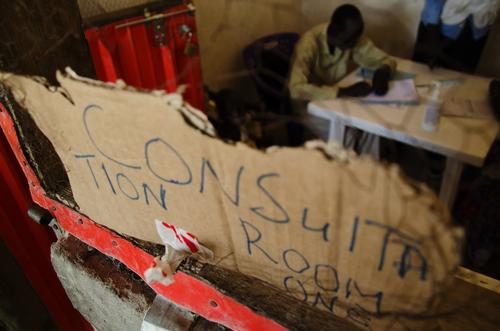
MSF teams run mobile clinics to provide medical care for IDPs. They provide primary healthcare consultations, chronic disease treatment as well as reproductive healthcare consultations. On average, the team is performing 60 consultations each day.
Iraq

“Today the greatest medical needs remain in areas that are extremely difficult and dangerous to reach”

MSF is providing healthcare for those trapped in Iraq Project Update - 21 Jul 2014
 
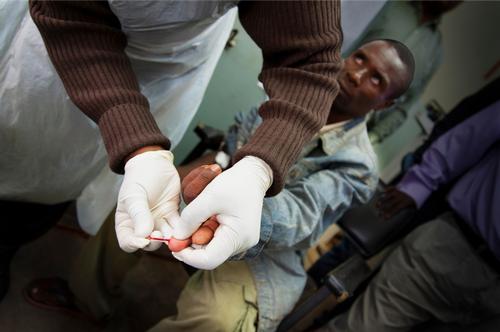
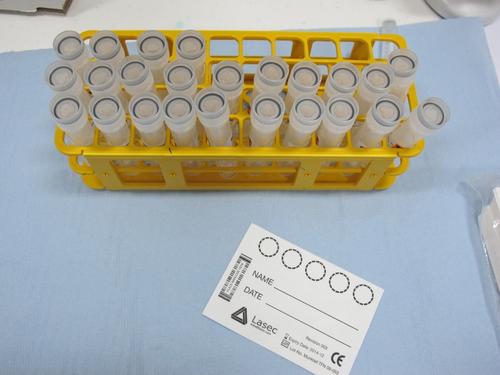
Julio Raoughcancan, from Thyolo, gets a dried blood spot sample drawn by a Health Surveillance Assistant (HSA) at Bvumbwe Health Centre. This sample will be compared with a venous blood sample drawn by a clinician in a validation study to prove that finger prick Dried Blood Spot (DBS) sampling techniques can be task shifted to lower cadres in the Health Centres
HIV/AIDS

High prices hinder access to newer HIV drugs and optimal tests that ensure treatment is working

MSF campaigns to reduce costs of newer HIV drugs Press Release - 21 Jul 2014
 
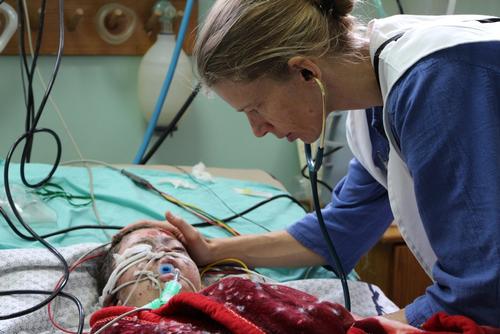
Kelly Dilworth, MSF anesthetist, in the intensive care unit of the burnt service of Shifa hospital where two brothers, 8 and 4 years old, are hospitalized after being severely burned when a missile fell on their house.
Palestine

Israel Must Stop Bombing Trapped Civilians

The majority of the dead and wounded in Gaza are civilians and medical workers are also coming under fire Press Release - 21 Jul 2014
 
In Maputo, Mozambique, Jose Macamo hospital. Viral load monitoring has been used for years in Western countries, and is recommended by the World Health Organization as the gold standard of care for HIV. Contrary to the CD4 test that gives only an indirect indication of the disease’s progression, this technology calculates precisely how much virus is present in the patient’s body. It allows physicians to detect right away how well the ARV treatment is working, if the patient is not taking his drugs properly or has developed resistance to the first line of HIV drugs.
HIV/AIDS

We need a revolution in the delivery of care to beat HIV/Aids

Daniela Belén Garone, MSF’s medical coordinator in Malawi: We need a revolution in the delivery of care to beat HIV/Aids Opinion - 18 Jul 2014
 
msf-placeholder
Afghanistan

MSF cares for dozens of wounded following heavy fighting in central and northerm Helmand province

MSF cares for dozens of wounded following heavy fighting in Helmand province Project Update - 18 Jul 2014
 
Rafah, Gaza Strip, Jan 16 2009
More than 1000 civilians, mainly coming from houses near de Philadelphia line (border with Egypt) that is being extensively boombed by the Israeli air force, took refuge in the UNRWA operated preparatory school number one. On the 20th day of the Israeli operation in Gaza, one and a half million people are still deprived of electricity and basic supplies, as well as being unable to flee from the densely populated combat zone.
Palestine

An MSF team entered Gaza on Thursday to scale up MSF emergency response as an Israeli ground offensive is launched

An MSF team entered Gaza on Thursday to scale up MSF emergency response as an Israeli ground offensive is launched Voices from the Field - 18 Jul 2014
 
Gatluok is then taken for his consultation with MSF nurse Peter Bitoang Machar. Gatluok’s mum tells Peter of their situation at home, how her house was burned and their food stocks were looted, and how they had to flee into the bush. 
MSF’s ambulatory therapeutic feeding centre (ATFC) in Leer hospital, Unity state, South Sudan.
Access to medicines

MSF calls for wider access to vaccinations in emergencies

WHO-recommended vaccines need to be available at lower prices Press Release - 18 Jul 2014
Four mothers posing in a corridor of the Hospital in Bili. All four of them are staying in the hospital with their child, that's suffering from a severe case of malaria. Since the beginning of the project in 2016, the pediatric ward already treated more than 4.000 cases of complicated/severe form of malaria.
Médecins Sans Frontières (MSF)

Independent medical humanitarian assistance

We provide medical assistance to people affected by conflict, epidemics, disasters, or exclusion from healthcare. Our teams are made up of tens of thousands of health professionals, logistic and administrative staff - most of them hired locally. Our actions are guided by medical ethics and the principles of independence and impartiality. We are a non-profit, self-governed, member-based organisation.

Learn more