



Ebola disease in DRC: find out how we're responding
Learn more
7998 Results
 
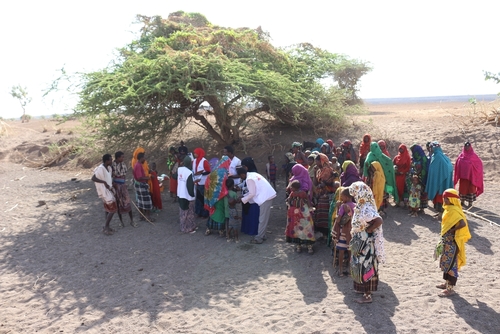
For years, the Diffa region in southeastern Niger, which borders Nigeria and Chad, has suffered the consequences of the armed conflict between Boko Haram and the armies of the area. Around 240,000 people have had their lives interrupted by the conflict, and have been forced to live in the camps for internally displaced and refugees that have proliferated throughout the region.
Niger

Hepatitis E outbreak linked to water shortages and poor sanitation

“Water and sanitation activities in Diffa are clearly insufficient to meet people’s needs." Press Release - 26 Apr 2017
 
An ambulance awaits at the entrance of the Haydan hospital. A pregnant woman who had arrived with complication is being referred to the main hospital in Sa’ada city.
Yemen

MSF statement at Geneva donor conference

A pledging conference for Yemen is being held in Geneva, providing the opportunity to highlight the risk of a health system collapse in Yemen, the key health needs, and the urge to handle them. Statement - 25 Apr 2017
 
AWD patients admitted to Kebridehar town CTC, Somali region Ethiopia
Ethiopia

Thousands hit by outbreak of acute watery diarrhoea during worst drought for decades

A prolonged period of drought in the Somali Region of Ethiopia has resulted in a radical water shortage, leading to an important outbreak of acute watery diarrhoea which is sweeping through the region. Project Update - 24 Apr 2017
 
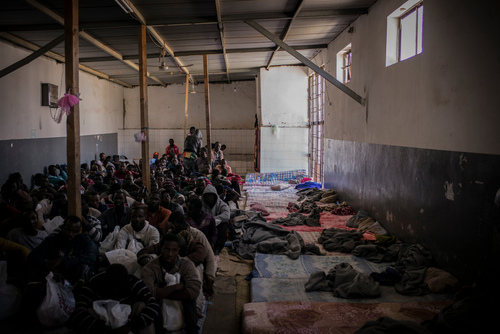
Almost all of the roughly 40 female inmates had medical complaints. More than half complained about scabies, followed by general body pain, often associated with mental trauma. They said the group left Nigeria with 120 people but many got separated by force during the journey.
Libya

From Misrata to Tripoli, a first-hand account from Dr Tankred Stoebe

The fighting continues in Libya, a country fragmented by a multitude of power centres. Doctor Tankred Stoebe spent the month of January in the country coordinating a medical assessment that took him from Misrata to Tripoli. Voices from the Field - 24 Apr 2017
 
HIV patient in the CTA (Ambulatory Treatment Center) of Matam. She came to have a consultation as she does not feel well. As her symptoms shows that she may have malaria she has been sent to the laboratory to do the test. The laboratory assistant do a rapid diagnostic test (RDT) for malaria. 

In the CTA of Matam, MSF provides the higher HIV care in the capital Conakry for patient living with HIV; including free access to ARV treatment, medical and psychosocial support. Further decentralisation of HIV services and upgrading of primary healthcare centres are integrated into Ministry of Health facilities taking over to improve HIV patients access to care and ARV treatment everywhere.
HIV/AIDS

MSF publishes study on the accuracy of HIV rapid diagnostic tests

MSF study on HIV rapid diagnostic tests confirm that the diagnosis of HIV should not be based on results from a single HIV rapid diagnostic test. Journal article - 20 Apr 2017
 
Between August and November 2015, MSF and the Ministry of Health of Mali launched a chemoprevention campaign against seasonal malaria, the leading cause of infant mortality in the country, which reached more than 45,000 children between three months and five years old in the Ansongo district, in the Gao region in the north of the country. During the campaign, MSF took the chance to complete the children’s vaccination records.
Mali

"There is a crisis overlap in northern Mali"

Interview with Côme Niyomgabo, MSF head of mission in Mali. Voices from the Field - 20 Apr 2017
 
A woman being attended at the MSF hospital in Pulka. She arrived some weeks ago fleeing the ongoing conflict. 
Many displaced people report that in the places they fled survival is a struggle, as there are no functioning hospitals or markets because they have been burned down or demolished, and their farming activities were very limited. As a result, most of them arrive in poor condition due to the deprivations they have had to endure.
Nigeria

Searching for aid after fleeing the fighting

Tens of thousands of Nigerians have lost their homes and livelihoods in Borno State, in the northeastern part of the country. Photo Story - 19 Apr 2017
 
Access to drinking water used to be a very big problem before the arrival of MSF in Banki, but the situation has now greatly improved with several water points provided by the organisation.
Nigeria

As refugees flee violence, others are forcibly returned

Violence and insecurity continue to force people from their homes in northeast Nigeria, where new waves of displaced are arriving in remote towns of Borno State. Nigerian refugees are also being forcibly returned from Cameroon. Press Release - 19 Apr 2017
 
Mothers waiting for their malnourished children to be seen by a nutritionist at the MSF clinic in Banki.
Nigeria

Testimonies of forced return

Nigerian refugees in Cameroon are being forcibly returned to northeast Nigeria. In March 2017, three of them told MSF staff their stories. Voices from the Field - 19 Apr 2017
 
Patients waiting to be seen by the medical staff at the MSF health centre in Rann.
Nigeria

“Falling sick in Rann is almost a death sentence”

"The humanitarian situation in Rann is becoming increasingly critical as newly displaced continue to arrive. The most urgent needs now are healthcare, shelter and water." Voices from the Field - 19 Apr 2017
Four mothers posing in a corridor of the Hospital in Bili. All four of them are staying in the hospital with their child, that's suffering from a severe case of malaria. Since the beginning of the project in 2016, the pediatric ward already treated more than 4.000 cases of complicated/severe form of malaria.
Médecins Sans Frontières (MSF)

Independent medical humanitarian assistance

We provide medical assistance to people affected by conflict, epidemics, disasters, or exclusion from healthcare. Our teams are made up of tens of thousands of health professionals, logistic and administrative staff - most of them hired locally. Our actions are guided by medical ethics and the principles of independence and impartiality. We are a non-profit, self-governed, member-based organisation.

Learn more