



Ebola disease in DRC: find out how we're responding
Learn more
8006 Results
 
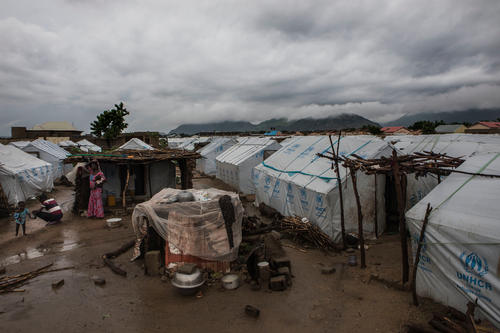
Camp for internally displaced people (IDPs) in the Nigerian town of Pulka, in the northeastern Borno state, close to the border with Cameroon.
Nigeria

What’s happening in the northeast?

More than two million people have fled their homes, with little chance of returning in the near future. An unknown number of people are out of reach of any humanitarian assistance. Project Update - 23 Nov 2017
 
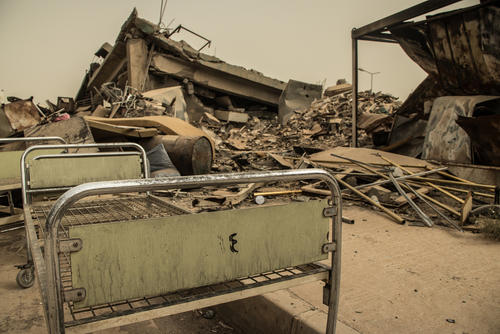
Old hospital beds lay abandoned in the grounds of Al Khansaa hospital in East Mosul, northern Iraq. The hospital suffered severe damage when Mosul was retaken from the Islamic State group in 2016 and 2017. Sixty percent of the hospital remains destroyed.  
 
The healthcare system in Mosul is still in tatters following months of conflict. Hospitals and clinics were bombed and now only a handful are left to service a large city.     
  
MSF has been working at Al Khansaa hospital to rebuild the emergency room, paediatric in-patient facilities, a nutrition unit and the intensive care unit (ICU).
Iraq

From chaos to the provision of care

It is crucially important for this work to continue. The rebuilding of essential medical services is of life-saving significance during this phase of Mosul's post-war recovery. Voices from the Field - 23 Nov 2017
 
msf-placeholder
Central African Republic

MSF suspends humanitarian relief activities following attack in Bangassou

Following a violent armed robbery on Monday 20 November that threatened the lives of its workers, Médecins Sans Frontières (MSF) has evacuated all 58 national and international staff, and suspended medical operations from Bangassou, a town in southeastern Central African Republic. Press Release - 22 Nov 2017
 
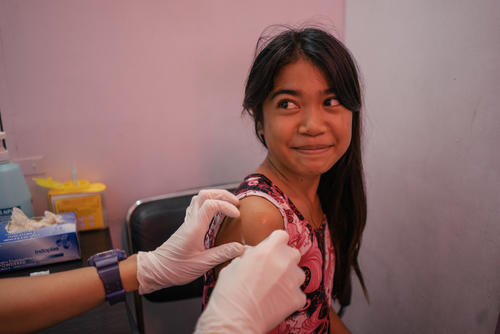
A young girl from Tondo, Manila, is seen in a Likhaan clinic for her free HPV vaccination. Likhaan provides reproductive healthcare services for low income families in the Philippines, where there remains a gap in women's awareness of their reproductive rights.
Philippines

Supporting young girls in the slums of Manila

Over 300,000 people live crammed into the slums of Tondo, which cling to the docks of the port of Manila, the capital of the Philippines. In these deprived districts, MSF launched a large-scale operation to vaccinate 25,000 young girls against the Human Papillomavirus (HPV), one of the main causes of cervical cancer. Photo Story - 21 Nov 2017
 
msf-placeholder
Syria

MSF teams respond to car explosion in Al-Hasakah, north-east Syria

MSF teams responded over the weekend to a mass casualty incident after a car exploded late on Friday near Al-Hasakah, in north-east Syria, killing and injuring people fleeing the fighting in Deir ez-Zor. Statement - 20 Nov 2017
 
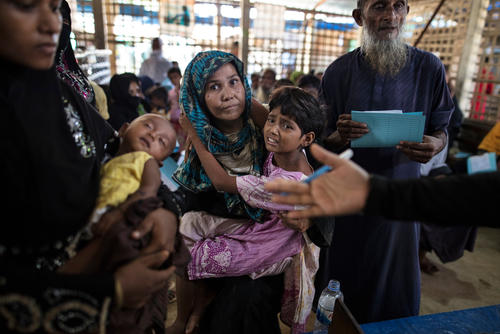
Patients wait for medical treatment in the urgent outpatient waiting area at MSF's medical facility in Kutupalong on October 4.

Since August 25, MSF has treated more than 30,000 patients in the Cox’s Bazar area, effectively five times the number of people who sought treatment at MSF facilities during the same period last year. The main morbidity among these patients is respiratory tract infections and diarrheal diseases, which are directly related to the poor hygiene conditions in the informal settlements. 

As a result of the massive increase in demand for our medical services, an additional 800 staff have been hired, bringing the total number of staff on the ground in Cox’s Bazar from around 200 people to 1000.

In addition, MSF has also expanded its inpatient capacity at its Kutupalong clinic from 50 to 70 beds, with new wards and isolation capacity for infectious diseases. The clinic, which provides basic healthcare services and is MSF’s largest health facility in Cox’s Bazar, has been running since 2009.
Rohingya refugee crisis

Crisis update – November 2017

Since 25 August, more than 620,000 Rohingya refugees have fled from Myanmar into Bangladesh. Crisis Update - 20 Nov 2017
 
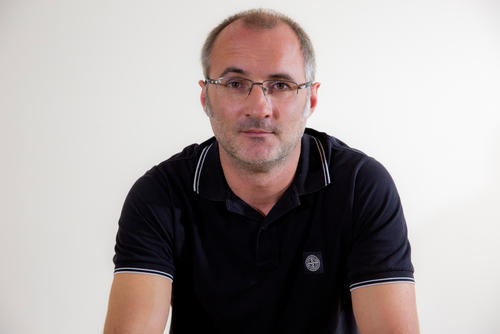
¨David Noguera, President of MSF Spain, meets with people who live in a camp for internally displaced people near Abs, Yemen. Most were driven from their homes by the war, and have lived in the camp for more than two years without sufficient shelter, access to water, or proper healthcare.¨
Yemen

Misery deepens as borders close

"Coalition leaders must immediately grant unhindered access to and within Yemen, so that humanitarian assistance can reach those most in need." Op-Ed - 20 Nov 2017
 
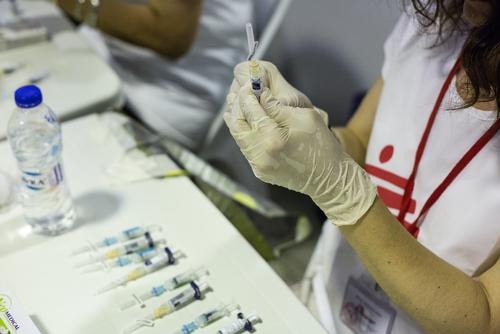
MSF staff preparing a vaccine.
Access to Healthcare

Unmerited Pfizer patent on pneumonia vaccine limits access for children

“At MSF, we have watched far too many children die of pneumonia, and we’re not going to back down until price is no longer a barrier.” Press Release - 20 Nov 2017
 
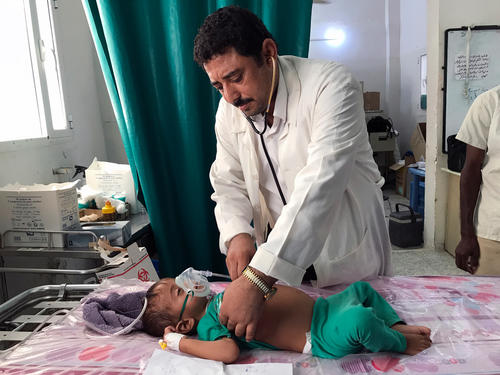
Mohammad Ahmed, Doctor, Rural Hospital in Abs
Yemen

MSF statement on Saudi-led coalition blockage

"Yemenis are already struggling with massive increases in food, water and fuel costs, as well as access to medical care" Statement - 17 Nov 2017
 
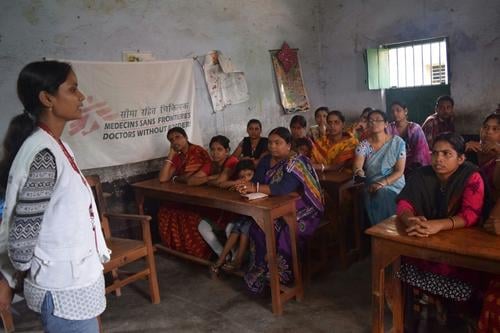
MSF health promoter / IEC worker addresses commonly held myths about antibiotics with mothers from Asansol district, West Bengal.
Antibiotic resistance

Drug-resistant infections are a looming challenge around the world

Since 2015, Médecins Sans Frontières (MSF) has worked on antibiotic resistance in collaboration with the health authorities in West Bengal, India. As the world discusses this growing challenge during World Antibiotic Awareness Week (13 to 19 November), we shares some of our findings on the reasons behind this phenomenon and how this challenge can be addressed. Project Update - 16 Nov 2017
Four mothers posing in a corridor of the Hospital in Bili. All four of them are staying in the hospital with their child, that's suffering from a severe case of malaria. Since the beginning of the project in 2016, the pediatric ward already treated more than 4.000 cases of complicated/severe form of malaria.
Médecins Sans Frontières (MSF)

Independent medical humanitarian assistance

We provide medical assistance to people affected by conflict, epidemics, disasters, or exclusion from healthcare. Our teams are made up of tens of thousands of health professionals, logistic and administrative staff - most of them hired locally. Our actions are guided by medical ethics and the principles of independence and impartiality. We are a non-profit, self-governed, member-based organisation.

Learn more