



Ebola disease in DRC: find out how we're responding
Learn more
8000 Results
 
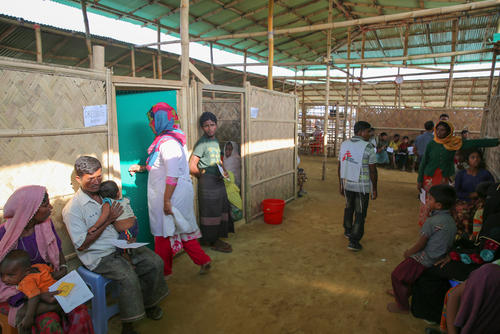
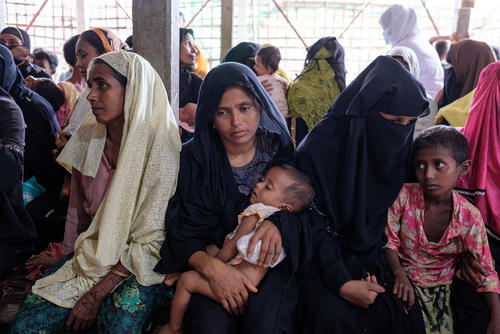
MSF staff treat Rohingya refugee patients at a clinic in a camp in Bangladesh.
Rohingya refugee crisis

Rohingya crisis - a summary of findings from six pooled surveys

On 25 August 2017, a counter-insurgency military operation in Rakhine State, Myanmar, led to a mass displacement of Rohingya civilians into Bangladesh. Over the following three months, some 626,000 Rohingya crossed into Bangladesh to escape the violence.
Project Update - 9 Dec 2017
 
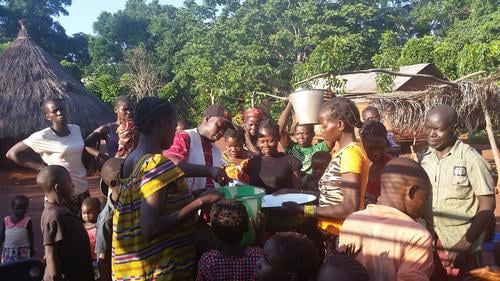
MSF staff distributing water to people who’ve been internally displaced by fighting in Zemio, CAR. They were among 7,000 people who have sought shelter at the local hospital.  
Just weeks after this photo was taken, On Tuesday 11 July, two armed men arrived at Zemio hospital in the southeastern region of CAR.
The men threatened a family, one member of which had been a patient two weeks earlier but had been unable to leave the premises due to ongoing violence. As three members of the family – including a woman holding her baby – attempted to seek cover, the armed men shot at them, striking the child in the head and killing her instantly. A month later, another armed group opened fire in the hospital. Thousand fled into the surrounding bush and across the border to DRC. The site now sits vacant and MSF has ceased its operations in the area, with no patients to treat and the safety situation for our staff remaining precarious.
Central African Republic

“The only people left in Zemio are those who couldn’t run away”

Recent attacks on Zemio, in southeast Central African Republic, have closed down the hospital and forced the city’s population, including MSF staff members, to flee. MSF medical coordinator Wil van Roekel describes the ramifications of the violence, including on some 1,600 HIV patients who need daily medication to survive. Voices from the Field - 9 Dec 2017
 
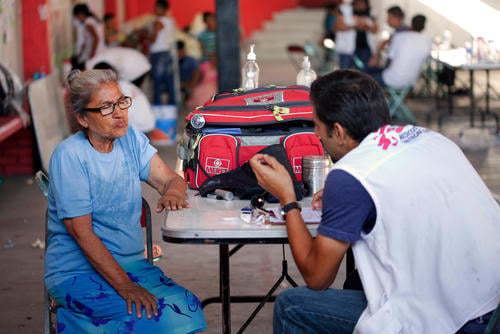
In the state of Puebla, Mexico, MSF teams identified as the main medical conditions among the population both respiratory problems and aggravations of chronic diseases, such as hypertension or diabetes, and psychosomatic symptoms
Mexico

MSF ends emergency response after the earthquakes

In November, Médecins Sans Frontières (MSF) teams in Mexico City, Mexico State, Puebla, Oaxaca and Morelos concluded the medical, mental health and heath promotions activities that were launched in response to the emergency situations created by two major earthquakes in September.

Project Update - 8 Dec 2017
 
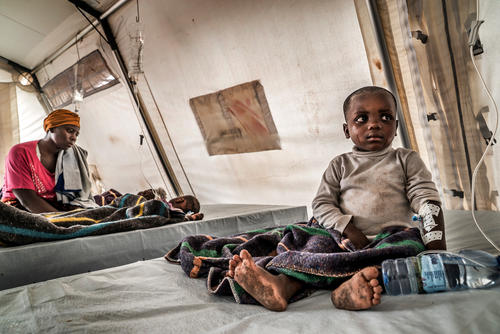
Victoire is four years old and has been brought to the CTC in Bukavu by his mother. He was very sick and had been vomiting all night.
Access to Healthcare

Taxing the ill - How user fees are blocking universal health coverage

MSF’s report, Taxing the ill, looks at fees paid to access health care, and how these are blocking universal health coverage

Report - 8 Dec 2017
 
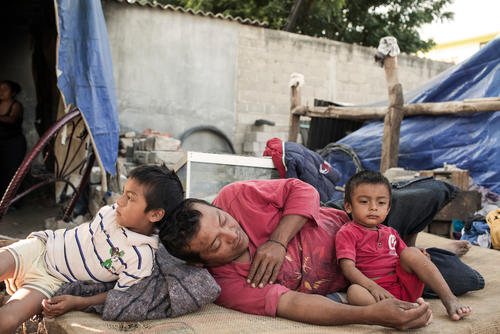
Andrés Aquino Villalobos, 32, descansa en una hamaca junto a dos de sus tres hijos en lo que queda de su casa, que fue totalmente dañada tras el terremoto del 7 de septiembre. Actualmente vive con su familia extensa en tiendas o bajo lonas.

Andrés Aquino Villalobos, 32, rests in a hammock with two of his three children in what remains of his house, which was totally damaged after the earthquake of 7 September. He is currently living with his extended family in tents or under canvas.
Mexico

Voices after the earthquake

Photo Story - 8 Dec 2017
 
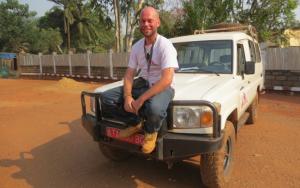
Auto mechanic, Holger Hornauf, in Bangui, Central African Republic, December 2017.
Central African Republic

My first week in Bangui: A warm welcome!

Holger Hornauf is a trained auto mechanic and in 2016 he went on his first assignment with MSF in the Central African Republic. One year later he’s back in Bangui as our workshop manager and is blogging about his experiences. blogs.msf.org - 7 Dec 2017
 
Rohingya outpatient area at the Kutupalong clinic
Rohingya refugee crisis

“This is still a population teetering on the edge.”

Emergency medical coordinator for MSF, Kate White, reflects on how the Rohingya refugee crisis in Bangladesh has changed in recent weeks. Voices from the Field - 6 Dec 2017
 
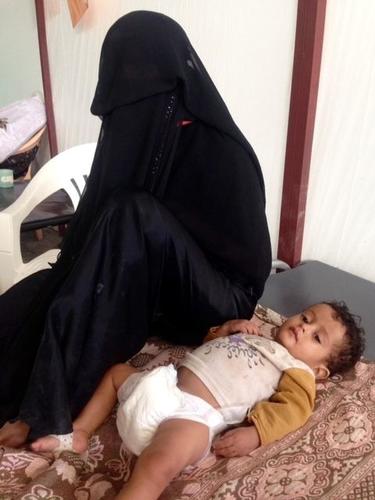
Fatima sits on the bed next to her 18-month-old son Ishaq, who is being treated at one of MSF's cholera treatment centres in Kilo, southern Ibb governorate. 

Fuel costs have risen dramatically since the imposition of a blockade by the Saudi-led Coalition in November, and Fatima cannot afford the cost of transport to and from the hospital.
Yemen

“There is food in the shops but no money to buy it”

Fatima sits on the bed next to her 18-month-old son Ishaq, her legs bent under her chin in front of her. They arrived the day before to the cholera treatment centre (CTC) operated by MSF in Al Qaeda city, Ibb governorate, after a four-hour journey from Shokan, a village located in Mawia district, in Taiz governorate, south-western Yemen.
Voices from the Field - 6 Dec 2017
 
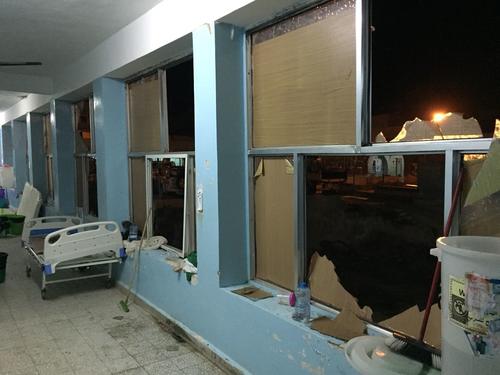
In the early hours of 4 December, an airstrike damaged the MSF-supported Al Gamhouri hospital in Hajjah city. The emergency room, operating theatre and intensive care unit were damaged and 12 ER patients were evacuated. Despite the damage, Al Gamhouri hospital received 22 casualties from the airstrikes in Hajjah shortly after. Al Gamhouri also received a total of 38 war-wounded patients between 2 and 3 December. 
“Health services have been repeatedly attacked over the course of this conflict. Yet again warring parties are not taking measures to spare medical facilities, endangering the lives of patients and medical staff,” says Steve Purbrick, MSF Field Coordinator in Hajjah. “Civilians must be able to flee or seek medical care, ambulances must be allowed to reach the injured and hospitals must be protected”.
Yemen

Intense fighting and blockade further reduce access to healthcare

A week of heavy violence, coupled with a crippling blockade preventing vital supplies entering into Yemen, shows new levels of disregard by warring parties for the civilian population, medical facilities and patients, says Médecins Sans Frontières (MSF).
Press Release - 6 Dec 2017
 
While settling in the hospital in Batangafo might seem the safest in terms of security, it also contains hidden risks such as contracting contagious diseases. A hospital is still a place to treat sick people.
Central African Republic

“In Batangafo, people are afraid for their lives. It’s the only thing they have left.”

Since late July 2017 fighting between ex-Seleka and Anti-balaka factions has once again set Batangafo and its surroundings on fire. The fighting in the area, in the north of the Central African Republic, has forced tens of thousands of people to abandon the temporary shelters where they had been seeking refuge since the crisis began in 2013-2014. Many have found refuge in the compound of the hospital supported by MSF.
Project Update - 6 Dec 2017
Four mothers posing in a corridor of the Hospital in Bili. All four of them are staying in the hospital with their child, that's suffering from a severe case of malaria. Since the beginning of the project in 2016, the pediatric ward already treated more than 4.000 cases of complicated/severe form of malaria.
Médecins Sans Frontières (MSF)

Independent medical humanitarian assistance

We provide medical assistance to people affected by conflict, epidemics, disasters, or exclusion from healthcare. Our teams are made up of tens of thousands of health professionals, logistic and administrative staff - most of them hired locally. Our actions are guided by medical ethics and the principles of independence and impartiality. We are a non-profit, self-governed, member-based organisation.

Learn more