Ebola disease in DRC: find out how we're responding
Learn more
8000 Results
 
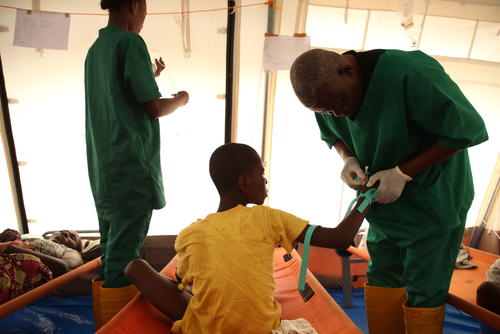
An MSF nurse gives a solution to rehydration solution to patients.
Democratic Republic of Congo

MSF steps up cholera support in DRC

“Cholera is affecting the parts of Kinshasa that are densely populated, so it’s crucial to act quickly to prevent the spread of this epidemic." Project Update - 25 Jan 2018
 
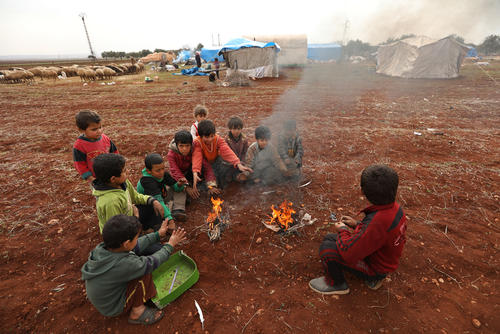
More than 212,000 Syrians have fled their homes due to an intensification of airstikes in northwest Syria. Most have very little or nothing to sustain themselves as winter sets in. Here, a group of Syrian children huddle near a fire to find warmth.

نزح أكثر من 212 ألف شخص سوري من منازلهم بسبب تصاعد الغارات الجوية في شمال غرب سوريا. لا يملك أغلبهم سوى القليل – وبعضهم لا يمتلك شيئاً– ليعيلوا أنفسهم في الشتاء. هنا يجتمع بعض الأطفال السوريين قرب نارٍ ليجدوا بعض الدفء.
Syria

Tens of thousands struggle for survival in the winter cold

Tens of thousands of families have fled north towards the Turkish border, where they are living in overcrowded tents or makeshift shelters. Project Update - 24 Jan 2018
 
Sulaith Auzaque is the coordinator of the Doctors Without Borders (MSF) emergency team in Colombia, a small and extremely mobile team that can move around the country following urgent alerts, most of them related to population displacements caused by violent incidents, but also in response to natural disasters or epidemics. Sulaith talks about the interventions carried out by her team that impacted her the most during 2017 and analyses the situation in the country for the year that is now beginning.
Colombia

“The violence hasn't eased, it’s just changed its name”

In recent years, the most typical interventions of MSF's emergency team in Colombia have focused on violence or the displacement or confinement generated by violence. Voices from the Field - 24 Jan 2018
 
Old Fangak, South Sudan, the river gate of the MSF hospital, through which patients arrived during mass casualty events.
South Sudan

“I left my namesake in Old Fangak”

Judith Elavian is a midwife from Kenya. She recently completed her first MSF assignment in Old Fangak, South Sudan. She shares the story of a patient she will never forget. blogs.msf.org - 23 Jan 2018
 
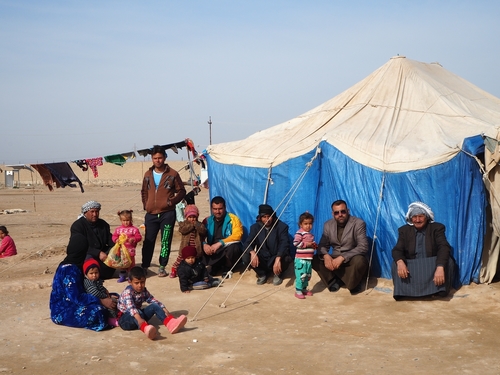
Providing care to displaced communities, Tikrit district, Iraq.
Iraq

Crisis update – December 2017

MSF has seen an increasing number of families leaving the camps and returning home but more than 2.9 million remain displaced. Crisis Update - 18 Jan 2018
 
Nine-day-old Mohammad was born at the Doctors Without Borders/ Médecins Sans Frontières (MSF) maternity unit in Domiz Refugee Camp, northern Iraq. His parents left Syria when the incessant bombing became too much. 

“I have three daughters and one son,” Mohammad’s mother Seva says. “Mohammad was born here at the maternity centre, as well as one of my daughters. The maternity unit [in Domiz camp] is much better than the other places where I gave birth.”

“The staff were really good [when I gave birth to Mohammad]. I feel relaxed when I know there are people from my community providing the services. It feels better than going outside.” 

MSF launched the sexual reproductive health and maternity project in Domiz Refugee Camp in 2013. We initially provided check-ups for women before and after birth and family planning services. In 2014, the project was expanded to a full maternity unit with a 24-hour delivery room, triage and gynaecological consultations. Over the past four years, MSF medical staff have delivered more than 3,400 babies and provided more than 27,400 gynaecological consultations.

MSF completed the project in Domiz Refugee Camp in November 2017 and has handed over the maternity unit to the Dohuk Directorate of Health. We currently have projects across Iraq in the governorates of Erbil, Diyala, Ninawa, Kirkuk, Salaheddin, Anbar and Baghdad and will continue to set up new projects where the needs are greatest.
Iraq

Giving Syrian refugees a safe place to give birth

The services here are really good and they take care of us. Voices from the Field - 18 Jan 2018
 
Markings of the January 17 bomb blast on a house in Rann
Nigeria

Rann bombing - one year on

On the one year anniversary of the bombing, we remember the victims. Project Update - 17 Jan 2018
 
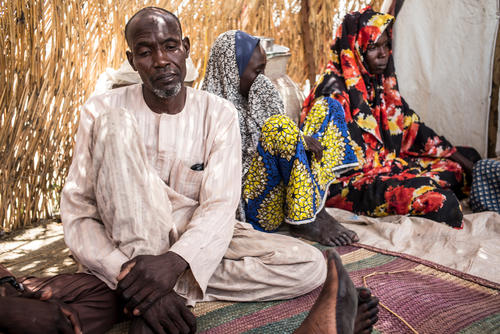
Mallan Ibrahim Kana, 43 years, (04.07.2017) from a village some 15 kms from Ngala. Fled twice before reaching Ngala camp. 

I arrived here with my family yesterday after walking for four days. We first left our village because of Boko Haram. For the past three years, there has been a lot of trouble. Boko Haram were outside our village and came to take our food and belongings. They took what we farmed and fished. They told us we could not go out at night. Many men have been killed in the village. We thought the military would come and bring security it didn't happen. Sometimes we heard planes dropping bombs outside of our village. I know people were injured in these bombings nearby. There was also fighting going on outside and we could not leave for fear of being caught up in the middle.
Life was very difficult and many people were sick and died. There is no hospital there and we could not go anywhere else. Most of the people in our village have fled. Many of them are here. We left empty handed and we have nothing.
Nigeria

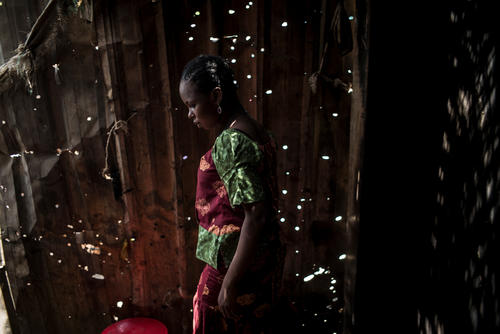
“I feel ashamed of relying on others to live, but we can’t go home”

"People are stranded and in need of assistance. It is hard to see how their situation will improve in the near future." Voices from the Field - 17 Jan 2018
 
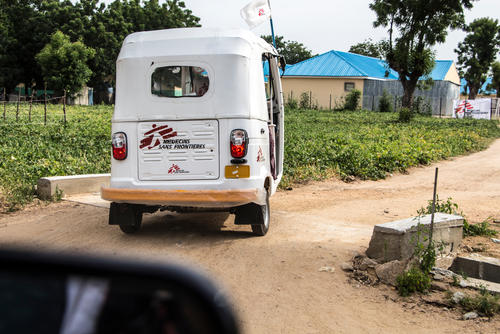
A keke napep carrying patients entering the MSF health centre in the Nigerian town of Gwoza. These three-wheeled vehicles, known as Keke napeps, are customised as makeshift ambulances to ferry patients from their homes to the MSF health centre.
Nigeria

No red lights to saving lives

Innovative use of small, three-wheeled vehicles to transport patients helps MSF overcome restrictions on movement in northeast Nigeria. Voices from the Field - 15 Jan 2018
 
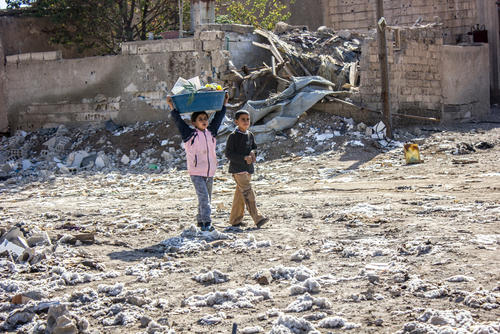
Two kids helping their parents cleaning their house from rubbles. Al Mishlab, east of Raqqa city.
Syria

33 blast victims treated by MSF in Raqqa in the first week of 2018

Demining activities need to be scaled up to protect Raqqa returnees from catastrophic but avoidable deaths and injuries. Statement - 15 Jan 2018
Four mothers posing in a corridor of the Hospital in Bili. All four of them are staying in the hospital with their child, that's suffering from a severe case of malaria. Since the beginning of the project in 2016, the pediatric ward already treated more than 4.000 cases of complicated/severe form of malaria.
Médecins Sans Frontières (MSF)

Independent medical humanitarian assistance

We provide medical assistance to people affected by conflict, epidemics, disasters, or exclusion from healthcare. Our teams are made up of tens of thousands of health professionals, logistic and administrative staff - most of them hired locally. Our actions are guided by medical ethics and the principles of independence and impartiality. We are a non-profit, self-governed, member-based organisation.

Learn more