



Ebola disease in DRC: find out how we're responding
Learn more
8000 Results
 
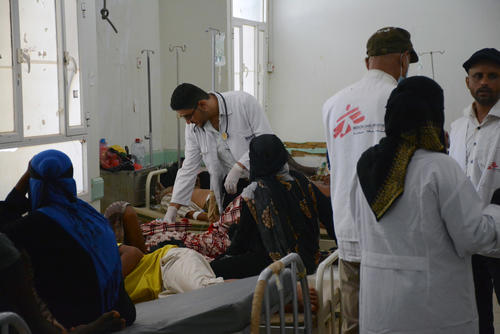
An MSF medical team is working together with MoH staff in the cholera treatment center in Al-Sadaqa hospital in Aden.
Besides the medical support, MSF logistic team has repaired the center as the building had been abandoned for two years after the war. MSF proceeded to emergency rehabilitation as it required heavy cleaning work, electricity, water system repairs as well as installing air conditions. Considering the hot and humid weather during the summer, heat becomes an issue in any health structure in the coast, most especially when it comes to hospitalise severely dehydrated patients.
Yemen

“On an average day in Taiz, we hear around five explosions per minute”

Arunn Jegan is an Australian project coordinator who has worked with Médecins Sans Frontières since 2016. He was with MSF in Cox’s Bazar, Bangladesh, and recently started his mission in Taiz, Yemen. Voices from the Field - 1 Feb 2018
 
Bardnesville Junction Hospital, on the outskirts of Monrovia, Liberia
Liberia

MSF opens paediatric surgery programme

Médecins Sans Frontières (MSF) opened a paediatric surgical programme at Bardnesville Junction Hospital (BJH) on the outskirts of Liberia's capital Monrovia on 11 January, with a goal of making surgical care more available for children in the country.
Project Update - 31 Jan 2018
 
Bria hospital, Doctor Victor Fayette (MSF) tends to Mahamat Sale's wound. He is the leader of the UPC rebel group (Union for Freedom in Central African Republic) and was shot during skirmishes in Batangafo, a district close to Bria.
Central African Republic

Renewed violence threatens people and healthcare in Bria

The cycle of attacks and violence in 2017 has left neighbourhoods in Bria, in eastern Central African Republic (CAR), entrenched or emptied by their inhabitants. Project Update - 31 Jan 2018
 
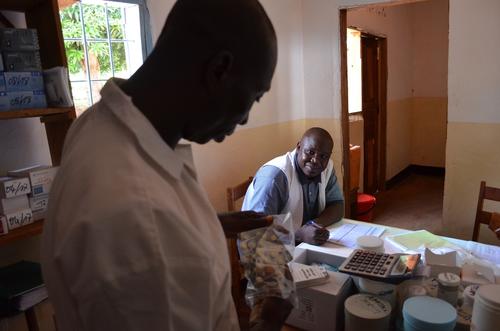
Nurse Pélé and a pharmacist in Mbalazime health centre do an inventory of the latest MSF supply delivery.
Central African Republic

“It was horrible leaving our patients behind when they needed us”

Pelé Hubert has worked in Bangassou, Central African Republic as an outreach nurse supervisor for MSF since 2015. Voices from the Field - 31 Jan 2018
 
Christelle is 24 years old. On September 8, she was getting water at the fountain next to the hospital when armed men arrived and started shooting at her and at another 13 years-old girl who was there. She fell down on the ground and they continued shooting. After they left, the girl told her that they should run to the hospital but she realized she couldn’t as she had been shot in the ankle. The bone has been hit and she needed surgery.
Central African Republic

Attacks on medical facilities leave people without options

We have treated patients who have been shot, stabbed, beaten, burned in their homes and raped. Project Update - 30 Jan 2018
 
msf-placeholder
Syria

MSF-supported hospital in Idlib closed after damage from airstrikes

This latest incident demonstrates the brutality with which healthcare is coming under attack in Syria. Statement - 29 Jan 2018
 
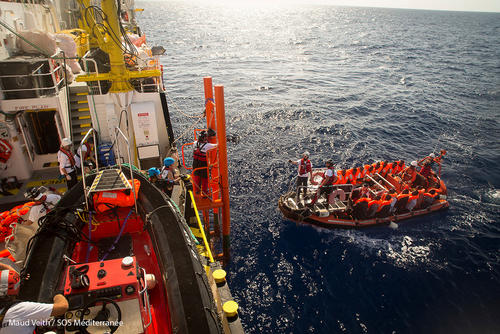
More than 500 people are now safely onboard Aquarius, a search and rescue vessel run by Médecins Sans Frontières (MSF) and SOS MEDITERRANEE, but an unknown number of people are missing presumed drowned after a gruelling day of rescues in the Mediterranean. Teams rendered assistance to three rubber boats in distress that were overloaded with men, women and children, 1 November 2017.
Mediterranean migration

Medical care for refugees and migrants along Central Mediterranean route

Unclear future for refugees amid challenging rescue environment for Aquarius. Voices from the Field - 29 Jan 2018
 
In a nightmarish day on the Mediterranean yesterday, 99 survivors from a sinking rubber boat were rescued by the Aquarius, a search and rescue vessel run by Médecins Sans Frontières (MSF) and SOS MEDITERRANEE, but an unknown number of men, women and children are missing, presumed drowned. Two women are confirmed dead.

“The scene was devastating, with many urgent medical cases in quick succession. They just kept coming, one after another, unconscious and not breathing,” said MSF nurse Aoife Ni Mhurchu. 

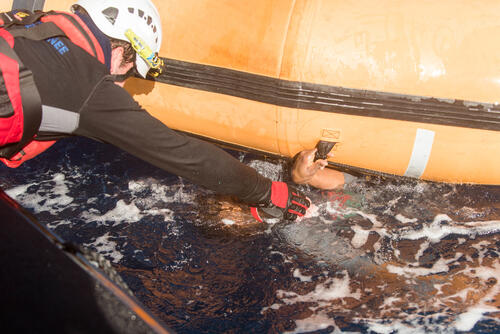
Dozens of people were already in the sea when the Aquarius arrived at the scene around 9.30am, and the rubber boat was already deflating. All floating devices were deployed from Aquarius, rafts were launched and the rescue team started pulling people from the sea. 

The MSF medical team on board the Aquarius resuscitated six young children, and one woman. Despite their best efforts they were unable to resuscitate two other women who had drowned. 

“It is absolutely heartbreaking. These women were mothers. We’re now trying to care for their very young children who remain onboard Aquarius” said Ni Mhurchu.

All medical emergencies together with their caretakers were evacuated from Aquarius by an Italian Navy Helicopter to Sfax, Tunisia – a total of sixteen people. This included all six resuscitated children and several women with water on their lungs. The MSF medical team also treated many severe fuel burns, as well as over a dozen mild to moderate hypothermia cases. Many survivors were disorientated and confused as a result of inhaling fuel which had leaked into the rubber boat.
Mediterranean migration

99 survivors rescued from sinking dinghy but many presumed drowned

99 survivors from a sinking rubber boat were rescued by the Aquarius, a search and rescue vessel run by MSF and SOS MEDITERRANEE, but an unknown number of men, women and children are missing, presumed drowned. Press Release - 28 Jan 2018
 
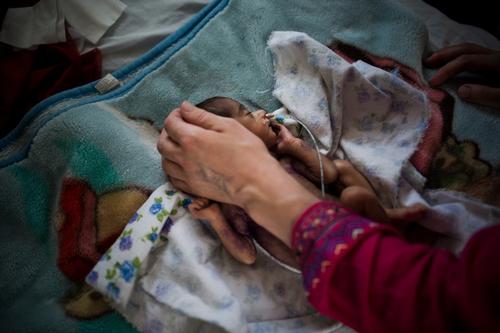
Pediatric nurse Isabelle Arnould examines a baby in the neonatal ward at the MSF Maternity Hospital in Khost, Afghanistan.
Afghanistan

Treating mums and babies in Khost, Afghanistan

Obstetrician/Gynaecologist Severine Caluwaerts blogs from a maternity hospital in Afghanistan, where MSF is working to provide women with a safe place to give birth. blogs.msf.org - 26 Jan 2018
 
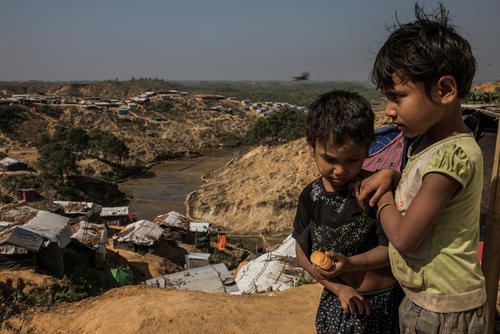
Two Rohingya children in Hakimpara makeshift settlement, where more than 32,000 people are sheltering.
Rohingya refugee crisis

Crisis update – January 2018

Since 25 August, we have massively scaled up our operations in Cox's Bazar, Bangladesh. We now manage 15 health posts, three primary health centres and five inpatient facilities. The main morbidities among our patients are respiratory tract infections and diarrhoeal diseases, which are directly related to the poor shelter, water and sanitation conditions in the settlements. Crisis Update - 26 Jan 2018
Four mothers posing in a corridor of the Hospital in Bili. All four of them are staying in the hospital with their child, that's suffering from a severe case of malaria. Since the beginning of the project in 2016, the pediatric ward already treated more than 4.000 cases of complicated/severe form of malaria.
Médecins Sans Frontières (MSF)

Independent medical humanitarian assistance

We provide medical assistance to people affected by conflict, epidemics, disasters, or exclusion from healthcare. Our teams are made up of tens of thousands of health professionals, logistic and administrative staff - most of them hired locally. Our actions are guided by medical ethics and the principles of independence and impartiality. We are a non-profit, self-governed, member-based organisation.

Learn more