




Ebola disease in DRC: find out how we're responding
Learn more
8000 Results
 
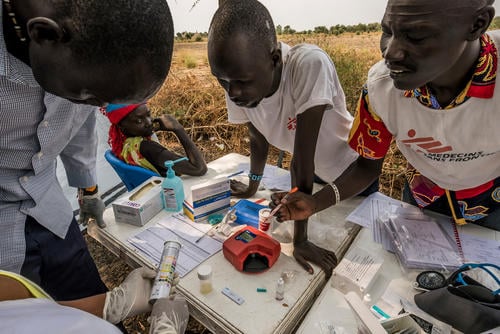
Village of Kier. MSF nurse Furaha Bazikanya shows members of the  mobile medical team how to read the results of urine test strips.
South Sudan

MSF’s newest project takes medical care to remote locations

It’s 8am, and the MSF compound in Akobo, eastern South Sudan, is a hive of activity. In front of the logistics tent, staff carefully load tables, chairs, floor mats, septic boxes, medicines and other supplies into the back of a vehicle. Nearby, the Project Coordinator manages to simultaneously gulp down a cup of coffee while mumbling into a dusty handset radio. With still-unbuttoned life jackets resting squarely on their shoulders, a team of clinical officers, nurses, and community health workers discuss the day’s strategy. Voices from the Field - 13 Mar 2018
 
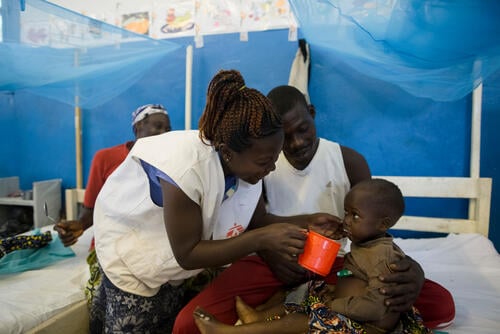
Ospedale di Bili. Reparto di malnutrizione.
Democratic Republic of Congo

MSF in DRC: Annual Report 2017

Médecins Sans Frontières en RDC, rapport annuel 2017 . Report - 13 Mar 2018
 
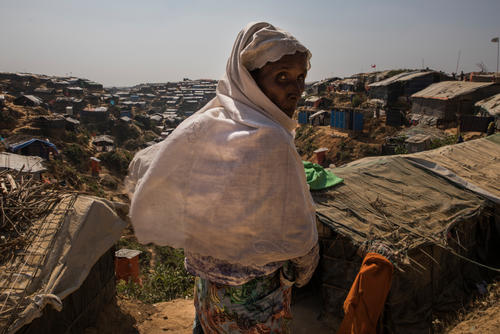
A Rohingya refugee in Jamptoli makeshift camp, where more than 50,000 people are sheltering.
Rohingya refugee crisis

‘No one was left’ - Death and Violence Against the Rohingya

MSF releases new advocacy report which explains 2017 Rohingya violence survey findings
Report - 9 Mar 2018
 
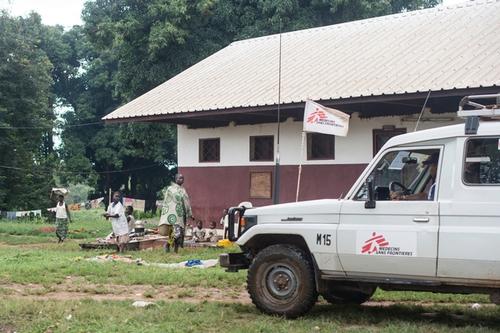
IDPs taking refuge in the MSF hospital in Bossangoa, CAR. The new wave of violence that is engulfing the Central African Republic has left tens of thousands of displaced people and many wounded. More than 30.000 are sheltered in precarious conditions in different locations in Bossangoa and in Bouca and the majority of towns in the area of Bossangoa are completely deserted. MSF providing emergency medical care at Bossangoa hospital, as well as emergency humanitarian support in three makeshift camps.
Central African Republic

Survivors describe a mass rape ordeal outside Bossangoa

“What’s most concerning about the number of sexual violence cases we have recorded is that the real number is likely to be much higher." Project Update - 8 Mar 2018
 
Half of the Syrian population has been forcibly displaced. Salma (* a pseudonym) fled with her children and brother-in-law from outside Damascus in Syria, south to Daraa, then crossed the border into Jordan. After a brief stay in Zaatari refugee camp, they moved to Irbid. A teacher, she left behind a “beautiful” life in Syria before the war. Five years later she and her family have adjusted to life in Jordan, assisted by the psychological care she sought for her youngest son and then herself at MSF’s mental health clinic.
Salma’s video is featured in the IWD 2018 package. See becauseimawoman.msf.org and, on the database, MSFSTO21277 for the video and transcript.
Website

Because I'm a woman

Women and girls forced to flee face health risks and further danger on their journey, simply because they are women. becauseimawoman.msf.org
 
In the ER section of a makeshift hospital in Syria that MSF has converted from a farm.
Syria

An outrageous, relentless mass casualty disaster in East Ghouta

At least 344 wounded and 71 dead every day, seven days a week for two weeks – non-stop Statement - 8 Mar 2018
 
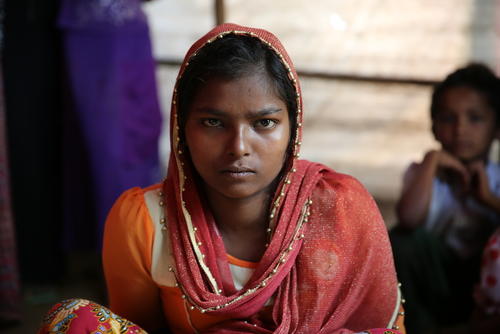
Farmin, aged 15, has been a refugee in Bangladesh since September. Her mother Nour al-Nahar died in the camp at the age of 35, in December 2017. The mother had been suffering from severe stomach pain for nearly two months. She is survived by five sons and two daughters. Her husband — Farmin’s father — was arrested in Myanmar in September. The family have not heard from him since.
International Women's Day

Caring for displaced women

For International Women’s Day 2018, against the backdrop of record levels of displacement, MSF is highlighting how health needs are exacerbated for women and girls on the move. Press Release - 6 Mar 2018
 
msf-placeholder
Nigeria

MSF suspends medical activities in Rann

It is still unclear how many people were killed and injured but before leaving, MSF medical staff treated 9 wounded patients. Press Release - 2 Mar 2018
 
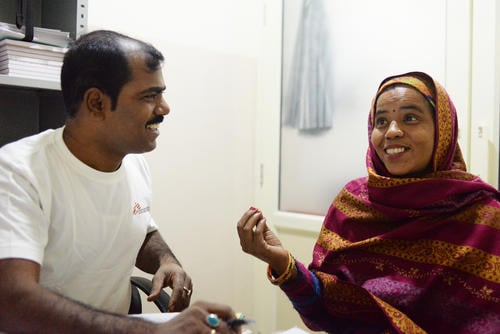
Patient Geeta reacts as she’s informed that she was now cured of Hepatitis C. Geeta was treated at MSF’s hepatitis project in Meerut for over 8 months. 

“The counselors here told me to keep taking the medicines and assured me that I would get well. I did the same and could notice the difference and felt that I was getting healthier. Despite many people telling me that the medicines may cause a lot of side effects and scaring me, I kept at it and am very happy that I no longer have the disease,” said Geeta, who hails from village Bhopada.
India

One year, 1,198 patients

MSF's hepatitis C clinic in Uttar Pradesh, India. Photo Story - 2 Mar 2018
 
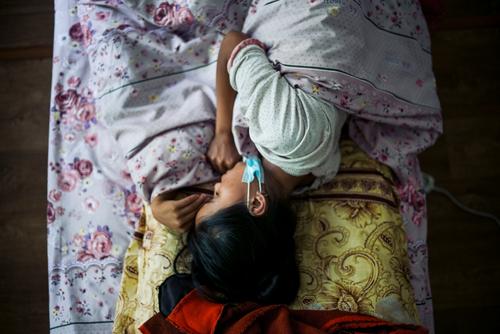
Aidana, 20 years old, in her bed at the Kara-Suu hospital. Aidana started first line treatment for TB in in 2014. After two months, she stopped the medication and went to Russia with her husband. In July 2017, after several months of illness, she came back to Kyrgyzstan and was diagnosed with MDR-TB. Kara-Suu.
Kyrgyzstan

Experts to tackle the deadly threat of TB in Eastern Europe and Central Asia Symposium

“To make TB a disease of the past, we have a long way to go” Press Release - 1 Mar 2018
Four mothers posing in a corridor of the Hospital in Bili. All four of them are staying in the hospital with their child, that's suffering from a severe case of malaria. Since the beginning of the project in 2016, the pediatric ward already treated more than 4.000 cases of complicated/severe form of malaria.
Médecins Sans Frontières (MSF)

Independent medical humanitarian assistance

We provide medical assistance to people affected by conflict, epidemics, disasters, or exclusion from healthcare. Our teams are made up of tens of thousands of health professionals, logistic and administrative staff - most of them hired locally. Our actions are guided by medical ethics and the principles of independence and impartiality. We are a non-profit, self-governed, member-based organisation.

Learn more