




Ebola disease in DRC: find out how we're responding
Learn more
4634 Results
 
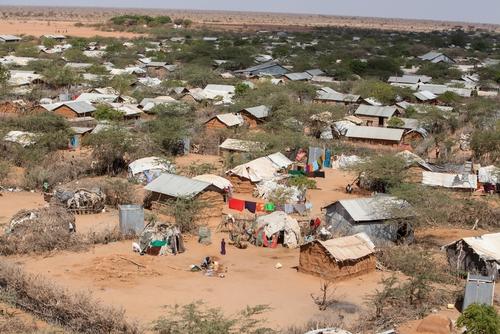
An aerial view of Dagahaley refugee camp, Dadaab, Kenya.
Kenya

MSF forced to close Dadaab health posts and evacuate staff amid escalating insecurity

As violence and threats in the northeastern province of Kenya escalate, international medical organisation Médecins Sans Frontières (MSF) has evacuated 42 of its staff from Dadaab refugee camps to Nairobi. Press Release - 28 May 2015
 
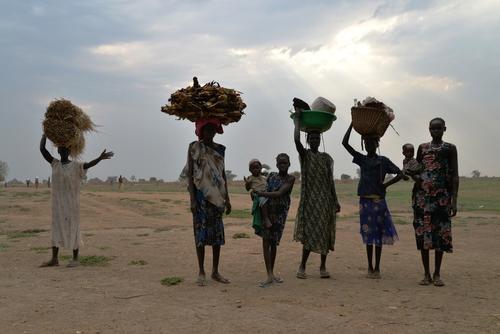
 *** Local Caption *** Since the on-start of the conflict in South Sudan, mid-December 2013, according to the UNCHR, more than 1,400,000 persons have been internally displaced and more than 450,000 would have sought refuge in the neighboring countries, amongst which 190,000 in Gambella region, western Ethiopia. The rainy season has temporarily slowed the stream of people arriving into the camps. The rate of new arrivals has slowed down in the last several months, from 1000 new arrivals per day in February to approximately 100 per week today. However UNHCR forecast expected an additional of 110,000 new arrivals in 2015 with restarting of the fighting in South Sudan during the dry season.<br/>
The current refugee population in Gambella region remains in a critical situation and additional population influxes could further destabilize an already difficult situation. In order to reduce child mortality, MSF is carrying out vaccination campaign targeting 50,000 children for PCV / vaccine and  26,000 children for DPT- Hib-HepB vaccine.<br/>
This vaccination campaign is a challenge due to logistical constraints (cold chain, waste management, transport, access, etc.) and the 2 doses minimum required for effective protection.<br/>
Extended preventive package in emergency situations is a major issue. New preventive strategy, including vaccination, could improve more rapidly the mortality and burden of diseases in acute phase of emergencies. This intervention is an example showing that is possible to extend the vaccination package in emergency situation and should be a first step to review current policy.
South Sudan

New wave of refugees fleeing ongoing violence in South Sudan

More than 3,000 people have recently made their way to the Gambella region in western Ethiopia, adding to the 200,000 already living there. Voices from the Field - 27 May 2015
 
msf-placeholder
Kenya

MSF staff relocated following incidents in Dadaab

MSF can confirm that following a series of recent incidents in the area of Dadaab, 40 staff has been relocated to Nairobi. Statement - 27 May 2015
 
msf-placeholder
Meningitis

Vaccine shortages causing delay in the fight against meningitis

MSF vaccination specialist discusses recent advances in responding to meningitis epidemics, and the improvements that are still needed. Voices from the Field - 27 May 2015
 
msf-placeholder
Ukraine

Activity Update, May 2015

MSF continues to expand its medical activities to meet the needs of people living in the hardest-hit areas, and to people who had to flee the conflict. MSF has offices in Kyiv, Artemivsk, Kurakhove, Donetsk, Mariupol and Lugansk and its activities are run by 69 international and 241 local staff. Crisis Update - 27 May 2015
 
msf-placeholder
Iraq

MSF provides assistance to the displaced and refugees in Kurdistan

Médecins Sans Frontières (MSF) has been working in the Erbil region or northern Iraq since 2013 providing primary healthcare and mental health services to Syrian refugees who have fled from the conflict that continues to rage in their country. MSF also assists Iraqis who have been forced out of their homes by the violence. Crisis Update - 26 May 2015
 
msf-placeholder
Ebola and haemorrhagic fevers

Experts support a varied approach to Ebola trials

In a letter to the Wall Street Journal today, 19 experts from Africa, Asia, Europe and the US set out their support for the use of a range of clinical trial designs during the Ebola epidemic. Open Letter - 26 May 2015
 
msf-placeholder
Access to medicines

Governments take decisive step towards more affordable vaccines

Resolution passes at World Health Assembly, calling for more affordable vaccines and greater transparency on vaccine pricing Press Release - 25 May 2015
 
MSF distributes tons of roofing materials in Gorkha District, Nepal on May 7 2015.
MSF provides material to families so that they have the opportunity to
rebuild their homes. The teams also distributes blankets, hygiene and
kitchen kits by helicopters to remote villages.


On 25 April a magnitude 7.8 earthquake killed more than 8,000 people and destroyed massive amounts of property, including numerous temples that were on the list of UNESCO World Heritage Sites.
Nepal

The earthquakes took Nepal by surprise, the rains should not

MSF is racing against time to reach remote villages with medical supplies and shelter material. Difficult logistics and terrain leave limited transport options, meaning MSF teams have to use helicopters to transport these materials to villages north and east of Kathmandu every day. Crisis Update - 25 May 2015
 
Maila Gurung, 26, from Diol village speaks on the phone after receiving a cast to treat his broken leg while his daughter, Ranjana, 2, stands next to him. Photograph taken at the MSF/Doctors Without Borders "inflatable" hospital in Arughat Bazaar, Gorkha District, Nepal on May 21 2015.  Due to the destruction by earthquake of the main health centre in Arughat, the MSF hospital is currently offering medical services to the surrounding communities.

On 25 April a magnitude 7.8 earthquake killed more than 8,000 people and destroyed massive amounts of property, including numerous temples that were on the list of UNESCO World Heritage Sites.

MSF is providing critical medical care is distributing shelter and hygiene materials across Nepal to affected communities in dire need. With the monsoon approaching, the situation is likely to deteriorate in the coming weeks.
Nepal

Evacuating the seriously injured from remote villages

“I was in terrible pain, I thought I would die,” said Maila Gurung. “Most of the nearby health posts were destroyed, the only one I could go to was an hour’s walk, but it was closed. And, besides, I couldn’t walk.” Voices from the Field - 25 May 2015
Four mothers posing in a corridor of the Hospital in Bili. All four of them are staying in the hospital with their child, that's suffering from a severe case of malaria. Since the beginning of the project in 2016, the pediatric ward already treated more than 4.000 cases of complicated/severe form of malaria.
Médecins Sans Frontières (MSF)

Independent medical humanitarian assistance

We provide medical assistance to people affected by conflict, epidemics, disasters, or exclusion from healthcare. Our teams are made up of tens of thousands of health professionals, logistic and administrative staff - most of them hired locally. Our actions are guided by medical ethics and the principles of independence and impartiality. We are a non-profit, self-governed, member-based organisation.

Learn more