




Ebola disease in DRC: find out how we're responding
Learn more
8000 Results
 
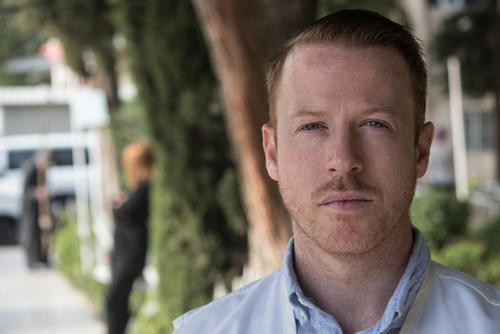
Patrick Durrant is the Project Coordinator for Médecins Sans Frontières / Doctors Without Borders (MSF) in Sulaymaniyah, northern Iraq. MSF started working in Sulaymaniyah in 2015 when a huge influx of people escaping violence in their towns and cities arrived in the area. Initially, we provided water and sanitation services in Arbat camps for displaced people, and then extended the project to provide mental health services in Ashti camp and rehabilitation and staff support for the Sulaymaniyah Emergency Hospital. The project finished on 30 November 2017. 

“Iraq has a decent health system – but after years of conflict, instability and economic hardships, the system is under a lot of strain,” Patrick says. “Although the Islamic State group areas have been re-taken, Iraq remains a volatile place – bombings and conflict are still a regular occurrence. Hospitals in Iraq must always be prepared. You never know what will happen the next day, hour or minute.”
Iraq

“Hospitals must always be prepared; you never know what will happen”

MSF started working in Sulaymaniyah in 2015 when a huge influx of people escaping violence in their towns and cities arrived in the area. Voices from the Field - 25 May 2018
 
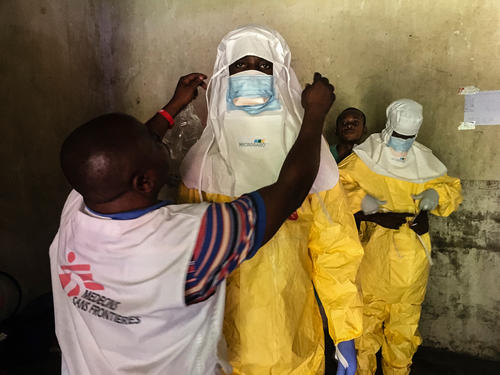
Staff getting dressed in full PPE in the ETC (Ebola Treatment Centre) in Bikoro.
DRC Ebola outbreaks

MSF response to second Ebola outbreak in DRC since 2016

Our teams are responding to an Ebola outbreak in Democratic Republic of Congo. It's the second outbreak of Ebola in DRC since the West African epidemic ended in 2016. Update as of 22 May 2018. Project Update - 23 May 2018
 
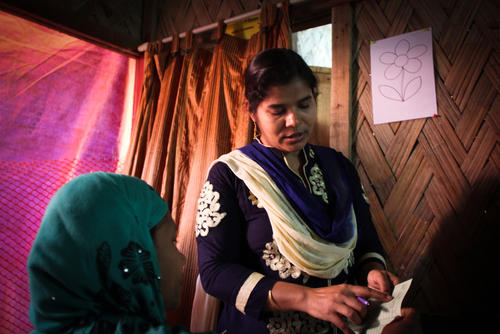
MSF has trained a group of young women to spread messages about surviving sexual violence. The presence of Rohingya women in our outreach team is vital.
Bangladesh

“This feels more like an emergency room than a normal delivery room”

In the makeshift settlements in Cox’s Bazar, Bangladesh, many Rohingya women give birth in their tents, limiting their medical options in case something goes wrong. MSF’s new maternity ward in Kutupalong, which will be able to withstand extreme weather, offers private rooms for new mothers and their babies, who face an uncertain future in Bangladesh. Project Update - 23 May 2018
 
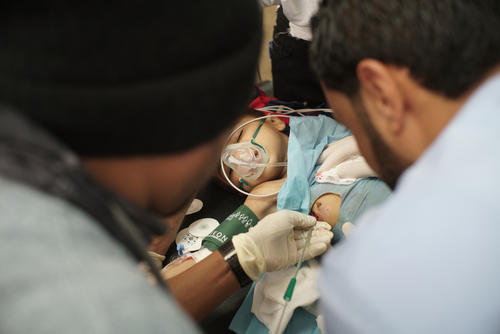
A young Syrian boy was hit by an astray bullet while being home.The bullet landed in his chest and went straight through his lungs. MSF medical teams in the ER of Tal Abyad hospital are trying to save his life.
Syria

Seeking to assist Syrians, wherever they are in need of help

After seven years of being denied access, Médecins Sans Frontières (MSF) once again requests the Syrian government to grant us access to all areas to provide medical treatment to Syrians in dire need, wherever they are. Press Release - 23 May 2018
 
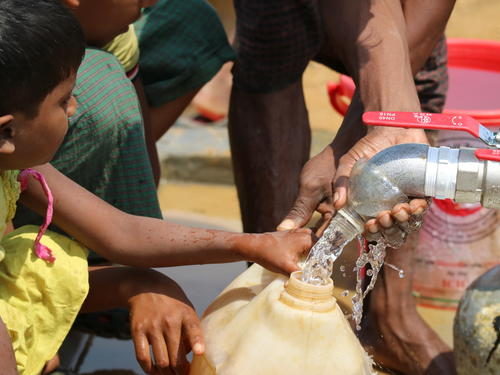
A newly installed submersible pump brings water to the community in an expansion area of the Kutupalong-Balukhali Rohingya refugee camp, April 18, 2018. MSF has provided hundreds of hand pumped wells and drilled 25 deep bore holes for motorised pumps, bringing over 32 million litres of water to the camp so far. The provision of safe drinking water in the camp is as much a life-saving priority as medical care.
Rohingya refugee crisis

Crisis update – May 2018

May 2018 update on activities in Cox's Bazar, Bangladesh, providing care for Rohingya refugees who have fled Myanmar. Crisis Update - 23 May 2018
 
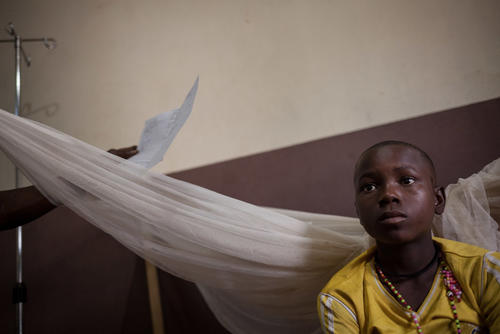
Bonaventure Ndjekpe, 14, is being kept under surveillance at Paoua Hospital, northwestern Central African Republic, supported by MSF. He would have been bitten on the heel by a snake on Christmas Eve, but there is no sign of blood poisoning.
Snakebite

Governments slated to vote on first-ever resolution at World Health Assembly

Snakebite is a hidden health crisis and has always been low on the public health agenda at national and international levels. Though the exact number of global snake bites is unknown, estimates put the number of envenomings at 2.7 million people per year. More than 100,000 people die and around three times as many amputations and other permanent disabilities are caused by snakebites each year. More than 20,000 people die from snakebites each year in sub-Saharan Africa alone. Statement - 23 May 2018
 
msf-placeholder

What we do

We treat patients suffering from a wide array of illnesses and health needs. Discover the main needs we see and what we do about them. Explore some of the main crises we work in, the consequences faced by affected people and the challenges in delivering care.
 
Traditional birth attendants in discussion with MSF Doctors. These trusted community representatives, are usually present during births in the home. By creating a dialogue, MSF is able to ensure that they refer women before and after birth for check ups and if there is a complication.
Sudan

Dreams of returning home remain distant for displaced in Darfur camp

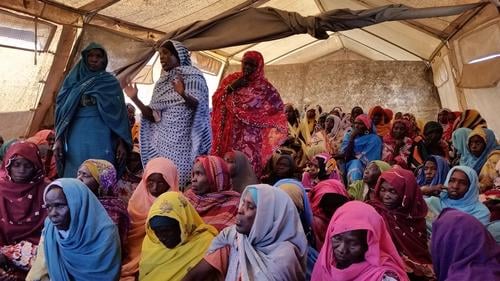
Two years ago, fighting erupted in Jebel Marra, southwestern Sudan, forcing nearly 160,000 people to look for protection. Over 23,000 settled around the small village of Sortoni and clustered together to form a camp for displaced people. But many are still reluctant to return home despite the difficulties of life in the displaced people’s camps. Voices from the Field - 18 May 2018
 
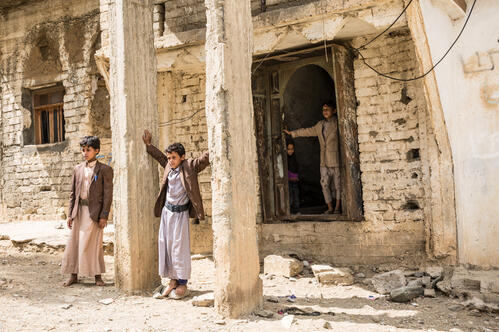
Yemen, gouvernorat de Saada, Haydan, mars 2018. Les enfants de la famille Ghani posent devant l'entrée de leur maison, bombardée pendant la guerre de Saada, entre 2004 et 2010. 

Saada governorate in Yemen, Haydan, March 2018. Ghani family children posing in front of the entrance of their house, bombed during the war of Saada, between 2004 and 2010.
Yemen

Living under daily coalition airstrikes

In March 2017, Médecins Sans Frontières teams returned to the hospital in Haydan that had been bombed and destroyed by Saudi warplanes in October 2015. MSF teams provide healthcare to isolated communities in Haydan as well as the remote surrounding area. Photo Story - 18 May 2018
 
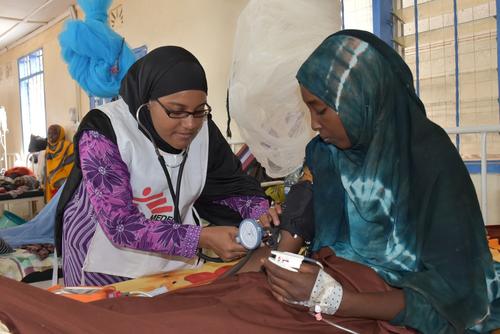
Nurse Salma attends to a patient in the maternity ward of MSF's hospital in Dagahaley camp, Dadaab.
Kenya

MSF responds to cholera outbreak amid heavy rains and flooding

Over the last two months, Kenya has been receiving heavy amounts of rainfall, causing floods, which have so far claimed the lives of over 170 people and displaced more than 300,000. Project Update - 18 May 2018
Four mothers posing in a corridor of the Hospital in Bili. All four of them are staying in the hospital with their child, that's suffering from a severe case of malaria. Since the beginning of the project in 2016, the pediatric ward already treated more than 4.000 cases of complicated/severe form of malaria.
Médecins Sans Frontières (MSF)

Independent medical humanitarian assistance

We provide medical assistance to people affected by conflict, epidemics, disasters, or exclusion from healthcare. Our teams are made up of tens of thousands of health professionals, logistic and administrative staff - most of them hired locally. Our actions are guided by medical ethics and the principles of independence and impartiality. We are a non-profit, self-governed, member-based organisation.

Learn more