



Ebola disease in DRC: find out how we're responding
Learn more
7999 Results
 
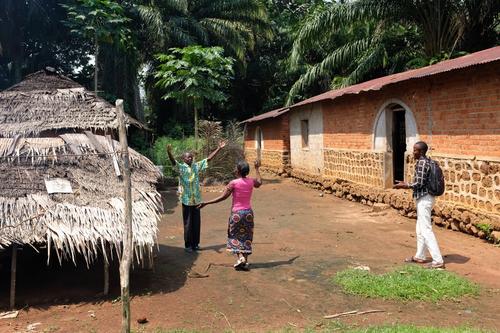
Marie-Vincent’s husband welcoming her home with a prayer. He lost his son and grandsons to Ebola but his wife has returned home a survivor.

“I WILL START TODAY FROM ZERO” – MARIE-VINCENT’S STORY

“At first, we didn’t believe in Ebola,” says Marie-Vincent, a woman recently discharged from MSF’s Ebola treatment centre (ETC) in Bikoro, Democratic Republic of Congo (DRC). She has just recovered from the virus, after her entire family fell sick.

Marie-Vincent doesn’t know how old she is, but she looks to be perhaps 60, and has certainly seen a lot in her life. Her family’s story of Ebola started with her son, Charles. 

One of 11 children, Charles was a nurse who ran a remote health centre in Itipo, tiny town some 170 kilometres from Mbandaka, the capital of Equator Province in Democratic Republic of Congo, over dirt roads and broken bridges. Itipo is the so-called epicentre of the recent Ebola outbreak. 

Charles spent years caring for patients with diseases like malaria, diarrhoea and malnutrition, as well as assisting women with antenatal care and complicated deliveries. He died from a case of probable Ebola on 9 May, the day after the epidemic was officially declared. His body was never tested for the virus, but was treated with care and respect, washed and carried back to the village of his birth for a traditional burial. 

In the days that followed, the full force of the virus would be released on his family and the colleagues who cared for him when he was sick.

“We became suspicious about why Charles was ill when the other nurses told us to distance ourselves from him,” says Marie-Vincent, “But I still looked after him, because a mother cares for her son when he is sick.” 

The body of a person who has died from Ebola is extremely contagious. In the days after Charles was buried, Marie-Vincent and several members of her family began to fall sick. 

“As soon as he was in the ground, we began to feel ill. We had fevers, vomiting and diarrhoea. We began to believe it really was a sickness and not a curse. I’d heard about Ebola and the mysterious deaths in some local villages. But at the time, we just didn’t know.” 

Soon, Marie Vincent was extremely sick with the virus and was taken to be tested. Her oldest son and his wife, then another son and another male relative, all fell ill one after the other. Next, Charles’ pregnant wife began to run a fever, as did two of his son’s and his son’s young fiancée. The whole family was brought to MSF’s Ebola transit centre in Itipo and referred onto the ETC in Bikoro, a town a few hours away, after their tests came back positive for the virus. 

The next weeks were spent inside the treatment centre, battling the symptoms and the fear, together.

“The staff were very warm and did everything they could to help us survive,” says Marie Vincent. “They encouraged us and made us believe we would recover even when we felt like giving up.”

Sadly, however Marie-Vincent’s grandsons (Charles’ sons) as well as the young fiancée all died from Ebola. Although Charles’ wife would later recover, her unborn child, a little boy, would not survive. The Ebola virus crosses the placenta where the mother’s immune system cannot go and has no hope of protecting it.

“I’ve recovered, but there is nothing left for me at home. Everything I own has been burned. I’m old, but I will have to start my life again from scratch. I will start today from zero.”
DRC Ebola outbreaks

“I will start today from zero”

The story of Marie-Vincent, a woman recently discharged from MSF’s Ebola treatment centre (ETC) in Bikoro, DRC, who lost her son and other family members to the virus. Voices from the Field - 19 Jun 2018
 
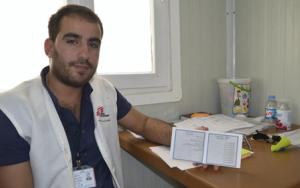
Omar Mahmoud Mental Health Activity Manager Assistant
Iraq

Syrian refugee works to heal wounds of Iraq's displaced

Omar Mahmoud, MSF aid worker and refugee, highlights the helplessness of those displaced. thenational.ae - 19 Jun 2018
 
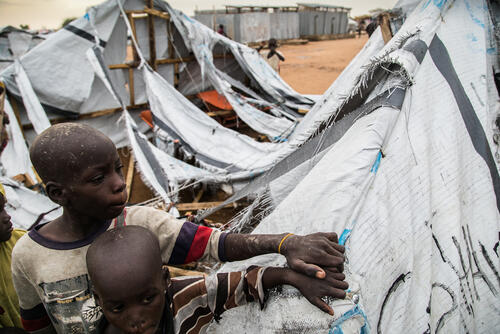
Two children stand next to a destroyed shelter inside a camp for internally displaced people in the town of Pulka, northeast Nigeria.
Nigeria

“There is no place to take cover or hide from the rain”

Around 5,000 internally displaced people are living in precarious conditions in 38 shared shelters in the transit camp in Pulka, northeast Nigeria. Project Update - 18 Jun 2018
 
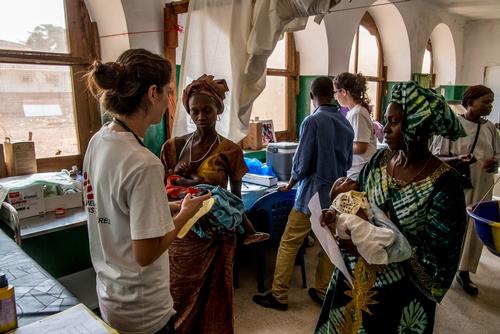
With the aim of improving medical care to help reduce the mortality rate among children under five years old, MSF launched a paediatric project in the region of Bafata in central Guinea- Bissau in November 2014. MSF is working in the paediatric department of the Bafata regional hospital, the referral centre for the entire region, where more than 180,000 people live, and in several health centres in the area.
Guinea-Bissau

Medical knowledge that outlasts MSF project

Erling Larsson, a Swedish doctor who has recently returned from Guinea-Bissau, describes the main outcomes of MSF's work in the region. Voices from the Field - 18 Jun 2018
 
Spokesperson MSF Doctor David Beversluis speaks French and English.

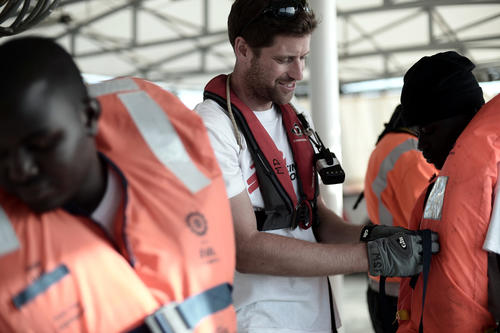
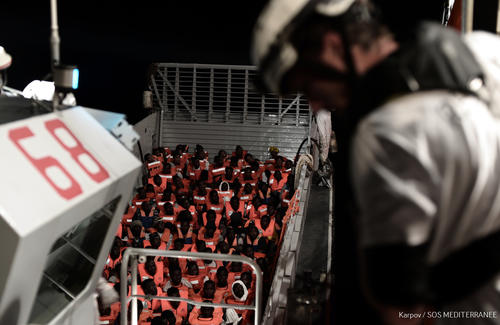
Aquarius is currently in the process of transferring 400 persons to two Italian Navy ships, at the request of the Italian MRCC. Aquarius was instructed by Maritime Rescue Coordination Centre in Rome to sail to Valencia to disembark the remaining 229 people.
 
While this appears to be a quick fix to the current political standoff, this should not set a precedent for future disembarkations. Rescued people should be disembarked in the nearest safe port available.
Mediterranean migration

Over 600 rescued people adrift in Europe’s political limbo

Testimony from Dr David Beversluis, an MSF doctor on board the Aquarius in June 2018. Voices from the Field - 17 Jun 2018
 
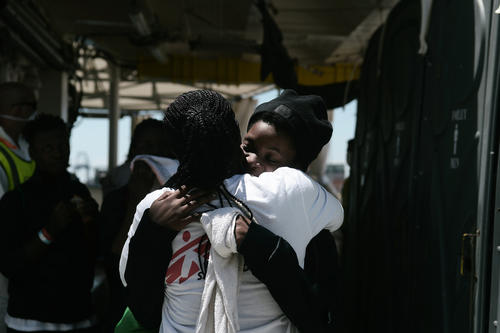
People disembark search and rescue vessel Aquarius, operated by SOS Méditerranée in partnership with Médecins Sans Frontières/Doctors Without Borders (MSF), in Valencia, Spain. The disembarkation is the end of a terrible ordeal for the men, women and children who spent multiple days at sea.
Mediterranean migration

European governments must put people’s lives before politics

MSF denounces Italy’s closure of its ports to prevent 630 rescued people from disembarking and European governments’ choice of political point-scoring over saving lives at sea. Press Release - 17 Jun 2018
 
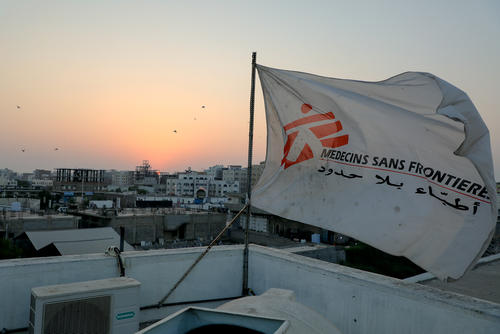
MSF flag over the top of the hospital
Yemen

MSF provides support to hospitals treating wounded from Hodeidah

On Wednesday 13 June, forces loyal to President Hadi, backed by the Saudi and Emirati-led international coalition (SELC) have launched a military offensive on Hodeidah, whose strategic port on the Red sea remains one of the few lifelines left for people living in northern Yemen. Project Update - 14 Jun 2018
 
Médecins Sans Frontières/Doctors Without Borders (MSF) is urging European Member States to facilitate the immediate disembarkation of 629 people rescued over the weekend in Mediterranean and now onboard Aquarius, a dedicated search and rescue vessel run by SOS MEDITERRANEE in partnership with MSF. Aquarius remains in international waters off Malta and Italy, the countries with the closest ports of safety but which continue to refuse permission to dock.
Mediterranean migration

MSF urges immediate disembarkation of 629 people on board Aquarius at nearest port of safety

Médecins Sans Frontières (MSF) is urging European Member States to facilitate the immediate disembarkation of 629 people rescued over the weekend in the Mediterranean and now on board the Aquarius, a dedicated search and rescue vessel run by SOS MEDITERRANEE in partnership with MSF. Aquarius remains in international waters off Malta and Italy, the countries with the closest ports of safety but which continue to refuse permission to dock. Press Release - 12 Jun 2018
 
Surgery with Surgeon Dr Hayder Alwash 

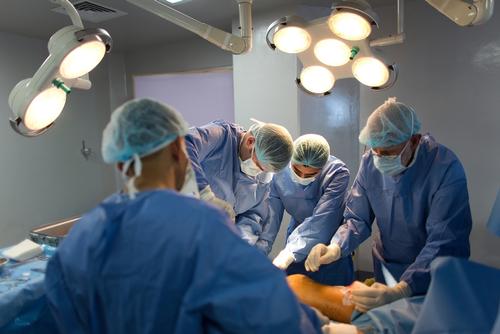
MSF Medical staff are working in Ramtha hospital in Jordan (5 km from Syrian border) where war wounded patients from Syria are being treated. Majority of patients require emergency surgery. Due to the severity of the injuries, patients require multiple complex surgery and long rehabilitation. The surgery runs 24 hours a day, 7 days a week.
Jordan

Lack of patients forces closure of Ramtha surgical project

After more than four years of emergency lifesaving activities in which over 2,700 war-wounded Syrians underwent medical treatment, Médecins Sans Frontières (MSF) has taken the difficult decision to close the Ramtha surgical project in northern Jordan. Project Update - 11 Jun 2018
 
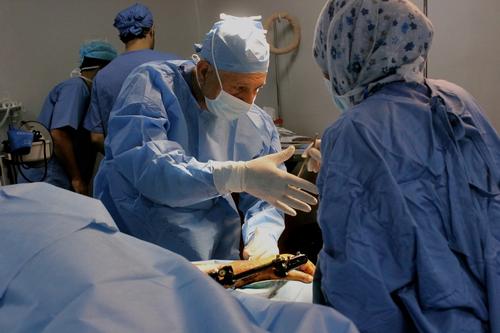
Dr. Haydar Alwash conducts a skin graft surgery on a patient. MSF's Emergency Trauma Surgical Project  in Ramtha Governmental Hospital opened in September 2013. It has treated hundreds of war wounded coming from Syria.
Jordan

Voices of Ramtha

MSF staff reflect on four years of saving lives and limbs in Ramtha, northern Jordan, and describe the impact this emergency surgical project had on the lives of both its patients and staff. Voices from the Field - 11 Jun 2018
Four mothers posing in a corridor of the Hospital in Bili. All four of them are staying in the hospital with their child, that's suffering from a severe case of malaria. Since the beginning of the project in 2016, the pediatric ward already treated more than 4.000 cases of complicated/severe form of malaria.
Médecins Sans Frontières (MSF)

Independent medical humanitarian assistance

We provide medical assistance to people affected by conflict, epidemics, disasters, or exclusion from healthcare. Our teams are made up of tens of thousands of health professionals, logistic and administrative staff - most of them hired locally. Our actions are guided by medical ethics and the principles of independence and impartiality. We are a non-profit, self-governed, member-based organisation.

Learn more