Ebola disease in DRC: find out how we're responding
Learn more
8006 Results
 
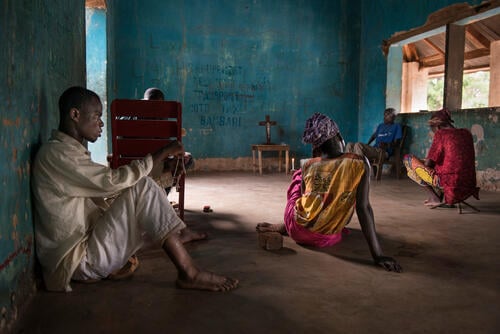
A church in an abandonned administrative building near the Alternatif IDP camp, Bambari. A group of IDP believers meet once a day to pray.
Central African Republic

Suffering mounts as armed groups return to Bambari

Following an upsurge in violence in May, indiscriminate criminality has increased in Bambari, affecting civilians and medical facilities. Project Update - 31 Aug 2018
 
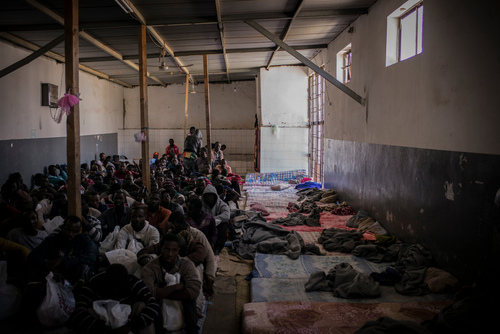
Men detained in Abu Salim detention centre, in Tripoli, Libya.
Libya

Conflict in Tripoli puts lives in danger, demonstrating that Libya is not a place of safety

MSF calls on European governments to acknowledge that Libya is not a place of safety. More must be done to help people trapped within its borders to find a safe and dignified way out. Press Release - 31 Aug 2018
 
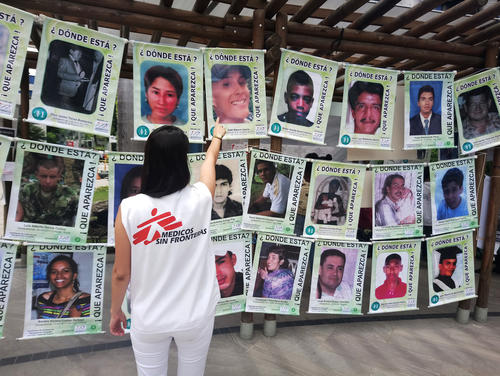
Acto en la Universidad de Santiago de Cali
Colombia

Suspended grief

In 50 years of war in Colombia, 83,000 people disappeared at the hands of guerrillas, paramilitaries, criminal groups and state forces. Giulia Panseri, MSF’s project coordinator in Puerto Asís and Cali, explains what MSF is doing in Puerto Asís and Cali to accompany the family members of those disappeared. Project Update - 30 Aug 2018
 
msf-placeholder
Palestine

MSF statement regarding the death of a staff member in Gaza

Hani Mohammed Almajdalawi worked as a nurse at one of MSF’s post-operative clinics in Gaza since 2014. MSF representatives have met with Israeli authorities but have not yet received information clarifying the circumstances surrounding Hani's death on 20 August 2018. Statement - 29 Aug 2018
 
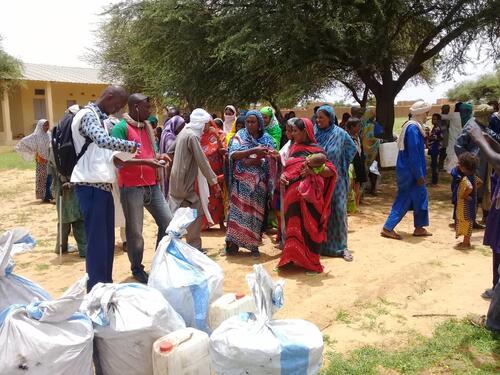
MSF staff registers the number of displaced families from the village of Tindinbawen, northern Mali, for the upcoming distribution of non-food item kits. MSF staff distributes non-food items kits to the 80 displaced families from the Tindinbawen village in northern Mali.
Mali

“People arrived exhausted; they ran out of water and food during the journey”

MSF provides emergency medical care after an attack on Tindinbawen village, Ansongo district, in northern Mali. Project Update - 27 Aug 2018
 
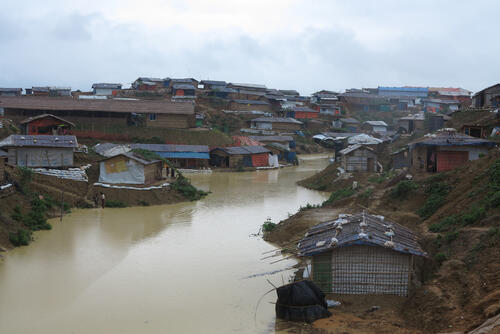
Water pools flowing the first thunderstorms of this year’s monsoon limit movements and access in the Rohingya refugee camp.
Rohingya refugee crisis

One year on, Rohingya refugees live in dire camps, facing an uncertain future and legal limbo

One year since over 700,000 Rohingya were forced to flee from Myanmar into Bangladesh, denial of their legal status and unacceptable living conditions continue to trap refugees in suffering and poor health. Project Update - 24 Aug 2018
 
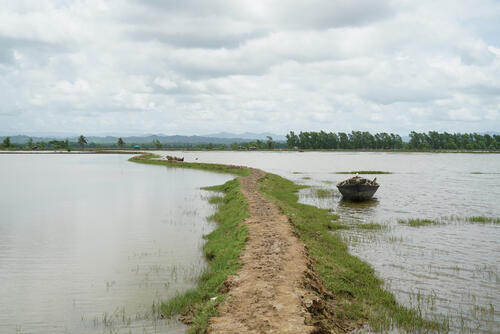
A boat is seen near Teknaf, Cox's Bazar district, with the mountains in Myanmar in the background. Many of the Rohingya who crossed into Bangladesh walked through the mountains before taking a boat like this across the water.
Rohingya refugee crisis

A Rohingya story in Malaysia: “We are always under threat of being arrested”

Mah, a Rohingya refugee who fled from Myanmar to Malaysia with his family in 2013, recounts his experience in Myanmar and the challenges he and his family are facing in Malaysia. Voices from the Field - 24 Aug 2018
 
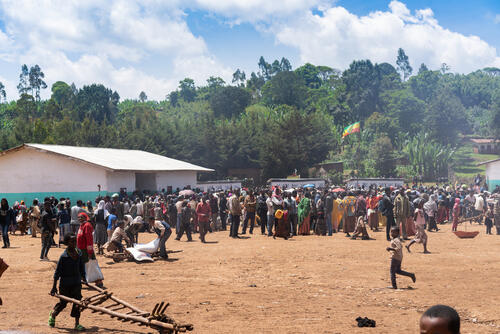
A view of the Kedida health center and of the IDP settlement around it.
Ethiopia

Nearly one million displaced people in urgent need of assistance

MSF has launched an emergency response to a recent surge in intercommunal violence that has displaced over 900,000 people between Gedeo and West Guji zones in southern Ethiopia. Project Update - 23 Aug 2018
 
Abu Ahmad: “I always have so many worries; worries about the future.”

Abu Ahmad is a 52-year-old father of eight (four daughters and four sons). His 11-year-old daughter Rukia became paralysed shortly before the violence erupted in August 2017. After arriving in Bangladesh, Rukia spent over seven months at MSF’s medical facility in Kutupalong. She returns to the facility every couple of days to have her bedsores treated. Here, Abu Ahmad recounts how the family fled, what life is like for his family in Bangladesh, and their hopes for the future.

“Before the conflict, we had cows, goats, land, all those things. Our business and livelihoods we earnt ourselves. But we faced lots of threats and torture from the government in Myanmar. If someone wanted to get higher education, that person would have to flee the country because if the government found out, they would arrest him. Our movements were very restricted; we were not allowed beyond the checkpoints. We could only move within our area. Other people, like monks and different [ethnic] communities, were free to move around everywhere. 

Then the conflict began. 
Fighting, stabbings and the burning of houses. Not long before that, my daughter Rukia had somehow became paralysed. She complained of pain and then stopped being able to feel anything below the waist. One night I called all my children together to discuss what to do. We did not see much hope; we could be arrested or killed no matter what we did. My eldest son told me that when the fighting starts, we would not be able to run with Rukia. “There will be no chance to save her life, he said. “You and mother should take her to Bangladesh now, ahead of us. We can join you later.” So I told my other children to get ready, and my wife and I left for Bangladesh with Rukia. 

Fleeing Myanmar.
After we left the house ... we were unable to [openly] leave our village because everywhere we looked we saw government people with weapons. We trekked miles throug
Rohingya refugee crisis

Abu Ahmad: “I always have so many worries; worries about the future.”

A Rohinga refugee and father of eight, recounts how he and his family fled Myanmar, what life is like for his family in Bangladesh, and their hopes for the future. Voices from the Field - 23 Aug 2018
 
KABALA, SIERRA LEONE - Health Promoter and IEC officer Sama T Marah talk to mothers at the neonatal ward at Kabala General Hospital on November 10, 2017 in Kabala, Sierra Leone. Photo by Xaume Olleros / MSF
Sierra Leone

Learning from the past, preparing for the future

Paul Jawor, an MSF water and sanitation (WATSAN) expert who has been working on the post-Ebola response in Sierra Leone since 2016, recounts the progress he has seen in the Mongo and Kabala regions in the north of the country over the last three years. Project Update - 21 Aug 2018
Four mothers posing in a corridor of the Hospital in Bili. All four of them are staying in the hospital with their child, that's suffering from a severe case of malaria. Since the beginning of the project in 2016, the pediatric ward already treated more than 4.000 cases of complicated/severe form of malaria.
Médecins Sans Frontières (MSF)

Independent medical humanitarian assistance

We provide medical assistance to people affected by conflict, epidemics, disasters, or exclusion from healthcare. Our teams are made up of tens of thousands of health professionals, logistic and administrative staff - most of them hired locally. Our actions are guided by medical ethics and the principles of independence and impartiality. We are a non-profit, self-governed, member-based organisation.

Learn more