



Ebola disease in DRC: find out how we're responding
Learn more
7999 Results
 
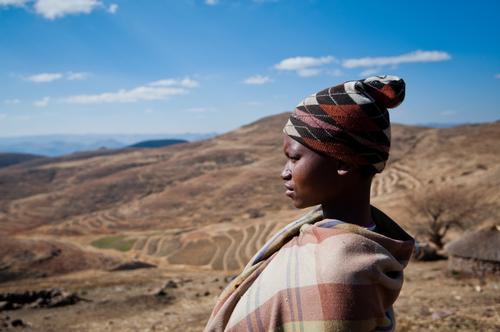
Mamotsieleli Molofotsane is around 20 years old she says. She has three children and is pregnant with her fourth.  Mamotsieleli has been tested HIV positive and is on ARV treatment. Her three children have been tested HIV negative.  To go to the MSF supported clinic of Ha Seng, she has to walk many hours. She already missed an appointment for a refill of her ARV drugs due to the distance and a problem with her feet.  In Lesotho, the health centers are very scattered. Women have to walk many hours and sometimes even have to sleep overnight before they can reach the health center.  As a result, many women have a poor adherence to their treatment.  Some are not coming to the health centers on a regular basis.  When a pregnant woman like Mamotsieleli doesn’t adhere well to her ARV treatment,  it increases the risk for her to transmit the virus to her child.   It also means that her treatment will not work properly for herself: she will get sick, resistant to treatment and ultimately risk death.  Maternal mortality -linked to HIV- in Lesotho is one of the highest in the world.
Women's health

"I’ve seen with my own eyes, safe abortion saves women's lives"

Dr Manisha Kumar talks about her experience in the field with women needing access to safe abortion care and efforts to increase access to contraceptive and safe abortion care services offered by MSF projects. Interview - 27 Sep 2018
 
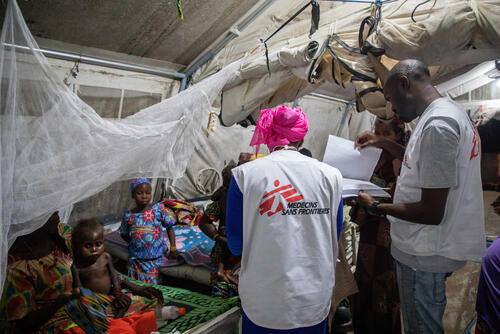
Fatouma Adamou and Iscander Raingou-Mounchili are doing the evening visit in a phase 2 tent.
Niger

One of the world’s biggest paediatric intensive care units is full

The 200-bed paediatric intensive care unit in Magaria, Niger, is overwhelmed as MSF teams tackle an unprecedented malaria peak in a hospital that covers a region of one million people.

Press Release - 25 Sep 2018
 
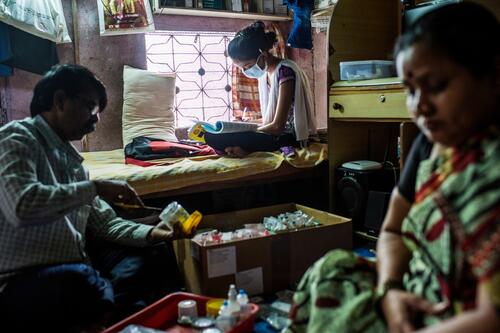
XDR-TB patient Nischaya, at home in the Ambedkar Nagar area of Mumbai, studying for her exams. Beside her bed, her father is putting in order her box of TB medication.

Nischaya (not real name) is 18 years old, lives in Mumbai, and is one of only a handful of extensively drug-resistant TB (XDR-TB) patients in India lucky enough to be able to have acesss to the new drugs. After having been on treatment unsuccessfully for several years, Nischaya was referred to the clinic of Medecins Sans Frontieres (MSF) / Doctors Without Borders, an international medical humanitarian organisation who since 2006 provides free diagnosis, treatment and support to patients with drug-resistant TB in Mumbai.
Tuberculosis

Global leaders must make bold commitments at first-ever UN tuberculosis summit

As world leaders meet at first-ever UN TB summit, MSF highlights urgent need to scale up newer tools available today to save lives, and develop a fast, safe and simple cure for TB Press Release - 25 Sep 2018
 
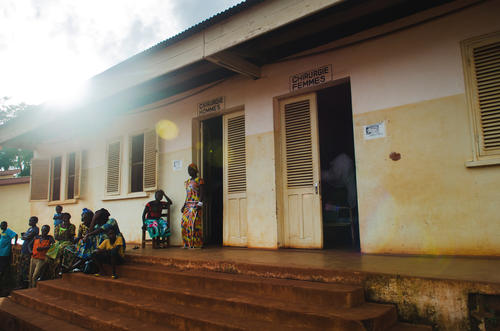
Women are waiting at the MSF supported hospital in Masisi, North Kivu, DRC. The MSF teams support the full extent of primary and secondary health care services (surgery, internal medicine, gynecology, maternity, pediatric, neonatology as well as a « village d’accueil » for women in their third trimester of a risky pregnancy who can stay there to ensure they have access to medicalized support to give birth) and undertake mobile clinics with a focus on malaria (curative/preventative) in remote health posts; watsan & health promotion.
Democratic Republic of Congo

48 hours on the frontline of maternity care

blogs.msf.org - 24 Sep 2018
 
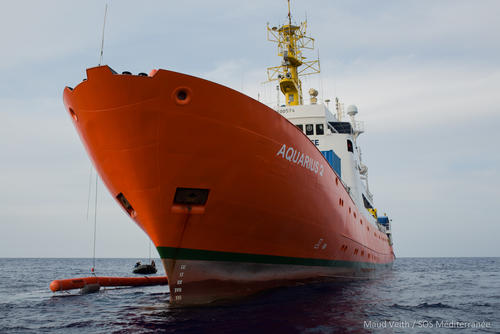
Central Mediterranean – 23 September, 2018 – Over the past 72 hours, Aquarius assisted two boats in distress and now has more than 60 survivors on board, several of whom are psychologically distressed and fatigued from their journeys at sea and experiences in Libya. 
SOS Mediterrannee and MSF are reeling from the announcement by the Panama Maritime Authority it has been forced to revoke the registration of the Aquarius under blatant economic and political pressure from the Italian government.
“Five years after the Lampedusa tragedy, when European leaders said ‘never again’ and Italy launched its first large scale search and rescue operation, people are still risking their lives to escape from Libya . News from the Panama Maritime Authority arrived to the Aquarius while its teams were engaged in an active search and rescue operation in the Central Mediterranean.
Mediterranean migration

Italian government pressures Panama to stop Aquarius rescues on world's deadliest maritime route

SOS MEDITERRANEE and MSF demand that European governments allow the Aquarius to continue its rescue mission. Press Release - 23 Sep 2018
 
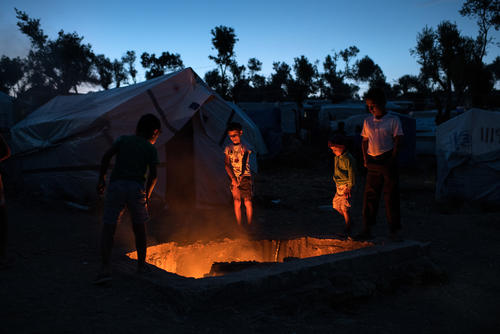
Thousands of people seeking safety after fleeing countries such as Syria, Afghanistan, Iraq, Sudan, and Congo continue to risk their lives to reach Europe. Those who try to arrive via Turkey and the Aegean Sea have been trapped for an indefinite period of time on islands in Greece as part of the EU/Turkey deal and its deterrence and containment approach. 
In Moria refugee camp, on Lesbos island, there are currently more than 7,500 people in a camp made for a maximum of 2,500. With the camp so full, refugees are now staying in an informal extension of the camp known as Olive Grove. The awful conditions at Moria camp/Olive Grove and arbitrary administrative situations have had a dramatic impact on their health and in particular their mental health. 
Médecins Sans Frontières teams provide medical and mental health support outside Moria camp and run a clinic for severe mental health cases in Mytilene, the capital of the island.
Greece

“It is difficult to believe this is Europe”

http://blogs.msf.org - 21 Sep 2018
 
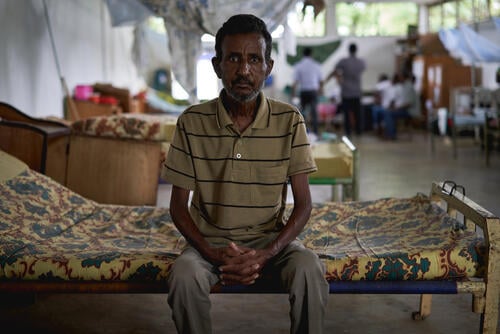
Wubet, 48, is a primary kala azar patient with HIV co-infection. He is being treated by MSF in Abdurafi and is part of the kala azar research program led by MSF and Antwerp Institute of Tropical Medicine (ITM).
Wubet is from Abdurafi. He was diagnosed with TB in 2016. After the completion of TB treatment he was still experiencing fever, poor appetite and weight loss, so he visited the health center several times to understand why. He was found to be HIV positive, but this alone could not explain his health status. The clinicians suspected kala azar and referred him to the MSF health center. Here he was finally diagnosed with visceral leishmaniosis. At that point, he was feeling so sick that he had to be on oxygen and he believed that he was going to die. Ever since he started receiving specific treatment, both for kala azar and HIV, his health has been improving. He says he already knew about kala azar before getting sick because the MSF teams had been doing health education within the community. However, at the time, he didn’t take it too seriously and did not take any of the preventive measures that were recommended, such as using a mosquito net, insect repellant and more protective clothing. He is a farmer and spends a lot of time outdoors, which greatly increases the risk of infection. Now he knows that the risk is real and he wants to help spread the word among his farmer friends. He also decided to join the ongoing study on the prevalence and incidence of kala azar in HIV patients. He wants to contribute to the development of new preventive methods and treatments and help his community.
Kala azar

Diagnosing, treating and researching HIV-kala azar co-infection in Ethiopia

MSF teams in Abdurafi, Ethiopia, talk about the challenges of diagnosing and treating kala azar in people living with HIV, and are collaborating on research into ways to better understand and prevent the neglected tropical disease. Project Update - 20 Sep 2018
 
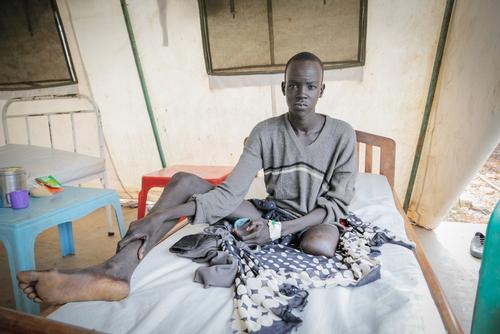
Banywich Bone, 18 ans, was reffered to Agok From Mayom, where MSF runs a primary health center. He was bitten by a snake three years ago, while he was sleeping at home. When he arrived in the hospital, he presented an infected wound for which doctors blame the snake bite. His left leg had necrotic tissus and pain, the wound was infected and MSF surgeon had to amputate the leg above the knee.
Snakebite

Time to strike back at snakebite and end the antivenom access crisis

Every year, an estimated 2.7 million people are bitten by venomous snakes, resulting in death for more than 100,000 people. Although effective treatment exists for snakebite envenoming, the vast majority of people aren’t able to access it. Report - 19 Sep 2018
 
msf-placeholder
About MSF

Five myths about working for MSF

blogs.msf.org - 18 Sep 2018
 
Bangassou – 8.8.2017

Surgery ward of Bangassou hospital.
Central African Republic

“We simply can’t let these people down. But we remain vigilant”: MSF returns to Bangassou

In 2017 a series of security incidents forced MSF to evacuate our team from Bangassou, CAR, and suspend activities in the area. In April 2018, our team returned to the city. Interview - 18 Sep 2018
Four mothers posing in a corridor of the Hospital in Bili. All four of them are staying in the hospital with their child, that's suffering from a severe case of malaria. Since the beginning of the project in 2016, the pediatric ward already treated more than 4.000 cases of complicated/severe form of malaria.
Médecins Sans Frontières (MSF)

Independent medical humanitarian assistance

We provide medical assistance to people affected by conflict, epidemics, disasters, or exclusion from healthcare. Our teams are made up of tens of thousands of health professionals, logistic and administrative staff - most of them hired locally. Our actions are guided by medical ethics and the principles of independence and impartiality. We are a non-profit, self-governed, member-based organisation.

Learn more