



Ebola disease in DRC: find out how we're responding
Learn more
7999 Results
 
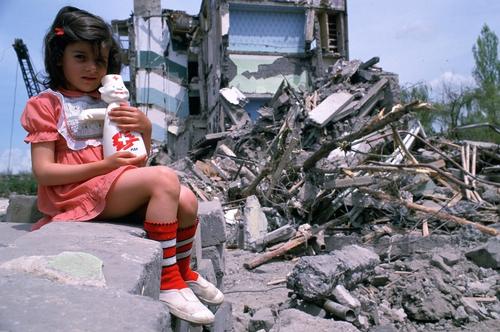
Gyumri, Armenie. Tremblement de terre : petite fille devant des décombres. Little girl in front of ruins caused by an earthquake.
On December 7, 1988, a catastrophic earthquake struck Armenia. A tragedy of enormous proportions, the earthquake claimed the lives of at least 60.000 people. Three days after the earthquake, on December 10, MSF was one of the first international non-government organizations to arrive in Leninakan (Gyumri) to help.
Armenia

Earthquake response: 30 years of MSF in Armenia

The first in a three-part series commemorating 30 years of MSF activities in Armenia, which began when MSF was the first international organisation to respond to the 1988 Spitak earthquake. Project Update - 19 Dec 2018
 
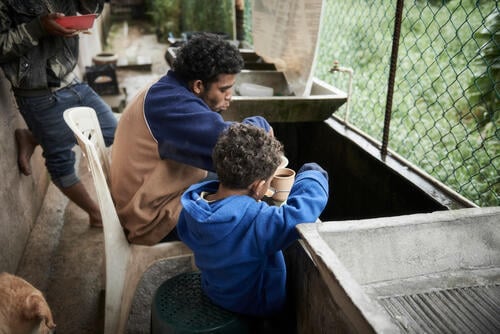
They are  from Yodo in Honduras.  The two Angel's thave travelled for 2 weeks to get to Coatzacoalcos.

He left Honduras because the violence is everywhere. It is usually there, that young people starting to work with gangs for buy a luxury phone and other things.

We have been travelling for two weeks. We walked 7 days to get train, and were cold from the rain during the night. We went to a house nearby and they told as that we could get the bus to came here. 

Everybody helped me with my son. My family knows that I decided came. Most of my life I have been alone. I dont have a father or mother. They didn't want me. Thet gave me away.

Our plan is stay in Mexico somewhere to try to find work and a school for my son. I did this near the southern border and it worked. The only thing that is important for me is that my son has a normal life. I know that he will be fine here. Is complex, but people here help us. 

Angel's (3yo) mother abandoned us when Angel was 6 months old.

I think that I will find work in Mexico, in Honduras I couldn't. I prefer go slow to United States and try to ask for asylum. We both ae ill like a cold of flu.
Central American migration

“I want a normal life for my son”

Testimonies from patients treated by MSF at the Casa del Migrante in Coatzacoalcos, Mexico, a transit point for migrants and refugees taking the perilous journey north from Guatemala, El Salvador and Honduras, Voices from the Field - 18 Dec 2018
 
مستشفى السلام في شرق الموصل في العراق
Iraq

A new emergency room for Al ‘Salaam hospital, East Mosul

MSF has completed the construction of a new emergency room (ER) in the Al ‘Salaam and Al’ Shifaa hospital complex, to increase the capacity of the health facility and improve access to high-quality emergency care for the population of East Mosul. Press Release - 18 Dec 2018
 
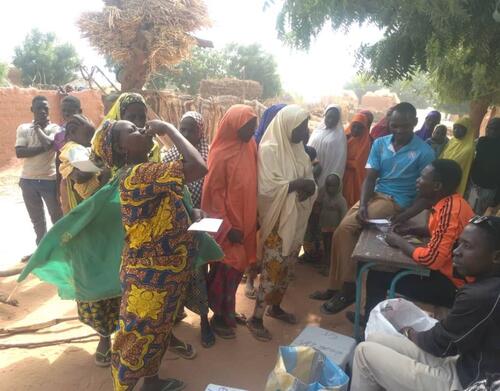
Since early July, Niger has been battling the worst cholera outbreak in years, which affected over 3,800 people and caused 78 deaths. As the disease ebbs, Médecins Sans Frontières and local health authorities shift focus to preventing future outbreaks in the southern region of Maradi, most affected by the current epidemic and known as a hotspot for cholera along the border of Niger and Nigeria. These efforts include vaccination of over 145,000 people with an easy-to-administer oral vaccine in three of Maradi’s health zones: Tchadoua, Aguié and Gazaoua. MSF has provided local health authorities with logistic and technical support. Epicentre is supporting the intervention with a post-vaccination survey.
Niger

Preventing future outbreaks in a cholera hotspot

Since early July, Niger has been battling the worst cholera outbreak in years. As the disease ebbs, MSF and local health authorities shift their focus to preventing future outbreaks in the southern region of Maradi, most affected by the current epidemic and known as a hotspot for cholera along the border of Niger and Nigeria. Project Update - 17 Dec 2018
 
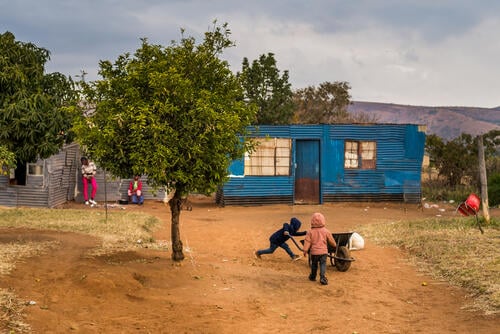
A house in the illegal settlements of the Bapong mine near a KCC MSF project.
South Africa

Critical gaps in mental healthcare for survivors of sexual violence

MSF's report finds that nearly half of health facilities in South Africa designated to care for survivors of sexual violence say they do not offer counselling services to child survivors of rape, who potentially represent up to half of all survivors, while 1 in 5 offer no counselling services at all. Report - 17 Dec 2018
 
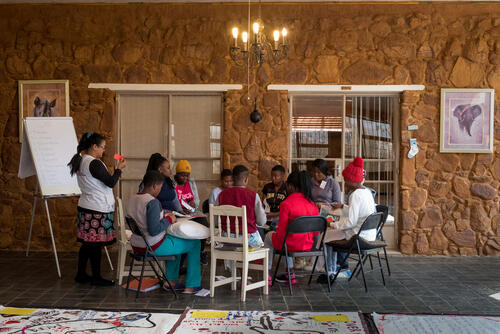
A sexual assault survivor working on her body map during MSF's Body Mapping workshop, Rustenburg, June 2018. 
MSF facilitated a 2-day Body Mapping workshop attended by adolescent survivors of sexual violence from across the Rustenburg area. In Rustenburg, South Africa, a 2016 MSF survey revealed that 1 in 4 women between the age of 18-49 has been raped in her lifetime. As part of MSF's comprehensive sexual violence project in Rustenburg, Body Mapping is used to help survivors of sexual violence identify the internal and external scars and hardships that they are living with and working through. Body Maps comprise a life-size outline of the body, which the survivor "maps" with their experiences and emotions.
South Africa

The mental healthcare lottery faced by victims of sexual violence

Yolanda Hanning, mental health manager for MSF’s Rustenburg project, presents the challenges victims of sexual violence in South Africa face in accessing mental healthcare and how MSF is working to change that. Voices from the Field - 17 Dec 2018
 
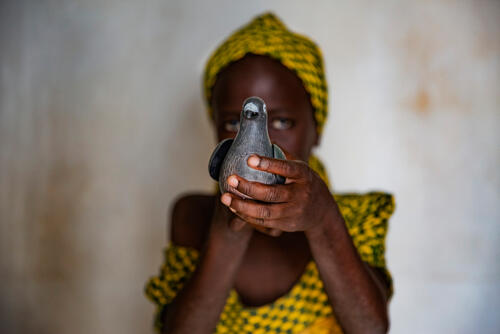
Aïcha 
Aïcha is nine-years-old. She fled to Niger by crossing through the jungle. She experienced hunger when she was fleeing. In Niger, Aïcha stopped playing and was always sitting alone. She found it hard to eat and was losing weight. She had nightmares which woke her up.
Niger

Diffa’s young minds damaged by the conflict

Children account for about 70 per cent of the 250,000 people who have sought refuge in Diffa, Niger, fleeing conflict in the Lake Chad region. MSF is running a mental health and psychosocial support programme for children and adolescents in Diffa, to help them to overcome the trauma they have experienced. Project Update - 14 Dec 2018
 
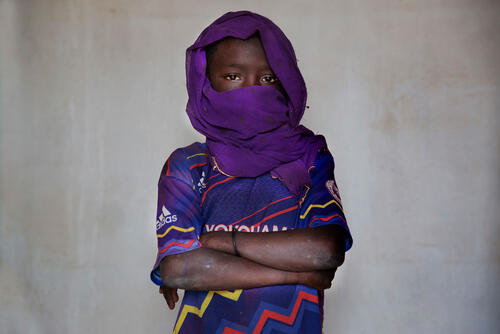
Anas 
Twelve-year-old Anas and his parents left Nigeria four years ago. Anas’ parents were small traders and the family lived well, but they had to give everything up due to the conflict. Anas witnessed several murders when his village was attacked.
Niger

Lives haunted by violence

Since late 2014, the region of Diffa in southern Niger has been caught in armed conflict, forcing 250,000 people from their homes, over two-thirds of them children. Halisa, Mohammed, Asan, Aïcha, Mariam and Issa, participants in the mental health programme that MSF runs in Diffa, share their stories. Voices from the Field - 14 Dec 2018
 
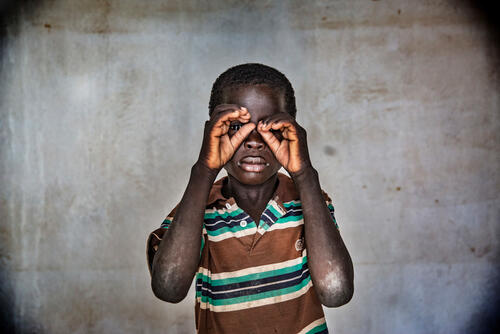
Issa
Ten-year-old Issa was kidnapped by an armed group when his village was attacked. He spent several months in captivity and saw another boy killed.
Mental health

“It takes a lot to bring these children back to something approaching a normal life”

Interview with Cristina Carreño, MSF mental health advisor, on the role of mental healthcare for children in MSF’s programmes for victims of violence, conflict or natural disasters, and notably for displaced populations. Interview - 13 Dec 2018
 
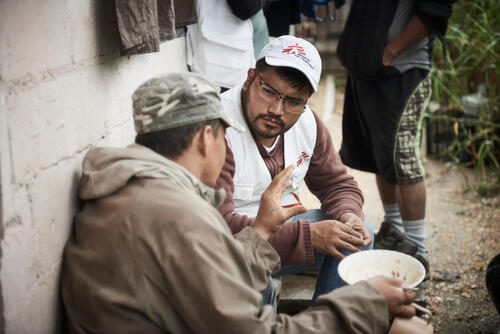
At the Casa del Migrante in Coatzacoalcos, Veracruz, an MSF team provides medical care and mental health care to hundreds of migrants and refugees who arrive daily in this city located in southern Mexico, known for being a place of passage where travelers usually take a break before continuing their journey aboard “La Bestia”, the freight train that connects the southern and northern borders of the Mexican republic.
Central American migration

US asylum restrictions are deepening Mexican border crisis

Current and proposed policies to severely restrict the ability to seek asylum in the United States have created an administrative limbo that leaves Central American asylum seekers in Mexico exposed to further violence. Press Release - 13 Dec 2018
Four mothers posing in a corridor of the Hospital in Bili. All four of them are staying in the hospital with their child, that's suffering from a severe case of malaria. Since the beginning of the project in 2016, the pediatric ward already treated more than 4.000 cases of complicated/severe form of malaria.
Médecins Sans Frontières (MSF)

Independent medical humanitarian assistance

We provide medical assistance to people affected by conflict, epidemics, disasters, or exclusion from healthcare. Our teams are made up of tens of thousands of health professionals, logistic and administrative staff - most of them hired locally. Our actions are guided by medical ethics and the principles of independence and impartiality. We are a non-profit, self-governed, member-based organisation.

Learn more