



Ebola disease in DRC: find out how we're responding
Learn more
8000 Results
 
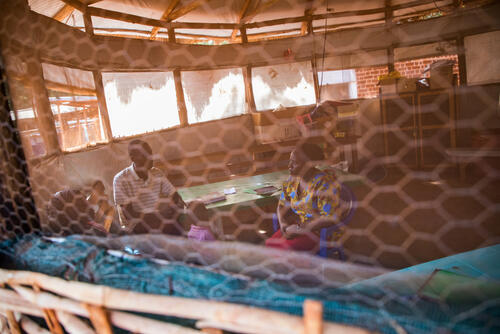
Mental health consultation in the MSF hospital in Nduta refugge camp, Tanzania.
Mental health

Displaced and distressed: people’s mental health in East Africa

MSF teams in Ethiopia, South Sudan, Sudan, Tanzania and Uganda are seeing the numbers of patients seeking treatment for mental health issues is increasing – in some cases even doubling – because of violence and displacement. Project Update - 22 Jan 2019
 
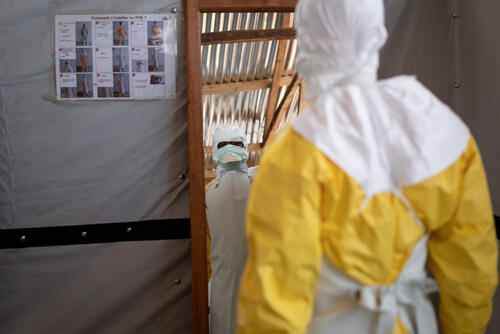
MSF staff at the Beni transit centre get ready for their round in the high risk area.
DRC Ebola outbreaks

Ebola patient care increases amid growing tensions in North Kivu

Conflict and instability in the North Kivu region of Democratic Republic of Congo has made it difficult for people to access healthcare in a region that is in the grip of the second-largest ever Ebola outbreak. MSF teams though are expanding our response to the epidemic. Project Update - 18 Jan 2019
 
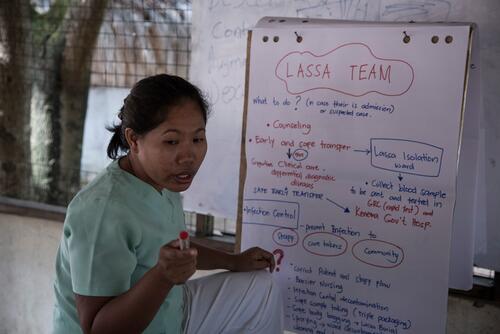
Honney Maymor Pannes, MSF Filipino nurse responsible for the Lassa isolation ward, briefing her team members about  patient and staff flow inside the ward, decontamination of medical instruments and strict procedures for handling patients suspected of Lassa.
Neglected diseases

Lassa fever: A challenging disease to diagnose and treat

Despite affecting up to 300,000 people a year across West Africa, and causing more than 5,000 deaths annually, Lassa fever is a poorly understood disease that is challenging to diagnose and treat. Research is urgently needed to develop more effective and affordable diagnostics and treatments. Project Update - 18 Jan 2019
 
MSF carried out an emergency intervention in the rural area of Dessa, in Tillabéry region. Our teams assisted more than 1,280 displaced people, victims of double violence: community conflicts on the one hand and the threat of armed groups considered as jihadists on the other.
MSF carried out 170 primary health consultations, 20 prenatal consultations and 131 measles vaccinations for children. Our teams also distributed essential items (blankets, cooking utensils, washing kits, mosquito nets and jerry cans) to 220 families of displaced persons.
Niger

“These displaced people live in fear of being attacked at any time”

After increased insecurity in the Tillabéry region of Niger caused large numbers of people to flee their homes, MSF carried out an emergency response in early January 2019. Interview - 17 Jan 2019
 
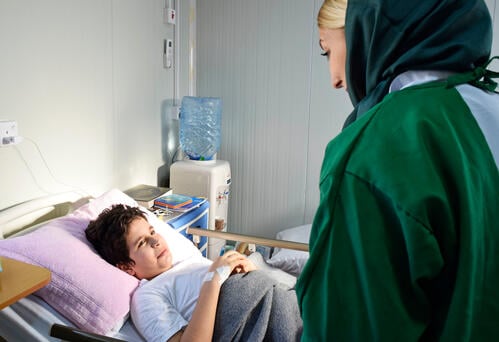
Ali Monir, 12 years old, in his room during a psychological support session in MSF’s post-operative care facility, in East Mosul. Ali has been hospitalised because of a fracture. Medical tests revealed that Ali presents a multidrug- resistant infection. In conformity with MSF’s infection prevention and control (IPC) measures, Ali has to stay in an isolation room, to avoid the spread of his infection to other patients and medical staff. MSF’s psychologist is visiting Ali regularly to help him deal with his anxiety and to ease his recovery.
Antibiotic resistance

“Without urgent action, common infections and minor injuries could be deadly again”

Ernestina Repetto, MSF advisor on infectious diseases, answers the big questions on antibiotic resistance. Interview - 17 Jan 2019
 
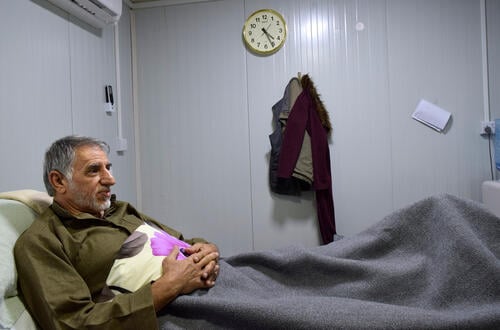
Hani Tah Suleyman, 63 years old, in his room in MSF’s post-operative care facility in East Mosul. Hani is affected by osteomyelitis and has developed a multidrug resistant infection. In conformity with MSF’s infection prevention and control (IPC) measures, Hani has to stay in an isolation room, to avoid the spread of his infection to other patients and medical staff. “When I first heard that I would be isolated I was relieved because my treatment was getting started. But when I realised that it was for 6 weeks, I felt sad because I would be separated from my family, from my home and my sons. I got teary eyed” says Hani. “No one likes to be alone, but we need to adapt. And services here are very good; the organisation takes good care of patients.”
Iraq

The invisible burden of antibiotic resistance in Mosul

Almost 40 per cent of patients admitted to MSF’s post-operative care facility in East Mosul arrive with multidrug-resistant infections, and antibiotic resistance is a problem throughout the country. Project Update - 17 Jan 2019
 
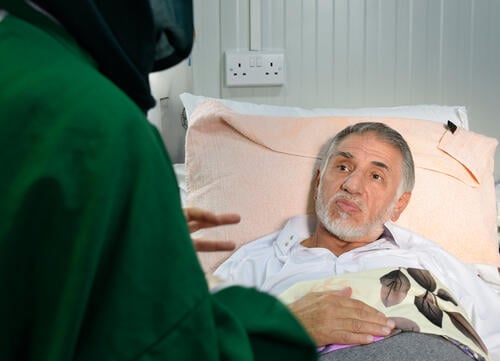
Hani Tah Suleyman, 63 years old, in his room during a psychological support session, in MSF’s post-operative care facility in East Mosul. Hani is affected by osteomyelitis and developed a multidrug resistant infection. In conformity with MSF’s infection prevention and control (IPC) measures, Hani has to stay in an isolation room, to avoid the spread of his infection to other patients and medical staff.
Iraq

“Over a third of our patients in East Mosul show antibiotic resistance”

Karam Yaseen, a health promoter at MSF’s hospital in East Mosul, Iraq, describes the rising challenge of antibiotic resistance. Voices from the Field - 17 Jan 2019
 
January 15, 2018.
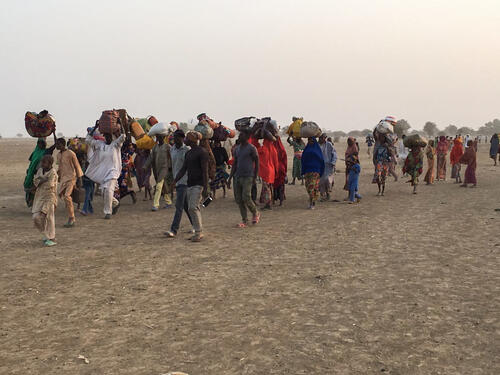
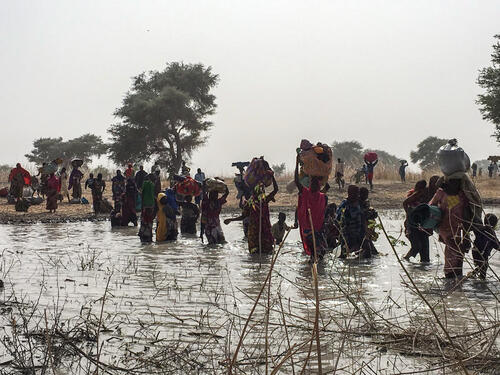
Some 8000 people who fled Rann after attack last night seek shelter in Bodo, Cameroon.
An MSF medical team arrived in Bodo today. There they found more than 8’000 people, (estimate) mostly women and young children. 1’200 people have been able to settle inland and more than 7’000 people are still at the river (border).  But people continue to arrive. They have no shelter, no fresh water and fled Rann with no belongings. The local community organized solidarity to provide them with some food. MSF teams are bringing medical supplies and are preparing to support the local health centre there. MSF teams are planning to return tomorrow with emergency food, shelter and a watsan team to support them. This is devastating news for the people in Rann who have already suffered so much.
Nigeria

Rann was attacked – and was left “like a graveyard”

MSF nurse Isa Sadiq Bwala describes what he saw in Rann, northeastern Nigeria, following a devastating attack on the town on 14 January. Voices from the Field - 16 Jan 2019
 
January 15, 2018.
Some 8000 people who fled Rann after attack last night seek shelter in Bodo, Cameroon.
An MSF medical team arrived in Bodo today. There they found more than 8’000 people, (estimate) mostly women and young children. 1’200 people have been able to settle inland and more than 7’000 people are still at the river (border).  But people continue to arrive. They have no shelter, no fresh water and fled Rann with no belongings. The local community organized solidarity to provide them with some food. MSF teams are bringing medical supplies and are preparing to support the local health centre there. MSF teams are planning to return tomorrow with emergency food, shelter and a watsan team to support them. This is devastating news for the people in Rann who have already suffered so much.
Nigeria

Thousands fleeing Rann attack seek refuge in Cameroon

A devastating attack on Rann, northeast Nigeria, has sent thousands of people fleeing across the border to Bodo, Cameroon, needing assistance with food, shelter, water and medical treatment. MSF teams have arrived in Bodo to provide help. Project Update - 16 Jan 2019
 
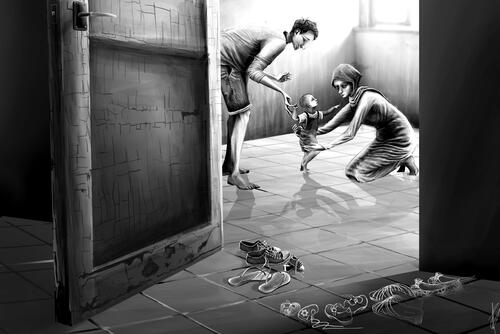
Patient: When the bomb fell on our home, it trapped my legs. I couldn’t do anything; I watched my family die in front of my eyes. My mother, sister, my two children, dying and I did nothing. Since we arrived in Lebanon, most days I just stay in the room with the children. It’s been almost five weeks since my last day out.
MSF's Psychologist: I try to help her to let go of this guilt, to see that her family would understand she did everything she could. We’re still working on the difference between forgetting and moving on.

Patiente: Quand la bombe s’est écrasée sur notre maison, mes jambes se sont retrouvées coincées sous les gravats. Je ne pouvais rien faire et j’ai vu ma famille mourir devant moi. Ma mère, ma sœur, mes deux enfants… ils sont morts et je n’ai rien fait. Depuis que l’on est arrivé au Liban, je passe la plupart de mes journées enfermée à la maison, avec les enfants. Cela fait presque cinq semaines que je ne suis pas sortie. 
Psychologue MSF: J’essaie de lui faire oublier ce sentiment de culpabilité, de lui dire que sa famille aurait compris qu’elle ne pouvait rien faire. Nous travaillons encore sur la différence entre le fait d’oublier et celui d’aller de l’avant.
Lebanon

“To see one smile on a broken face is enough to know that this work is worthwhile”

MSF has been working with refugees in Shatila refugee camp, Lebanon, since 2013. Illustrator Ella Barron visited our clinic in late 2018 and took refugees' testimonies and illustrated their stories, while MSF psychologist Miriam Slikhanian shares her experience of working on mental health issues in the camp. Project Update - 15 Jan 2019
Four mothers posing in a corridor of the Hospital in Bili. All four of them are staying in the hospital with their child, that's suffering from a severe case of malaria. Since the beginning of the project in 2016, the pediatric ward already treated more than 4.000 cases of complicated/severe form of malaria.
Médecins Sans Frontières (MSF)

Independent medical humanitarian assistance

We provide medical assistance to people affected by conflict, epidemics, disasters, or exclusion from healthcare. Our teams are made up of tens of thousands of health professionals, logistic and administrative staff - most of them hired locally. Our actions are guided by medical ethics and the principles of independence and impartiality. We are a non-profit, self-governed, member-based organisation.

Learn more