



Ebola disease in DRC: find out how we're responding
Learn more
4633 Results
 
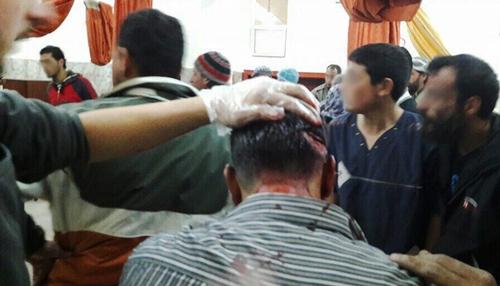
Victims of a double-tap barrel bombing on Saturday 28 November on an Médecins Sans Frontières/Doctors Without Borders (MSF)-supported hospital in a besieged zone in northern Homs governorate, Syria, are treated .The bombing  caused seven deaths, the partial destruction of the hospital and an influx of 47 wounded patients needing to be transferred to nearby field hospitals, some of whom died en route.

The most critically wounded patients were transferred to three nearby hospitals. The 16 from the initial influx were immediately sent to one hospital. A second facility received 21 injured and four who arrived dead, having died on the journey, and the third facility received ten injured and one dead-on-arrival.
Syria

The feeling of powerlessness is excruciating, but I cannot abandon my people

An MSF-supported surgeon working in rural northern Homs governorate tells of the pervasive fear of permanent aerial threat, but also the commitment to stay and provide surgery. Voices from the Field - 9 Mar 2016
 
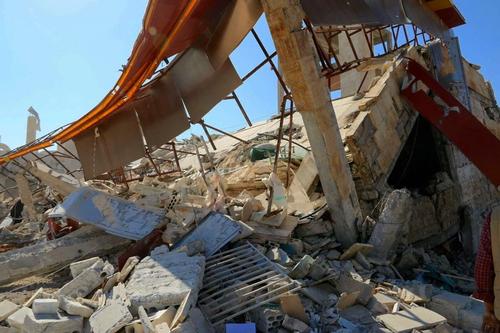
The MSF-supported hospital in Ma’arat Al Numan before it was attacked and destroyed on Monday 15th Feb. At least 25 people were killed, including nine staff members.
The 30-bed hospital  had 54 staff, two operating theatres, an outpatient department and an emergency room. The outpatient department treated around 1500 people a month, the ER carried out an average of 1,100 consultations a month, and around 140 operations a month, mainly orthopaedic and general surgery, were carried out in the operating theatres.

MSF has been supporting this hospital since September 2015 and covered all the needs of the facility including provision of medical supplies and running costs.
Syria

War-wounded and war-dead in Syria – medical data provides a stark warning that 2015 must not be repeated

"The medical data documented in the report reveal an appalling reality,” said Dr. Joanne Liu, international president of MSF. “The consistently high numbers of women and children - more than 900 wounded per week - puts beyond any doubt that civilian areas and infrastructure were either targeted or indiscriminately struck throughout the military campaigns in 2015." Press Release - 9 Mar 2016
 
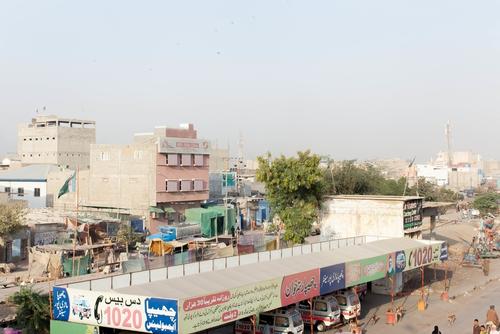
A view of MSF Machar Colony Clinic
Pakistan

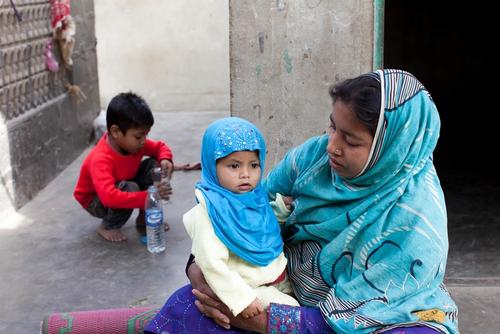
When they are diagnosed with hepatitis C, patients think they will die

By Dr Muhammad Khawar Aslam, medical doctor for Médecins Sans Frontières in Karachi Voices from the Field - 9 Mar 2016
 
New shelters in Grande Synthe
France

Cynicism beyond bounds, Grande-Synthe

The Grande-Synthe camp, in France, has the capacity to house 2,500 people. It has just opened, but is already threatened with closure. It may not meet the standards, but one thing is certain. In France, the cynicism of the State exceeds the bounds. Press Release - 9 Mar 2016
 
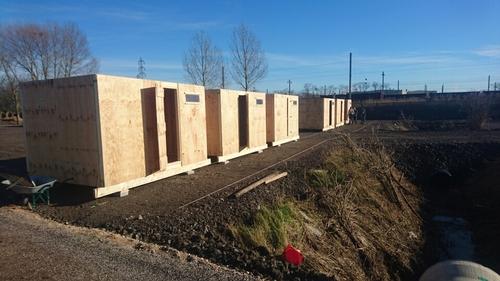
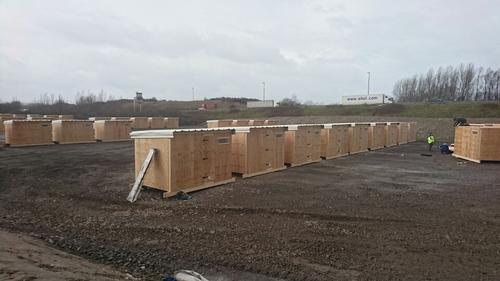
New shelters constructed by MSF in the Grande Synthe camp, before the settling of people.
France

New quarters for the Grande-Synthe camp

“We built this site to ease a crisis situation in which the government has refused to intervene,” explained André Jincq, MSF deputy program manager.


.
Project Update - 7 Mar 2016
 
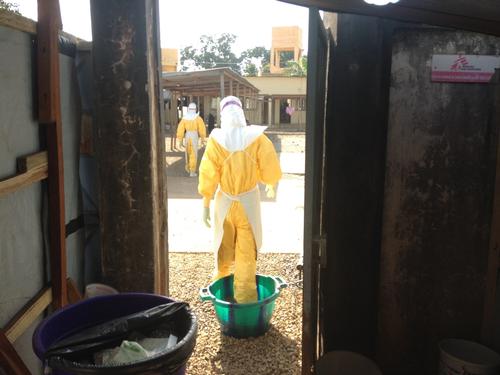
MSF staff walk into the area where there are patients who are either suspected or confirmed as having Ebola. Since late March MSF has been working in the south east of the country and in the capital, helping health authorities tackle the virus, which had not been seen in the West African country before the 2014 outbreak.
Ebola and haemorrhagic fevers

Experimental treatment with favipiravir for Ebola virus disease

This study discusses a multicenter non-randomized trial on Ebola virus disease, in which all patients would receive favipiravir along with standardized care. The objectives of the trial were to test the feasibility and acceptability of an emergency trial in the context of a large Ebola outbreak, and to collect data on the safety and effectiveness of favipiravir in reducing mortality and viral load in patients with EVD. Journal article - 7 Mar 2016
 
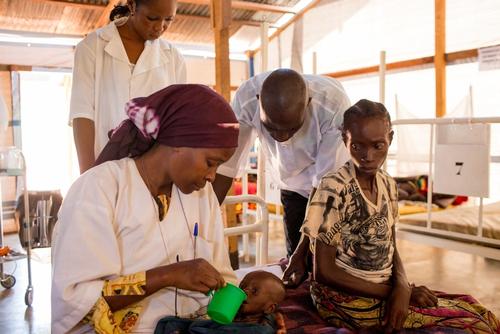
Medical staff feed a baby suffering malaria.
Central African Republic

Despite the return to calm some displaced people in Carnot have yet to return home

Despite the return to calm, the situation in Central African remains unstable and over 450,000 people are still displaced within the country. At the Catholic Church in Carnot, the displaced are gradually moving out of what has become an enclave. "Many of them are scared of going back and the violence starting up again," says Stanislas Tatale, MSF’s social and health worker in the church compound. Opinion - 7 Mar 2016
 
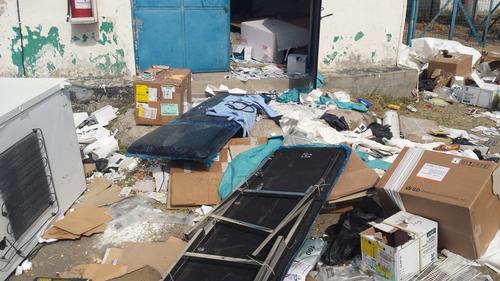
Upon return to the MSF healthcare centre in Pibor, MSF teams encountered a scene of chaos and destruction. Fans were ripped from the ceiling in the patients’ wards, electronic equipment and fuel were taken and all the therapeutic food used for treating malnourished children was stolen. Anything of value that was not bolted to the floor was carried off, even hospital beds for sick women and children. Life-saving medicines, medical equipement and essential records were strewn everywhere while cabinets and shelves were tossed and emptied in a whirlwind of theft and disrespect for medical care.
(Friday, Feb. 22, 2016)
(C) Loic Jaeger /MSF
South Sudan

Looming medical crisis in Pibor following devastating violence and looting of MSF medical compound

“This is a blatant and outrageous attack on life-saving medical care,” said Corinne Benazech, MSF head of mission in South Sudan. “Every single item of value that was not bolted to the floor was stolen, even the hospital beds for treating sick and malnourished children in the pediatric ward." Press Release - 4 Mar 2016
Four mothers posing in a corridor of the Hospital in Bili. All four of them are staying in the hospital with their child, that's suffering from a severe case of malaria. Since the beginning of the project in 2016, the pediatric ward already treated more than 4.000 cases of complicated/severe form of malaria.
Médecins Sans Frontières (MSF)

Independent medical humanitarian assistance

We provide medical assistance to people affected by conflict, epidemics, disasters, or exclusion from healthcare. Our teams are made up of tens of thousands of health professionals, logistic and administrative staff - most of them hired locally. Our actions are guided by medical ethics and the principles of independence and impartiality. We are a non-profit, self-governed, member-based organisation.

Learn more