



Ebola disease in DRC: find out how we're responding
Learn more
8000 Results
 
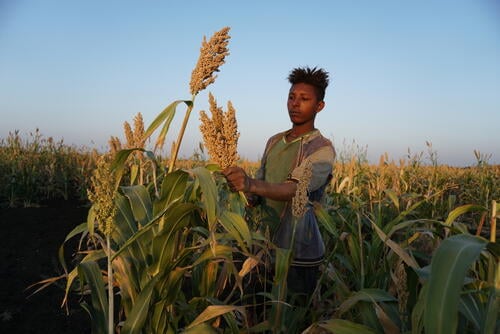
In the early morning in a sorghum field about 30-minute-drive by car from Abdurafi town. A group of migrant workers harvest sorghum. They usually come at the start of the harvest season (June) to the area to earn their living as daily worker on the big farms. Snakebites hit the poorest of the poor: in Ethiopia’s north the remote rural communities are more at risk as they live in simple mud tukuls/huts and often have no protective measures, such as bednets and beds that can protect them against snakes and kala azar. If they are bitten or fall ill with kala azar they have very limited access to health education and medical care. Patients and their families often resort to traditional medicine, or seek medical care too late, because they cannot afford to pay for treatment. Many have to travel for hours, especially migrant workers who live in the remote fields, to reach medical facilities, while timely treatment of snakebite is crucial.
The 18 years young man Getasew Dessie is from a village in South Gonder, coming to the farming region for two years. It takes him two days to reach Abdurafi. “My name is Getasew Dessie I am 18 years old, and I am from Esetia part of South Gonder. It is hard work, because it is always very hot and we live in the fields all the time, we have not free time, but work as much as we can. This is the last crop we harvest. We finish soon. I do not know if I can go home afterwards it depends on the situation. And how much money I could earn, but I would like to go home.”
Snakebite

“The first ten minutes are critical”: treating snakebite in Ethiopia

Snakebite overwhelmingly affects the rural poor, such as migrant harvest workers in northern Ethiopia. Access to treatment remains difficult, due to high prices for antivenoms, and the unavailability of effective antivenom in remote places.
Voices from the Field - 14 Feb 2019
 
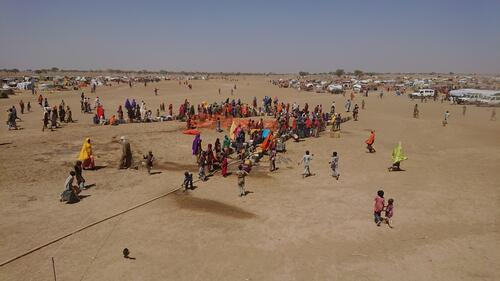
More than 35,000 Nigerians have crossed into Cameroon in recent weeks following an upsurge in violence around the northeast Nigerian town of Rann. Having arrived in the village of Goura in Cameroon’s far northwest, they are in urgent need of food, shelter and water, warns international medical organisation Médecins Sans Frontières/Doctors Without Borders (MSF), which has launched an emergency response.
Cameroon

Nothing to drink and nowhere to sleep for thousands who’ve fled Rann, Nigeria

MSF staff have treated hundreds of people with urgent needs living in a makeshift camp in far northwestern Cameroon after 35,000 fled violence in Rann, northeastern Nigeria. Press Release - 14 Feb 2019
 
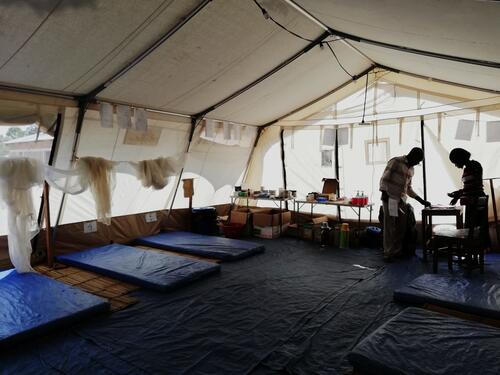
Set up of tent for admitting children to increase the capacity of Mukubu reference center.
Democratic Republic of Congo

Even during a widespread measles epidemic, we can save kids’ lives

A measles epidemic was declared in March 2018 in the former province of Katanga, southeastern Democratic Republic of Congo (DRC). Nearly 12 months on, MSF teams are still responding to the outbreak, vaccinating and treating children. Interview - 14 Feb 2019
 
Patient in Ad Dahi emergency room
Yemen

MSF opens new emergency room in Ad Dahi hospital

MSF has opened a new emergency room in Ad Dahi hospital, Hodeidah governorate, Yemen, where 100-year old Omar was recently our first patient. Project Update - 14 Feb 2019
 
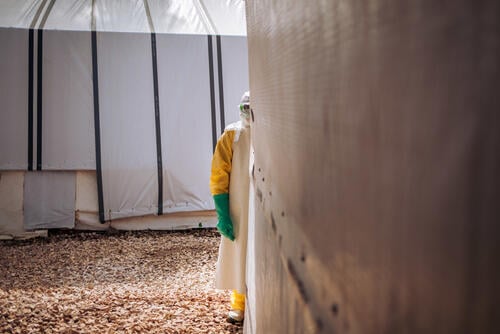
A health worker in the red zone.
DRC Ebola outbreaks

Potential new Ebola drugs being trialled in MSF treatment centres

Médecins Sans Frontières (MSF) has started enrolling patients in clinical trials of four potential new treatments for Ebola in treatment centres in Katwa and Butembo, North Kivu, Democratic Republic of Congo. Statement - 12 Feb 2019
 
Personnel of the Ministry of Health (Minsal) was able, thanks to the presence of Doctors Without Borders (MSF), to cross the invisible borders imposed by the situation of violence that hinders access to health in some neighborhoods in the capital.
El Salvador

Breaking the invisible barriers that divide neighbourhoods controlled by gangs

Staff from the El Salvador Ministry of Health were able, thanks to MSF's presence, to cross the invisible borders imposed by violence that hinders access to health in some neighborhoods in the capital. Project Update - 11 Feb 2019
 
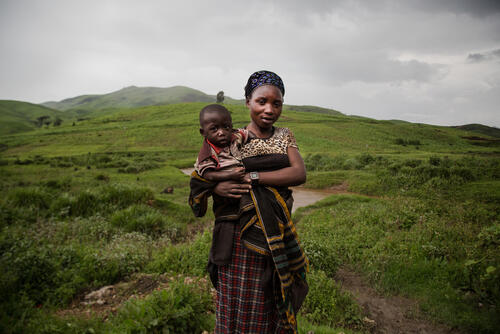
Asefili. She arrived to Numbi 5 months ago to look for work. She is now working in the artisanal mines. When she is working she has to leave her children with the neighbours.
Photo story

South Kivu: Marathon journeys to access basic medical care

In the provinces of North Kivu and South Kivu, Democratic Republic of Congo (DRC), people - particularly pregnant women - face challenges in accessing health care; insecurity and conflict in the region, long distances between villages and health centres, roads that become muddy rivers in the rainy season. Photo Story - 8 Feb 2019
 
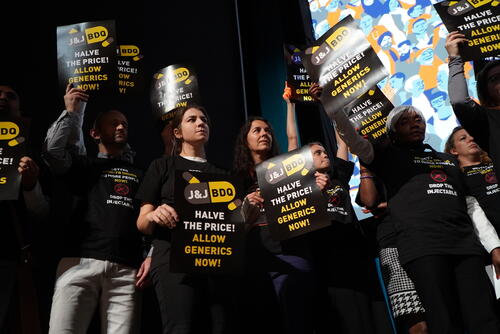
MSF, alongside other civil society organisations, protested against J&J during the Union Conference on Wednesday, the 24th.
Access to medicines

TB activists challenge patent in India, in bid to prevent J&J from extending monopoly

MSF is supporting two survivors of drug-resistant tuberculosis challenging a patent on bedaquiline. If they are successful, generic versions of the drug could be available four years earlier, saving thousands of lives. Press Release - 8 Feb 2019
Four mothers posing in a corridor of the Hospital in Bili. All four of them are staying in the hospital with their child, that's suffering from a severe case of malaria. Since the beginning of the project in 2016, the pediatric ward already treated more than 4.000 cases of complicated/severe form of malaria.
Médecins Sans Frontières (MSF)

Independent medical humanitarian assistance

We provide medical assistance to people affected by conflict, epidemics, disasters, or exclusion from healthcare. Our teams are made up of tens of thousands of health professionals, logistic and administrative staff - most of them hired locally. Our actions are guided by medical ethics and the principles of independence and impartiality. We are a non-profit, self-governed, member-based organisation.

Learn more