



8076 Results
 
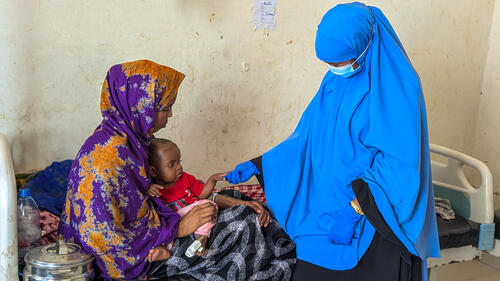
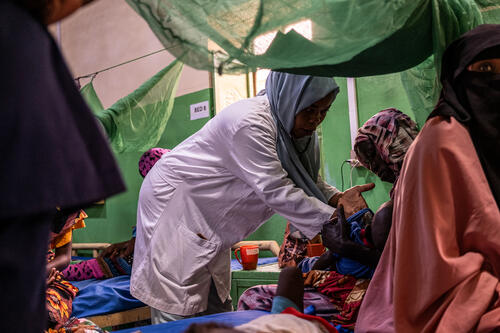
MSF team providing medical consultations at the mobile clinic in West Wollega, Oromia Region, Ethiopia. July 2026.
Ethiopia

Ethiopia: MSF launches new healthcare programme in Oromia region

MSF has begun a new general and specialist healthcare project for hard-to-reach communities in East Wollega and West Wollega zones in Ethiopia. Project Update - 20 Aug 2026
 
A 25 year old lady sets fire outside her tent in a refugee camp on the outskirts of Sittwe, February 2, 2013. photo by Kaung Htet
MSF Speaking Out

Speaking Out Podcasts

The MSF "Speaking Out" podcasts are adapted from the original Médecins Sans Frontières (MSF) Speaking Out Case Studies (SOCS). Like the case studies, the podcast examines the challenges and dilemmas surrounding speaking out. Each series offers an in-depth look into humanitarian dilemmas in a specific crisis through the narration of extracts from MSF documents and press archives to help establish the facts. Interviews with the main MSF protagonists at the time of the events also provide insight into, and personal analysis of, the positions adopted. - 19 Aug 2026
 
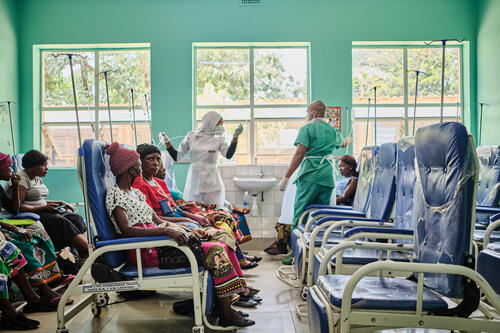
19 DECEMBER 2025 / PORT-AU-PRINCE, HAITI: In Bel Air, a neighborhood of Port-au-Prince controlled by armed groups and marked by frequent gunfights, women seeking maternal and other healthcare wait at a mobile clinic in an abandoned school operated by Médecins Sans Frontières. The clinic opens just for a few hours when the security situation allows for it. Access to the community is negotiated with the armed groups controlling the area.
Haiti

Women risk their lives to reach sexual and reproductive healthcare in Port-au-Prince

Ongoing violence is restricting people's access to sexual and reproductive healthcare in Port-au-Prince, Haiti. Project Update - 19 Aug 2026
 
One of the MSF-supported water chlorination sites near the Ruzizi River in South Kivu province, DRC. These supply points are disinfected to provide safe drinking water and prevent cholera transmission.
Democratic Republic of Congo

Other health emergencies must not be neglected in eastern DRC

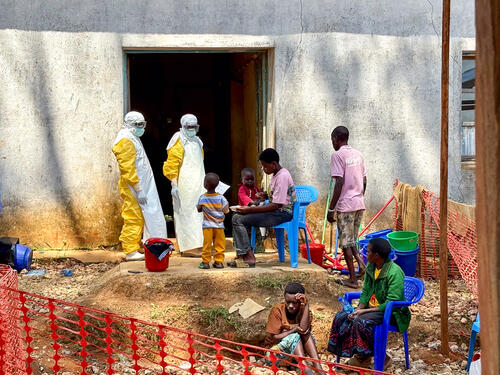
While the response to Ebola disease continues in Democratic Republic Congo, other health emergencies such as cholera, measles, malaria, and violence linked to ongoing conflict, must not be neglected. Project Update - 14 Aug 2026
 
An MSF water truck provides a critical source of clean drinking water. Despite producing around 500,000 litres daily, it is enough for only 80,000 people to receive the bare minimum.
Gaza-Israel war

Israel puts thousands at risk by blocking crucial supplies for healthcare in Gaza

Israel are putting thousands of people at risk in Gaza, Palestine, by blocking crucial supplies for healthcare and hygiene, including engine oil and spare parts. Press Release - 12 Aug 2026
 
A 25 year old lady sets fire outside her tent in a refugee camp on the outskirts of Sittwe, February 2, 2013. photo by Kaung Htet
MSF Speaking Out

Podcast: MSF and the Rohingya 1992-2014

This podcast is adapted from the MSF Speaking Out Case Study “MSF and the Rohingya 1992–2014”.
It brings to light two decades of MSF advocacy activities as part of its humanitarian assistance to the Rohingya people in Bangladesh and Myanmar.
It examines the challenges that MSF teams in the field and headquarters encountered when deciding whether and how MSF could publicly speak out about the plight of the Rohingya facing persecutions and violence in Myanmar and Bangladesh. During the 1992-2014 period, MSF worked mostly through diplomatic channels “behind closed doors” to advocate about the Rohingya’s plight with foreign diplomats and United Nations agencies. This “silent advocacy” was challenged within MSF by those who felt that the lack of public speaking out meant MSF was abandoning a persecuted population. They considered that maintaining an operational presence without speaking out publicly was not an ethically justifiable option for an independent and impartial humanitarian organisation like MSF.
Over 7 episodes, the podcast explores the challenges, dilemmas and internal disagreements underlying MSF’s humanitarian response to assist the Rohingya under the Myanmar authoritarian regime.
- 11 Aug 2026
 
Children admitted for severe acute malnutrition receive inpatient care in the inpatient therapeutic feeding centre (ITFC) at MSF-supported Bay Regional Hospital, Baidoa, Southwest State, Somalia.
Somalia

Survey of displaced families in Baidoa finds every second child malnourished

A recent MSF survey finds shocking levels of malnutrition among children in displacement sites in Baidoa, Somalia. Press Release - 11 Aug 2026
 
Shali,Russian tank, next to the market.
After the reelection of Kadyrov, for people inside the Chechen republic aswell as in neighboring Ingushetia the situation has not improved, Kadyrov is seen as a Russian marionet who betrayed the Chechens, his army is rudeless and has no interest in protecting the population.
 In ingushetia the refugees from Chechnya are forced out of their tents,just before winter fall's, back into Chechnya where they claim to have the situation under control.
Living conditions in and around Chechnya are inhuman after almost a decade of war and destruction.
 People inside Chechnya are terrorized as well by the Russian occupation as the Kadirov army in a daily and structural way and the disappearance and execution of people are more rules than exception.
 The Chechen fighters are divided and not able to finance the war, if they have the money they buy their weapons from the Russian enemy who are underpaid for their services.
 
 For the Chechens who fled their country during the war the situation is almost as bad, mostly ending up in neighboring Ingushetia, living in camps with little or no facilities in tents who fall apart after the strong winters and even in stables normally used for animals.
 Since also drug smugglers and criminals fled Chechnya, an increasing number of the refugees become drug addicted.
 
 Most  NGO's working in Ingushetia can not enter Chechnya to do their important work as the risk of being kidnapped is too high and Russian government is not supporting in any way.
MSF Speaking Out

Podcast: War Crimes and Politics of Terror in Chechnya 1994–2004

This podcast is adapted from the case study “War Crimes and Politics of Terror in Chechnya, 1994-2004”. Over 9 episodes, it explores the challenges and dilemmas MSF faced during the two wars in Chechnya between 1994 and 2004. These wars raised many questions for MSF on when and how the organisation should speak out publicly about the war crimes its staff witness and the chilling effects of the politics of terror on the Chechen people.
Through MSF press releases, internal reports, speeches, and news articles of the time as well as eyewitness testimonies from MSF staff, this podcast series examines the challenges MSF faced when access to those in need was repeatedly blocked by the Russian authorities, forcing international staff to operate and train Caucasus teams at a distance. Later on, when staff members were kidnapped, MSF was confronted with a new dilemma - whether to raise a voice or lay low until their colleagues were released?
- 11 Aug 2026
 
Refugies Rwandais a Tingi Tingi. A partir du mois de septembre 1996, un mouvement rebelle, soutenu par le Rwanda et l’Ouganda, emerge dans le Kivu, region frontaliere de ces deux pays. En octobre et novembre 1996, les troupes rebelles attaquent les camps de refugies rwandais et burundais situes le long de la frontiere du Zaire, provoquant le retour d’une partie d’entre eux vers le Rwanda (entre 400 et 500.000 refugies) et le Burundi (environ 60.000 refugies). Les refugies rwandais, encadres et otages des ex-FAR et interhamwes comme dans les les camps sur la frontiere, sont disperses, pourchasses, perdus dans la foret zairoise. Debut decembre 1996, su l’axe routier Kisangani-Bukavu, un groupe  de 80.000 refugies se regroupe sur le site de Tingi-Tingi, un autre groupe de 20 a 25.000 est localise a Amissi. MSF intervient sur le camp de Tingi Tingi en mettant en place les structures medicales permettant de prendre en charge les pathologies les plus graves (malaria, diarrhee, malnutrition): hopital, centre d’isolement, CNT e CNS, approvisionnement en eau.
MSF Speaking Out

Podcast: The Hunting and Killing of Rwandan Refugees in Zaire-Congo 1996-1997

This podcast is adapted from the case study “The Hunting and Killing of Rwandan Refugees in Zaire-Congo 1996-1997". In 8 episodes, it investigates MSF's experience in the aftermath of the 1994 Rwandan Tutsi genocide, and in particular, with the impact on local populations and refugees living in the Democratic Republic of Congo (formerly Zaire).
The series expresses on the constraints, questions, and dilemmas faced by MSF teams attempting to bring relief to Rwandan refugees and local populations.
- 11 Aug 2026
 
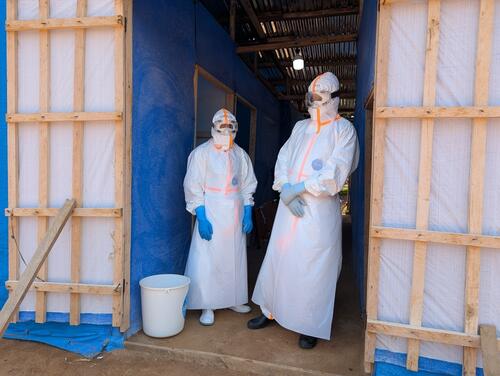
Vue aérienne du centre de traitement Ebola Elykia, à Bunia, dans la province de l'Ituri, en RDC

Aerial view of the Elykia Ebola treatment centre in Bunia, in Ituri Province, DRC
DRC Ebola outbreaks

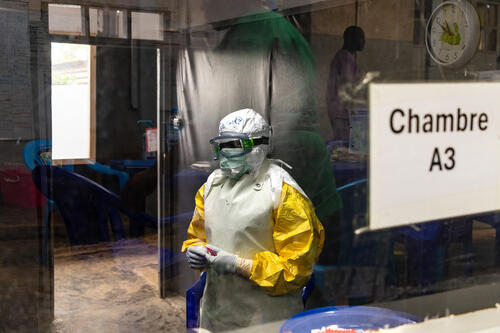
Three questions about the new clinical trial for the Ebola disease outbreak in DRC

Dr Kasita, a physician caring for Ebola patients in Democratic Republic of Congo, answers questions about the new clinical trial for the Ebola disease outbreak caused by the Bundibugyo virus. Interview - 11 Aug 2026
Four mothers posing in a corridor of the Hospital in Bili. All four of them are staying in the hospital with their child, that's suffering from a severe case of malaria. Since the beginning of the project in 2016, the pediatric ward already treated more than 4.000 cases of complicated/severe form of malaria.
Médecins Sans Frontières (MSF)

Independent medical humanitarian assistance

We provide medical assistance to people affected by conflict, epidemics, disasters, or exclusion from healthcare. Our teams are made up of tens of thousands of health professionals, logistic and administrative staff - most of them hired locally. Our actions are guided by medical ethics and the principles of independence and impartiality. We are a non-profit, self-governed, member-based organisation.

Learn more