



Ebola disease in DRC: find out how we're responding
Learn more
8000 Results
 
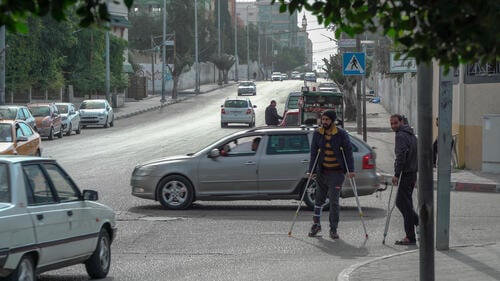
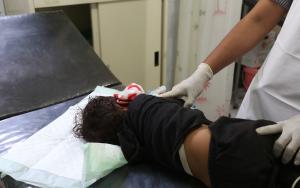
Our teams work with other health providers in Gaza to treat thousands of people shot by the Israeli army during protests at the fence that separates Israel from the blockaded enclave.

The injuries are complex and severe, with half resulting in open fractures. They require long periods of care and different types of treatment, to get better.

The Ministry of Health provides emergency care in their hospitals before patients come to MSF’s clinics and hospitals.

Today, however, there is still insufficient capacity to do reconstructive surgery and treat the infections, with hundreds of patients in need.
Palestine

March of Return protestors abandoned after year of suffering

A year after the start of the series of March of Return protests in which Israeli forces shot at people in Gaza, resulting in horrific injuries, the needs to provide injured people with care mount as the local healthcare system is unable to cope. Project Update - 28 Mar 2019
 
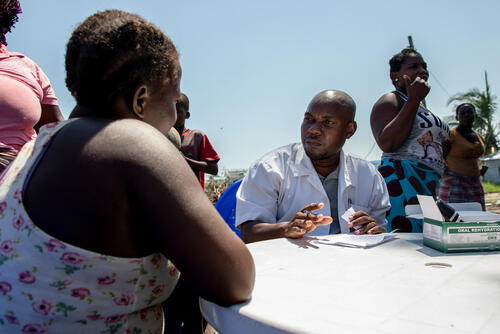
Raul Castro, doctor, does consultations in the slum of Praia Nova in Punta Gea with the mobile clinic of MSF.
 

MSF is running mobile clinics to areas of Beira hard hit by Cyclone Idai. During these clinics our staff provide care for patients suffering for infected cuts and small wounds, respiratory tract infections, skin conditions as well as diarrhea. Importantly, they also go door to door looking for cases of diarrhea that may need treatment at the local health centres. Diarrhea can be easily treated with oral or IV rehydration as well as antibiotics. During the mobile clinic, if the team finds a patient in need of in patient care they are transferred to the health centre or hospital by MSF.
Cyclone Idai & Southern Africa flooding

Mozambique declares cholera cases in Beira in wake of Cyclone Idai

Two weeks after Cyclone Idai hit Beira in central Mozambique, leaving fresh water supplies and infrastructure damaged, the government in Mozambique has reported the first cases of cholera in the city. Project Update - 28 Mar 2019
 
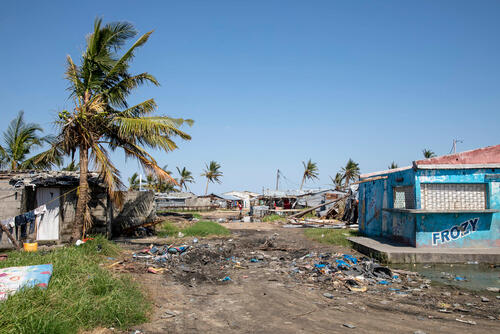
View of the slum of Praia Nova in Punta Gea after Cyclone Idai hits the city of Beira, Mozambique.
 

MSF is running mobile clinics to areas of Beira hard hit by Cyclone Idai. During these clinics our staff provide care for patients suffering for infected cuts and small wounds, respiratory tract infections, skin conditions as well as diarrhea. Importantly, they also go door to door looking for cases of diarrhea that may need treatment at the local health centres. Diarrhea can be easily treated with oral or IV rehydration as well as antibiotics. During the mobile clinic, if the team finds a patient in need of in patient care they are transferred to the health centre or hospital by MSF.
Cyclone Idai & Southern Africa flooding

Mozambique flooding and response: both enormous in scale

MSF has massively scaled up the response in Beira, Mozambique, after Cyclone Idai and flooding struck the city on 14 March. Project Update - 27 Mar 2019
 
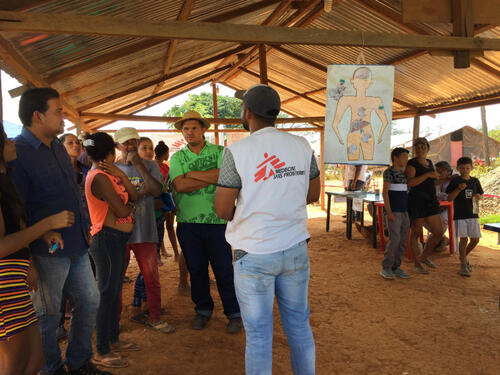
In February 2019, MSF conducted a large bed net distribution campaign in Sifontes municipality, a mining area in Bolivar Sate. The distribution is crucial to allow people in this mining area to protect themselves from mosquitoes and therefore malaria. 

An MSF health promoter explains to people from the community how malaria affects the functioning of different body organs and addresses some misconceptions about the disease.
Venezuela

MSF’s work across Venezuela

MSF is working across four projects in Venezuela. MSF Operations Coordinator Kristel Eerdekens describes the activities we're carrying out through the country. Interview - 27 Mar 2019
 
A mother holding her child in MSF supported cholera treatment center in Al-Sadaqa hospital.  The child had cholera and was suffering from acute watery diarrhea.
Yemen

MSF treats exponential increase in cholera cases since start of 2019

Since the start of 2019, MSF staff in Yemen have recorded and treated exponential increase in cholera cases across 4 governorates in Yemen over the last three months. Press Release - 27 Mar 2019
 
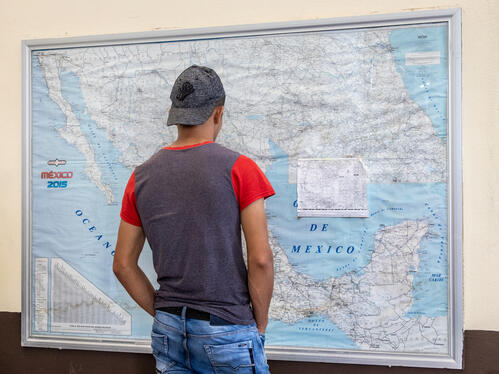
MSF teams work in the Casa Migrante Guadalupe shelter, in Reynosa, Tamaulipas, offering primary health care, mental health and social work services to migrants, refugees and to people who have been recently deported from the USA.
Central American migration

People fleeing put at risk through dangerous government migration policies

MSF's Samuel Almeida describes the impact that dangerous and immoral government migration policies - particularly those of the US - have on people fleeing violence in Central America. Voices from the Field - 26 Mar 2019
 
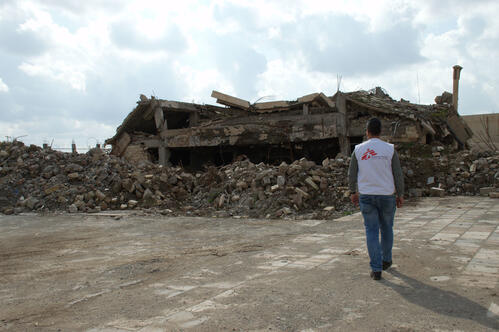
A collapsed building close to Hawija General Hospital, Kirkuk Governorate.
Iraq

The aftermath of the conflict in Hawija: “My only hope is to get back to normal”

With people returning to Hawija, northern Iraq, after years of conflict, MSF is filling the gaps in the local healthcare system, providing treatment including for chronic and non-communicable diseases. Project Update - 26 Mar 2019
 
Intense fighting in Taiz Houban
Yemen

People unable to access lifesaving care amid heavy fighting in Taiz city

Three MSF-supported facilities have received 49 war wounded and 2 dead, while the total number of people in need of assistance is unknown after four days of intense fighting in the Yemeni city of Taiz. Statement - 24 Mar 2019
 
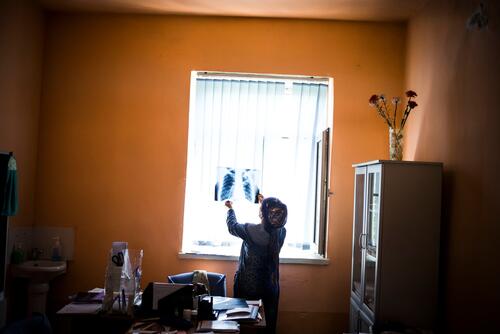
A doctor checks a patient x-ray in her office at one of Kara-Suu's TB Cabinets. Kara-Suu region.
Tuberculosis

Video innovation helps TB patients comply with their treatment

An innovative approach using video link-up allows MSF doctors and nurses, and tuberculosis patients confidently navigate the often difficult treatment - without patients having to daily leave home. Voices from the Field - 22 Mar 2019
 
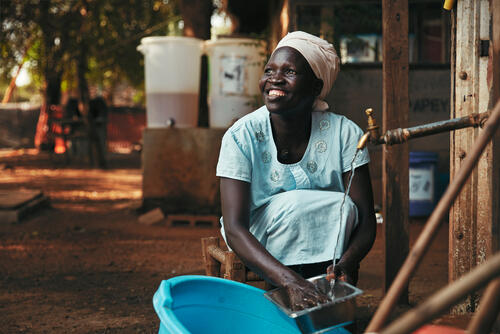
Teresa is one fo the cooks within the staff compound in Doro, an exceptional cook she is able to make the most amazing traditional dishes from the very basic ingredients available. Teresa was very sadly in mourning as her husband had recently passed away, we were under strict instructions from an elder that we could not ask her to smile, but if she smiled on her own it was OK.
Water and sanitation

Water: source of health and dignity

Two billion people regularly drink dirty water, potentially contracting waterborne diseases. Collecting water mostly falls to women, often making them vulnerable. MSF’s watsan teams play a key role in responding to crises.

Photo Story - 21 Mar 2019
Four mothers posing in a corridor of the Hospital in Bili. All four of them are staying in the hospital with their child, that's suffering from a severe case of malaria. Since the beginning of the project in 2016, the pediatric ward already treated more than 4.000 cases of complicated/severe form of malaria.
Médecins Sans Frontières (MSF)

Independent medical humanitarian assistance

We provide medical assistance to people affected by conflict, epidemics, disasters, or exclusion from healthcare. Our teams are made up of tens of thousands of health professionals, logistic and administrative staff - most of them hired locally. Our actions are guided by medical ethics and the principles of independence and impartiality. We are a non-profit, self-governed, member-based organisation.

Learn more