


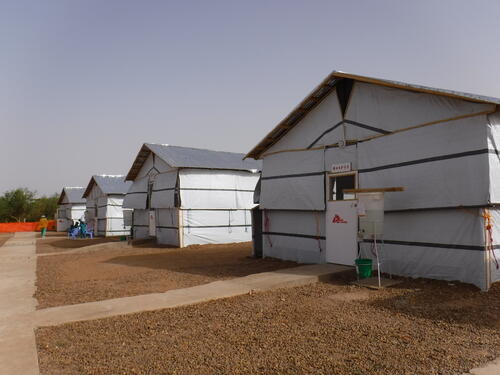

Ebola disease in DRC: find out how we're responding
Learn more
8000 Results
 
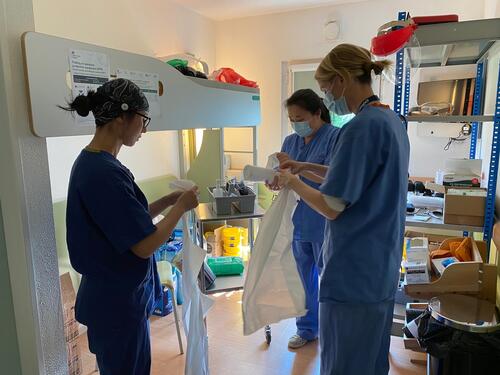
In April, 11 MSF staff joined the University College London Hospital (UCLH) Find and Treat team in establishing the UK’s only Covid care facility for people experiencing homelessness.

The project provided rapid testing, accommodation for self-isolation and medical care for members of the London homeless community with suspected or confirmed COVID-19.  

MSF brought expertise on outbreak and emergency response, helping the facility to be opened rapidly and safely with nursing and logistical support.

At the time of opening, people with suspected or confirmed COVID-19 had already been identified in several homeless hotels across London and were transferred to the facility for care.

As surveillance in the hotels, other accommodation, and in hospitals continued, people experiencing homelessness with symptoms of COVID-19 were identified and transferred to the Covid Care Centre for testing, isolation, and nursing support. 

As patient numbers in the Covid Care Centre began to decrease, MSF nurses joined UCLH’s Find & Treat teams on their screening programmes.  Initially, this was to screen for COVID-19 in homeless accommodation across London, as well as joining the street teams who engage with those still rough sleeping.

The screening aimed to identify patients and detect any clusters of cases that may be occurring in this vulnerable population. To date, over 1,300 people experiencing homelessness have been tested for COVID-19 through this approach.

In late May, as the number of positive COVID-19 cases reduced, the Find & Treat teams evolved their screenings to include blood-borne viruses including HIV, hepatitis C, as well as syphilis. These are diseases that people experiencing homelessness are at risk of.

With large numbers of this vulnerable community staying in hotels, it was an opportunity for medical teams to try and engage them within the health system.  

MSF staff joined the Find & Treat teams to undertake this screening, with 600 people being fully screened over a two-week period. It is hoped that these screenings will help health services better engage with homeless populations in the longer term. 


Following this screening period, MSF has now concluded its involvement with the project and members of our nursing team have joined the UCLH team for the coming weeks as the project winds down due to consistently low numbers – in line with the decrease in cases we are seeing across the UK.

This project represented the first time since MSF was founded in 1971 that we were providing medical assistance in the UK.

We intended this to be a short-term project in the UK and now the NHS has more capacity to cope, it is the right time to withdraw our staffing support and continue to focus our work in regions of the world most affected by medical and humanitarian crises.

We remain ready to rapidly increase our support again should the situation deteriorate in the future and we identify critical gaps in the UK response to COVID-19.
United Kingdom

MSF support to London COVID-19 care centre ends

msf.org.uk - 11 Jun 2020
 
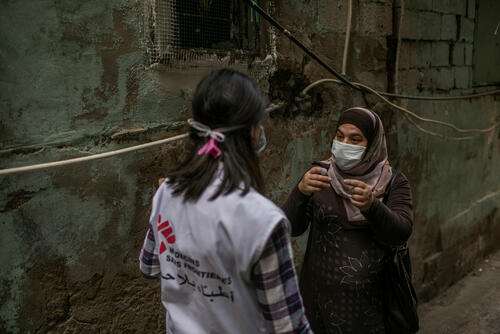
Dayana Tabbarah, MSF health promoter, is talking to an elderly woman in the streets of Burj al-Barajneh camp, Beirut. Dayana has been working with MSF for the past six years. “Talking to people in the streets and listening to their medical concerns has changed since the beginning of the COVID-19 pandemic. Now, we must maintain a social distance of two meters to follow the protection measures”, she says. “In the past years, we have built up a good and strong relation with the camp’s residents, so we are able to work, support and help Burj al-Barajneh´s community”. Dayana visits the houses of residents who had agreed to participate in the shielding approach recently put in place by MSF in the camp, as part of its COVID-19 response.

المرشدة الصحية مع منظّمة أطباء بلا حدود دايانا طبارة تتحدّث إلى امرأة مسنة في شوارع مخيم برج البراجنة في بيروت. تعمل دايانا مع أطباء بلا حدود منذ ستّ سنوات؛ وتقول، "لقد تغيّرت طريقة الحديث مع الناس في الشوارع والاستماع إلى مشاكلهم الطبية منذ انتشار جائحة كوفيد-19. يتعيّن علينا اليوم تنفيذ التباعد الاجتماعي المتمثل في الحفاظ على مسافة مترَين بيننا بغية اتباع إجراءات الحماية". وتُردف قائلةً، "في السنوات الماضية، بنينا علاقة جيدة وقوية مع سكان المخيم، ولذلك نحن قادرون على العمل مع مجتمع برج البراجنة ودعمه ومساعدته".
تزور ديانا بانتظام منازل المرضى الذين وافقوا على المشاركة في برنامج الحماية الوقائية الذي وضعته منظّمة أطباء بلا حدود مؤخراً في المخيم كجزء من استجابتها لمرض كوفيد-19.
Coronavirus COVID-19 pandemic

“COVID-19 has brought suffering to people everywhere, but its impact is not shared equally”

MSF International President Dr Christos Christou tells the United Nations Economic and Social Council that countries must address the inequality and exclusion seen in healthcare. Speech - 10 Jun 2020
 
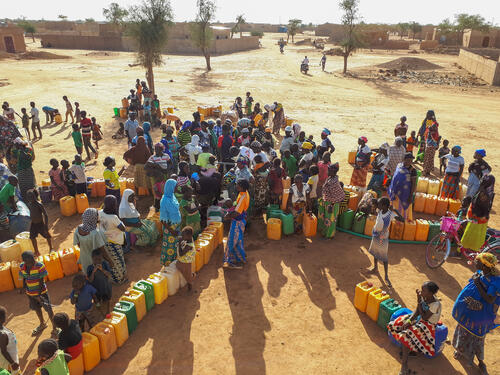
Water distribution in Djibo. The site was not yet installed but as the populations needed water urgently, MSF teams made the distribution from the truck.

International Financial Report 2019

Annual Report - 10 Jun 2020
 
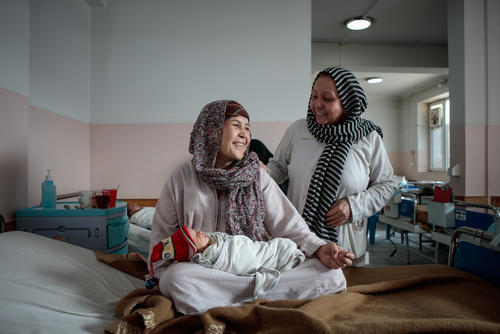
Zakia (32 years old), and her twins, Qassim and Abbas 
 
Zakia has just given birth to twins, Abbas and Qasim, born 20 minutes apart. Abbas, who came first, is also the smallest; he was hypoglycemic at birth and was placed in the incubator for a few hours.
 
Before her twins, Zakia, 32, had four other children: she is no longer a novice when it comes to newborns, but this time there are two of them. Her mother, Sakina, came to help her for a few days. When I ask her how many times she is a grandmother, Sakina needs to count... 18 times already. And not all her children are married yet. 
 
Zakia's first child was born at home, the next two in the hospital. For her fourth, finding a taxi to take her to the hospital took too long, she was already in labor and Zakia had to give birth at home. She is lucky, all her deliveries were the same: quick and easy. For her twins, once she arrived at the door of the maternity ward, she went straight to the delivery room.  
 
Six children, all boys. Zakia would have liked to have a girl, she hoped that this pregnancy would bring her one. Her mother would also have wanted her to have a daughter, to help her with her daily chores. Raising girls is more difficult according to both women: they have more to learn from the prospect of being married. More rules to follow too, more responsibilities. In Afghanistan, even though both parents are educating, mothers are more involved. 
 
Zakia and her family come from Ghazni. Ten years ago, they preferred to leave their region because they were afraid that the Taliban would recruit their husbands, both of whom have no permanent jobs. When the family arrived in Kabul, like many Hazara families arriving from the provinces, they lived in Dasht-e Barchi. A few years ago, the neighbourhood was accessible and very cheap. They had their own house for 2000 Afghanis per month (25 euros). Two years ago, their landlord wanted to take over the house and they moved here, to Karte Sakhi. They pay 2500 afghanis (30 euros) in rent but are three families sharing the house. Each family has its own room.
Afghanistan

“As midwives in Afghanistan, we are the silent leaders of our country.”

Nearly a month after the attack on MSF's maternity wing at Dasht-e-Barchi hospital in Kabul, which killed 15 mothers and an MSF midwife, MSF midwife supervisor Zahra Koochizad describes why midwives are so critical in Afghanistan. Voices from the Field - 10 Jun 2020
 
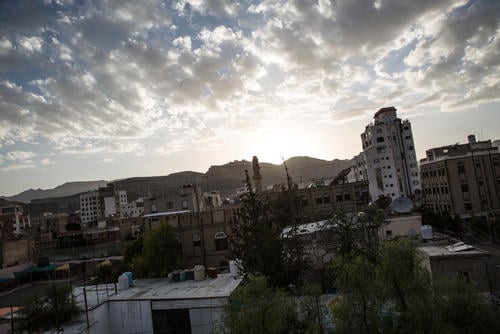
Yemen, gouvernorat de Sanaa, mars 2018. Vue du toit du bureau de MSF à Sanaa.

Sanaa governorate in Yémen, March 2018. View from MSF office rooftop in Sanaa.
Coronavirus COVID-19 pandemic

“COVID-19 has made the health system's collapse complete” in Yemen

MSF is treating patients severely ill with coronavirus at our COVID-19 centre in Sana’a, Yemen, where the 15-bed ICU has been mostly full for the past four weeks. People are dying of the new coronavirus at a high rate as our teams try to save lives.

Project Update - 10 Jun 2020
 
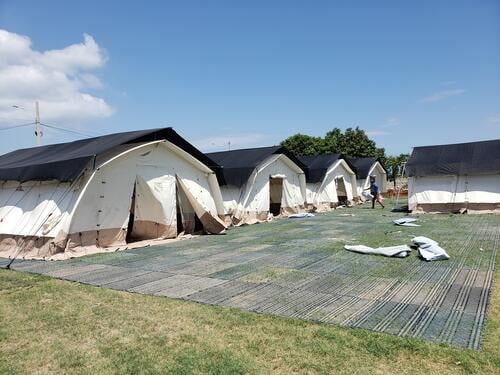
Médecins Sans Frontières (MSF) has opened a COVID-19 treatment center in Drouillard, Cité Soleil, with a capacity of 20 beds. MSF will treat patients tested positive for COVID-19 who need hospitalization or oxygen, and have been referred by the Ministry of Public Health and Population. Patients will then spend 14 days recovering in these tents, on the hospital grounds.
Coronavirus COVID-19 pandemic

COVID-19 cases in Haiti spike dramatically as MSF opens treatment centre

In response to the growing spread of COVID-19 in Haiti, MSF opened the Drouillard treatment centre in Port-au-Prince, to care for people with severe cases of the coronavirus.  Project Update - 5 Jun 2020
 
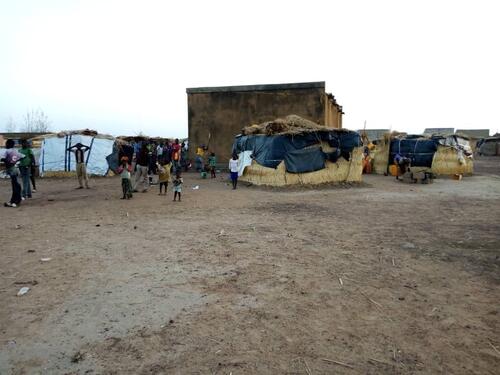
Displaced families live in makeshift shelters in Fada, Eastern Burkina Faso.
Burkina Faso

Out of sight, people suffer from rise in violence in eastern Burkina Faso

Abdallah Hussein, MSF's head of mission in Burkina Faso, describes how a surge in violence, and the threat of COVID-19 has impacted people's lives in the country's east. Op-Ed - 5 Jun 2020
 
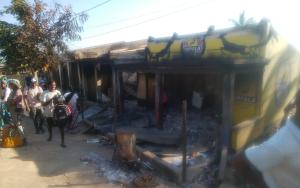
Burnt out building in Macomia Mozambique
Mozambique

Thousands displaced, healthcare jeopardised, as violence surges in Cabo Delgado

Violence has erupted again in northeastern Mozambique's Cabo Delgado province, forcing people to hide in the bush and jeopardising access to healthcare. Press Release - 5 Jun 2020
 
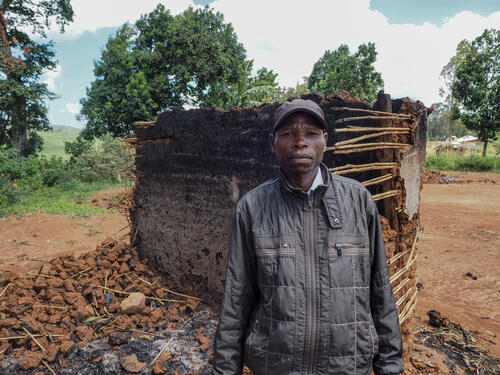
Ndjilo Laki Emmanuel is a community leader of Wada. The MSF healthcare centre of Wadda was completely looted on May 2nd. In the same attack 227 houses of the villages were completely burned.
The village is abandoned now as everybody fled.
“They attacked us in broad day light. We run away in the bush with our families. Then they attacked again a week later. Since then we sleep in the bush, with no food, no shelter and exposed to all nature’s hazards. We can’t go back. Our homes where burned down leaving only ashes behind.” Emmanuel says.
Democratic Republic of Congo

Nearly 200,000 people forced from homes as violence surges in northeast DRC

A surge in violence has forced 200,000 people to flee their homes in the last two months in Ituri province, northeastern Democratic Republic of Congo. MSF teams are urging other organisations to provide assistance to displaced people. Press Release - 4 Jun 2020
 
The MSF treatment centre for COVID-19 patients at the Amirou Boubacar Diallo National Hospital in Niamey, Niger, has 50 beds, with the potential to accommodate up to 100 beds in case of a peak in patient numbers. The semi-permanent structure is completely autonomous to treat patients and limit the risk of transmission to the neighbouring hospital. The centre has superior infection control conditions and is divided into five main buildings. One of these receives suspected cases with complications, while the other four are for confirmed cases requiring hospitalisation.
Coronavirus COVID-19 pandemic

Facing multiple challenges in responding to COVID-19 in Niger

MSF teams are supporting health authorities in Niger to manage the COVID-19 pandemic, in a context where insecurity is rife and persistent rumours and misinformation add to the complexity of the response. Project Update - 3 Jun 2020
Four mothers posing in a corridor of the Hospital in Bili. All four of them are staying in the hospital with their child, that's suffering from a severe case of malaria. Since the beginning of the project in 2016, the pediatric ward already treated more than 4.000 cases of complicated/severe form of malaria.
Médecins Sans Frontières (MSF)

Independent medical humanitarian assistance

We provide medical assistance to people affected by conflict, epidemics, disasters, or exclusion from healthcare. Our teams are made up of tens of thousands of health professionals, logistic and administrative staff - most of them hired locally. Our actions are guided by medical ethics and the principles of independence and impartiality. We are a non-profit, self-governed, member-based organisation.

Learn more