


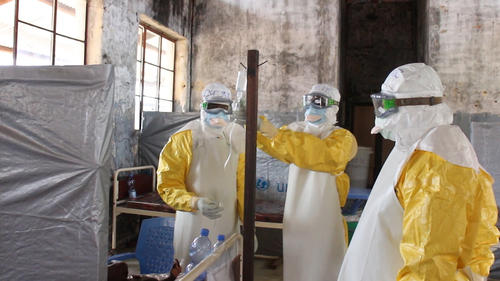
Ebola disease in DRC: find out how we're responding
Learn more
7996 Results
 
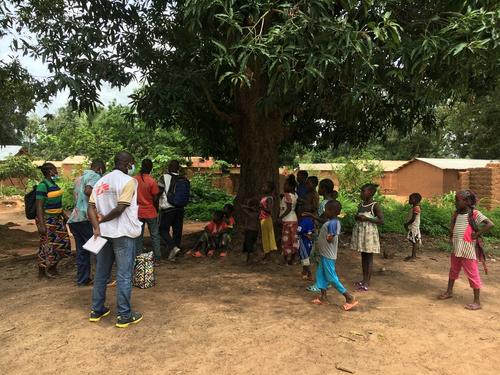
MSF staff organise a COVID-19 health information session in Aydarken
Kyrgyzstan

In remote Kyrgyzstan, COVID-19 puts a strain on the health system

MSF teams in Kyrgyzstan are bracing for further cases of COVID-19, especially in remote areas of the country, where resources and staff were already stretched. Project Update - 22 Jul 2020
 
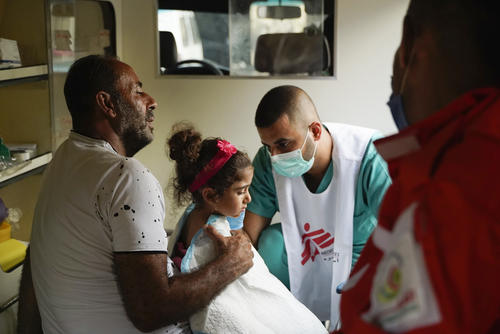
A medic waits for patients in a dedicated space set-up to identify potential COVID-19 symptomatic patients, to place them in observation if needed and call an ambulance for them to be tested, at a hospital supported by MSF in Northwest Syria.
Syria

COVID-19 provokes fears over further health system decline in northwestern Syria

With the first people diagnosed with the new coronavirus in northwestern Syria in early July, MSF is concerned over the impact the COVID-19 pandemic will have on the already-depleted healthcare system in the region. Project Update - 21 Jul 2020
 
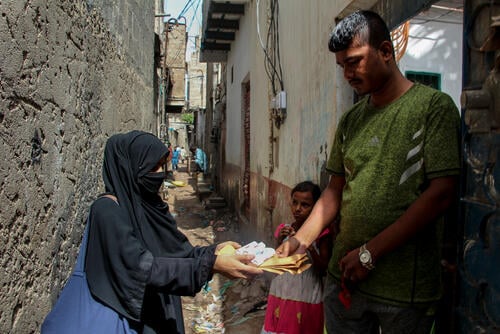
Union council communications support officer Abdul Hameed Baloch is with two community health care workers who are distributing facemasks and soaps in Machar Colony, Karachi. MSF is distributing 218,000 facemasks and 75,000 soaps in the community to provide people with tools to help prevent the spread of COVID-19.
Pakistan

Distributing masks and soap to help protect against COVID-19 in Karachi

MSF teams, working with the local ministry of health, are handing out hundreds of thousands of masks and soap to residents of Karachi's Machar Colony, in Pakistan, in a bid to prevent the spread of COVID-19. Project Update - 20 Jul 2020
 
COVID-19 response in Marawi
Philippines

Displaced communities in Marawi living with COVID-19 and ongoing uncertainty

Around 120,000 people in Marawi, in the south of the Philippines, are still displaced following a siege by IS-related groups in 2017. The community lockdown in the Philippines caused by COVID-19 has complicated lives further. Project Update - 17 Jul 2020
 
A mobile team from MSF is giving a briefing to the staff of the retirement home "Résidence Christalain", in Jette, Brussels.
Belgium

Left behind in the time of COVID-19

Médecins Sans Frontières' experiences from intervention in care homes in Belgium during the coronavirus COVID-19 pandemic. Report - 17 Jul 2020
 
The road is cut in half by a shallows which is completely impassable when it rains. The drop in water level has allowed the displaced to cross with the kits they received.
Burkina Faso

Displaced in Burkina Faso face extra challenges amid increasing violence and rain

Nearly one million people are displaced in Burkina Faso, a result of increasing levels of violence. With the onset of the rainy season, the displaced are even more vulnerable to diseases. Project Update - 16 Jul 2020
 
Yasin is a 9-year-old boy from Afghanistan, who visits the MSF pediatric clinic once a week with his father Mohtar, to consult with a child psychologist.
He suffers from nightmares and is constantly afraid that something bad will happen to him in Moria. When he grows up, he wants “to help children like his psychologist” in the MSF pediatric clinic that is located right across from Moria. Yasin lives in a makeshift shelter in the olive grove, with his 3-year-old brother and their parents.
Greece

Greek government must end lockdown for locked up people on Greek islands

The Greek government is using the coronavirus pandemic as a weak, discriminatory excuse to keep asylum seekers and migrants trapped on the islands in an extended lockdown. Project Update - 16 Jul 2020
 
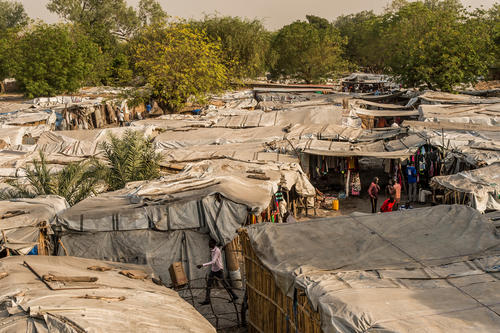
The family of Ibrahim, 60-years-old, who live in Laylan camp.

"My name is Ibrahim. I am 60 years old and am living with a disability. I’m from the town of Abbasi in Hawija but have been displaced since ISIS attacked in 2017. First I moved to Haj Ali camp and then later to Laylan Camp. I got injured in the Iraq-Iran war.  

"I’ve been living in Laylan camp for about a year. I have several children, some of them are married. We live as five in each tent. Each four tents use a joint bathroom. 

"My first wife died because of the grief she felt for her son who died. I’m suffering from high blood pressure and my current wife has kidney disease. Last year our family lost a 5-month-old baby because of the cold. After that there was blanket distribution and kerosene for heating. 
Two of my sons work so we can eat. They work outside of the camp as daily workers.  One of these sons is married and has children of his own.  

"With the curfew (imposed after corona), my sons are not able to find work. But we manage, we get some onions and tomatoes from here and there. 

"Cleanliness in the camp depends on each family cleaning habits. A month ago, we were given us bars of soap but that’s not for cleaning toilets. For that we get no cleaning liquids.  Also, the amount of soap is not enough for my big family. Now I cannot bathe."
Iraq

Displaced people are extremely vulnerable to COVID-19 in Iraq

Over 1.3 million people are displaced in Iraq, with more than 300,000 living in camps across the country. The unhygienic living conditions in camps can exacerbate the spread of COVID-19.
Press Release - 14 Jul 2020
 
Victoria Square in Athens, Greece
Greece

Vulnerable refugees evicted and left to sleep on streets

Refugees in Greece with severe health and mental health conditions are increasingly left on the streets without shelter, protection or proper healthcare. Press Release - 13 Jul 2020
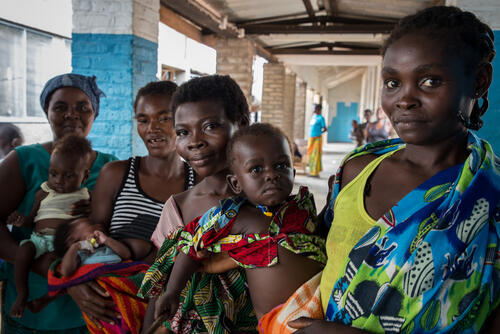
Four mothers posing in a corridor of the Hospital in Bili. All four of them are staying in the hospital with their child, that's suffering from a severe case of malaria. Since the beginning of the project in 2016, the pediatric ward already treated more than 4.000 cases of complicated/severe form of malaria.
Médecins Sans Frontières (MSF)

Independent medical humanitarian assistance

We provide medical assistance to people affected by conflict, epidemics, disasters, or exclusion from healthcare. Our teams are made up of tens of thousands of health professionals, logistic and administrative staff - most of them hired locally. Our actions are guided by medical ethics and the principles of independence and impartiality. We are a non-profit, self-governed, member-based organisation.

Learn more