



Ebola disease in DRC: find out how we're responding
Learn more
4633 Results
 
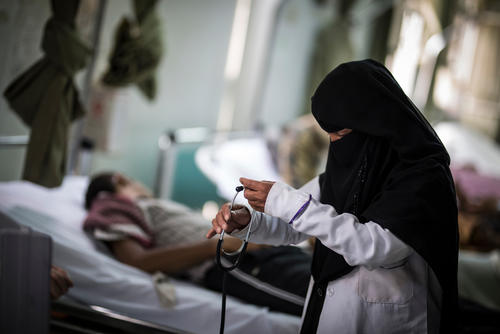
Kawkab Al Sarafi works as a nurse in the Emergency Room of the Al Koweit university hospital in Sana’a since 1 year. Since she started her job, she hasn’t been paid a cent. Kokab explains that she lives far away and has to walk to go to the hospital as most of the time she can’t pay for the transportation. When she doesn’t work at the hospital, she goes to the khat market to try to buy large quantities to resell it. « We are really poor, i live with my sister and sometimes we haven’t money to buy food », she added. Kokab is one out of thousands health workers who haven’t been paid since a year, when the government stopped paying the salaries of the civil servants.
Yemen

Government health staff are saving lives without salaries

“People don’t understand that we don’t always have drugs; we need to use our own money to buy the medication. People shout at us ‘Why are you here?!’” Report - 28 Sep 2017
 
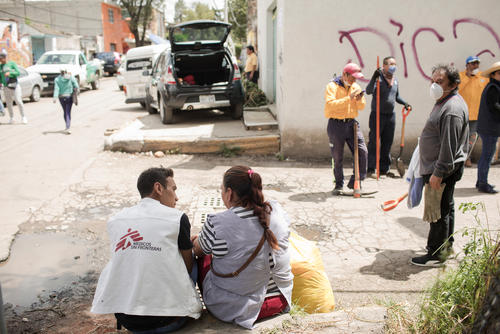
Alfredo Cabrera, 31, gives first psychological attention to a resident in San Gregorio.
Mexico

“Fear is still the predominant emotion in Mexico City”

"We explain to our patients that given what they are experiencing, the reactions they are having right now are totally normal. Our job is mainly to help them start using their coping mechanisms." Voices from the Field - 26 Sep 2017
 
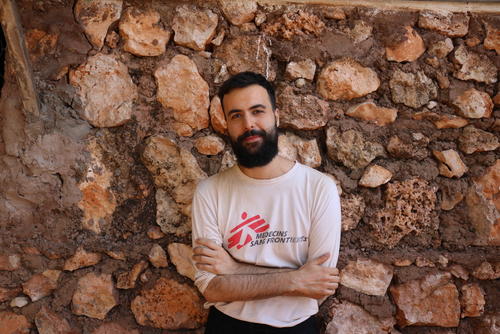
Roberto Wright, from MSF's emergency team, is an Anthropologist from Brazil. In Ethiopia’s Somali region he is responsible for developing a community engagement strategy for MSF’s community health outreach staff, which involves training them to speak to people in the informal settlements about how the organization is working to identify, treat and prevent malnutrition.
Ethiopia

“If people don’t understand what we do, they will never come to our health centres”

“Part of my work is to understand their approaches regarding traditional medicine and to explain MSF care to them so that they can combine both.” Voices from the Field - 25 Sep 2017
 
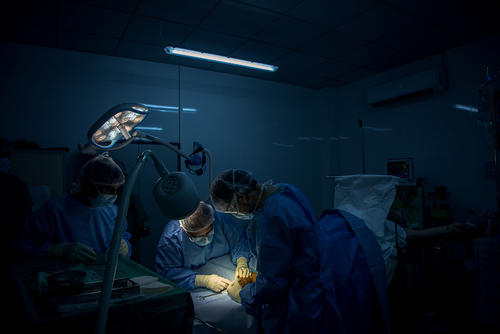
A woman receives surgery to remove a piece of shrapnel from her heel in an injury she sustained weeks earlier. She fled Mosul with her injury.
Iraq

Crisis update – September 2017

The battle for Mosul has taken a staggering toll on the people of Iraq’s second largest city. Health needs are shifting from war injuries to medical cases and long-term rehabilitation care. Crisis Update - 21 Sep 2017
 
MSF nurses treating internally displaced people in the city of Mariupol, eastern Ukraine. MSF provides free consultations, medication and psychological support to people affected by the conflict in eastern Ukraine.
Ukraine

MSF launches new mobile health clinic in eastern Ukraine

“As we were facing a large number of patients in some locations we decided to increase the frequency of some of the mobile clinic sites, to ensure that we can see as many patients as possible.” Press Release - 21 Sep 2017
 
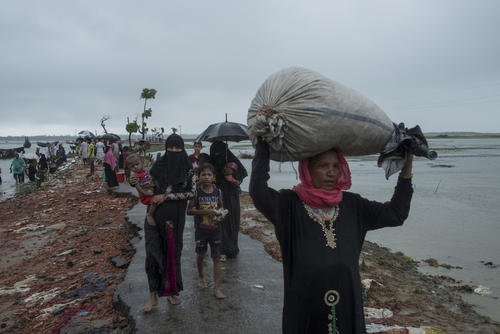
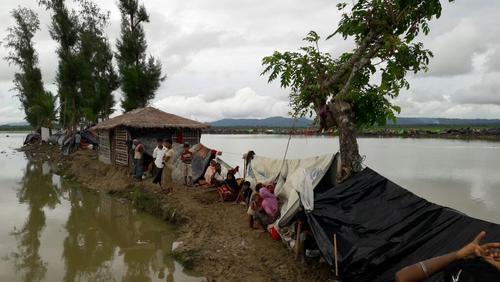
People in the rain at a border crossing on the Naf river, near Teknaf, September 19.
Rohingya refugee crisis

Immediate action needed to avert massive public health disaster

“Hundreds of thousands of refugees are living in an extremely precarious situation, and all the preconditions for a public health disaster are there.” Press Release - 21 Sep 2017
 
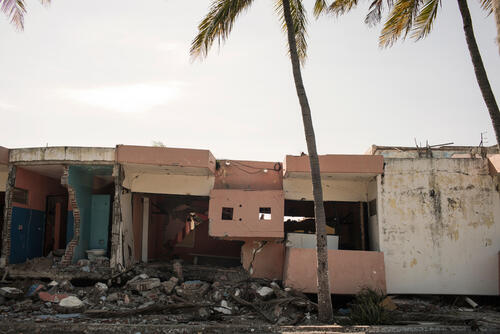
Un hotel en ruinas por el terremoto que azotó Oaxaca el 7 de septiembre

A hotel in ruins due to the earthquake that hit Oaxaca on 7 September
Mexico

MSF assists people following Mexico City earthquake

Thirty nine buildings have collapsed in Mexico City, while in the state of Morelos at least 2,000 houses have been damaged. Press Release - 21 Sep 2017
 
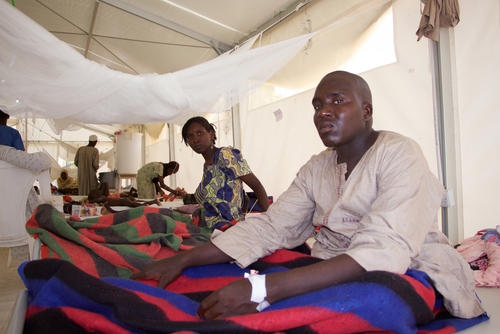
Algoni  and his wife Khadija, live in Muna Camp, having fled their homes in Dikwa, Borno state. They have been receiving treatment in MSF’s cholera treatment unit for three days.
Nigeria

MSF scales up activities as cholera spreads in Borno state

“We remain alert and through our community health workers continue to monitor the spread of the outbreak, and respond to it across Borno state.” Project Update - 19 Sep 2017
 
Rohingya who crossed into Bangladesh, fleeing violence in Rakhine state, Myanmar that started on 25 August. This massive influx, coming on top of 75,000 people who have arrived since violence began in October 2016, represents one of the largest influxes ever of Rohingyas into Bangladesh.
Rohingya refugee crisis

International humanitarian access to Rakhine State must urgently be permitted

“To ensure access to medical care and to be able to provide assistance to conflict-affected people, MSF... must be allowed immediate and unhindered access to all areas of Rakhine State." Press Release - 18 Sep 2017
Four mothers posing in a corridor of the Hospital in Bili. All four of them are staying in the hospital with their child, that's suffering from a severe case of malaria. Since the beginning of the project in 2016, the pediatric ward already treated more than 4.000 cases of complicated/severe form of malaria.
Médecins Sans Frontières (MSF)

Independent medical humanitarian assistance

We provide medical assistance to people affected by conflict, epidemics, disasters, or exclusion from healthcare. Our teams are made up of tens of thousands of health professionals, logistic and administrative staff - most of them hired locally. Our actions are guided by medical ethics and the principles of independence and impartiality. We are a non-profit, self-governed, member-based organisation.

Learn more