


Ebola disease in DRC: find out how we're responding
Learn more
4633 Results
 
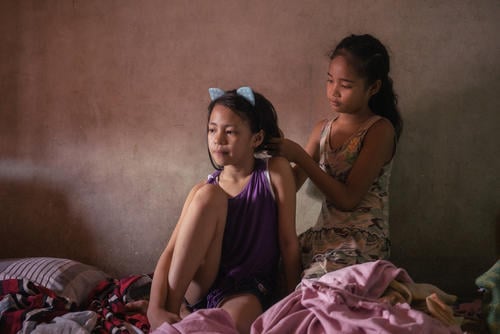
Young girls Elyes and Diana fix each other's hair before posing for a portrait in their tenement home near Smokey Mountain, Manila. Both girls are recipients of free vaccinations from Likhaan clinic, which provides free healthcare for low income communities.
Photo story

A year in pictures 2017

MSF's Pictures of the Year collection looks back on a year of providing medical care in extreme conditions and contexts across the globe. Through the lens of its photojournalists, MSF remembers and pays tribute to those who have struggled, those who have persevered and those who have perished. Photo Story - 18 Dec 2017
 
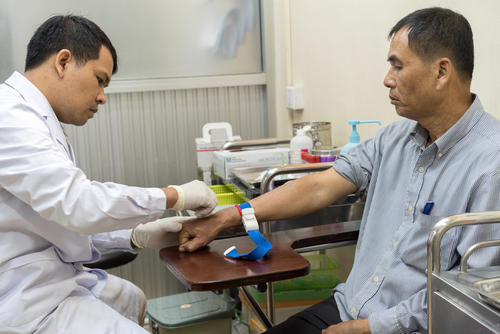
Din Savorn, 50, receives a blood test from MSF laboratory technician Sokchea Yan, at the MSF Hepatitis C clinic at Preah Kossamak Hospital in Phnom Penh, Cambodia, 20, April 2017.
Access to medicines

MSF challenges Gilead’s patent application for hepatitis C treatment

The world desperately needs more affordable sources of these essential hepatitis C medicines to save lives and contain this growing epidemic. Press Release - 15 Dec 2017
 
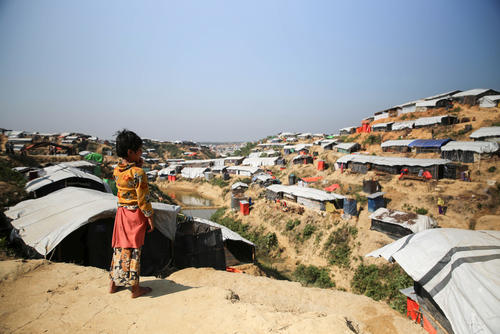
Conditions of life for Rohingya children at the refugee camps in Bangladesh are grim.
Bangladesh

A living nightmare (part one): To leave or die

On 25 August 2017, Myanmar's military and local militias launched a wave of "clearance operations" in response to attacks by the Arakan Rohingya Salvation Army in Rakhine state that turned into widespread violence against civilians. Since then, more than 647,000 members of the Rohingya community have fled Myanmar to Bangladesh. Photo Story - 14 Dec 2017
 
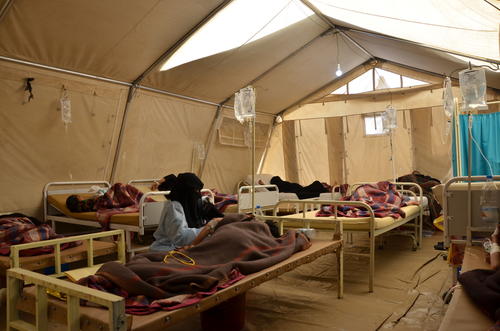
The female inpatient department at MSF cholera treatment center in Khamer. MSF is receiving an increased number of cholera patients in Yemen since the beginning of May 2017. This cholera treatment center alone, treated more than 1200 patients in less than two weeks. The center is still receiving patients.
Yemen

From cholera to diphtheria – shattered health system battles a new threat

Yemen’s healthcare system cannot afford another outbreak. Statement - 12 Dec 2017
 
Conditions of life for Rohingya children at the refugee camps in Bangladesh are grim.
Rohingya refugee crisis

MSF surveys estimate that at least 6,700 Rohingya were killed during the attacks in Myanmar

Currently people are still fleeing from Myanmar to Bangladesh and those who do manage to cross the border still report being subject to violence in recent weeks. Press Release - 12 Dec 2017
 
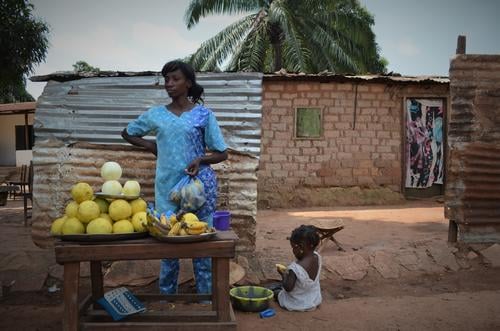
Raissa, 35 years old, shopkeeper, and Maiva, 18 months,
Single, with spouse
Malimaka neighbourhood, district 5, Bangui

"I have six children: the oldest is 19 and the youngest, Maiva, is now 18 months. I live here in Bangui, in the Malimaka neighbourhood, in district 5. 
During the events of 2013, I fled with almost all my neighbours to the IDP camp at M’Poko airport. Seleka set up here in the neighbourhood in March that year (Author’s note: this is when Seleka, a coalition of armed men under former-President Michel Djotodia, took Bangui by force).  There was a Seleka house just on the corner there, and there was another other that way. There were also many of them in the mosque. Those men would do whatever they wanted. When you crossed the road, you had to watch out to make sure you weren’t shot at. They would turn up at houses in the neighbourhood, break down the door and steal everything. Sometimes, to get people to leave, they would fire into the air, and even at people – they killed women by the road behind where we are sitting now. Once the shots started, everyone would start running and the Seleka fighters would make take advantage of this to carry off our things, even our beds. Anti-Balaka fighters chased them off in December 2013 and then set up here themselves. For us, the people living here, not much changed. They also harassed us, which ultimately drove us to leave. 
Before the troubles, we had better lives. During, and just after, I no longer had the means to continue my business. Now, it is quiet, we no longer hear gunfire. It still isn’t easy to earn a living here, but I have to try. I have six children: I can’t just sit here and do nothing. 
When I was living at the M’Poko IDP camp, we were living in poor conditions: my five children and I lived under the same tarpaulin. I became pregnant with Maiva while we were there. I didn’t go to many prenatal consultations, but that was more due to the lack of security in the camp and city, rather than money problems. Ultimately, we left in December last year, when the government closed and tore down the camp. They gave money to some people to help them leave and get back on with their lives. Unfortunately, I didn’t get anything. 
I gave birth to Maiva in Castors, in district 5. For the other children, I gave birth at one of the major hospitals in Bangui. There, they ask for a lot of money. At every step, they ask you for money. For every procedure, you have to pay the healthcare staff directly in cash. They don’t even ask you to go to the counter. The staff do not look after the patients, their top priority is the money. When I went to the hospital to give birth to my second son, I gave birth alone on the floor in the waiting room. If you want the midwife to come to you, you have to spend a lot of money first."

Prenatal consultation for her previous pregnancies: CFA 2,000 
Spending CFA 2,000 on oranges from the market, Raissa could make CFA 2,000 in profit by reselling them.
Global health

Health policies must focus on needs of individuals

Between 12-15 December the Universal Health Coverage Forum 2017 will take place Tokyo, Japan. Report - 11 Dec 2017
 
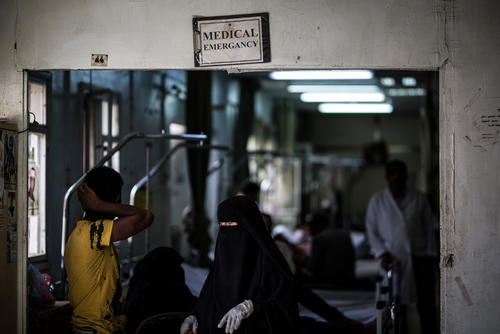
For more than a year, civil servants salaries haven’t been paid in Yemen. Despite this, many health workers continue to bear their duties despite growing difficulties. Emergency room of the Al Koweit university hospital in Sana’a - Yemen.
Yemen

“Just living has become more difficult”

Monia Khaled is water and sanitation supervisor for MSF in Yemen. This is her account of the dramatic changes in everyday life she has witnessed over the past two and a half years. Voices from the Field - 11 Dec 2017
 
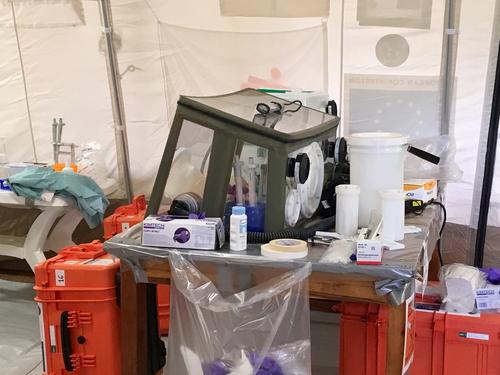
Healthcare staff in the district was trained in these centres by MSF staff experienced in hemorrhagic fevers outbreaks. The main fields of training included the safe management of suspect and confirmed cases, collection of laboratory samples and community surveillance.
Uganda

MSF ends its intervention in response to the Marburg fever outbreak

“This is the first time that Marburg fever has been diagnosed in these districts of Uganda, but strong national surveillance meant that the epidemic was noticed and confirmed early enough to allow for a rapid and effective collaborative response” Project Update - 11 Dec 2017
 
msf-placeholder
Yemen

Crisis update - January 2018

MSF is in Yemen to support the Yemeni populations affected by the conflict on all sides of the frontlines. We work in 13 hospitals and health centres and provide support to more than 20 hospitals or health centres across 11 Yemeni governorates: Taiz, Aden, Ad Dhale, Sa’ada, Amran, Hajjah, Ibb, Sana’a, Abyan, Shabwa and Lahj. Crisis Update - 11 Dec 2017
 
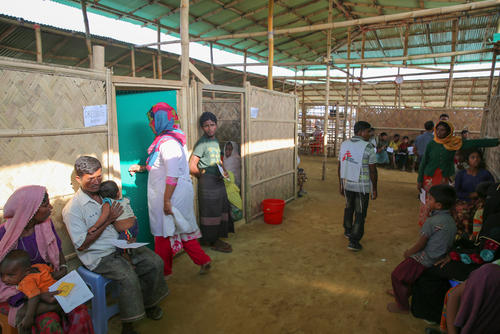
MSF staff treat Rohingya refugee patients at a clinic in a camp in Bangladesh.
Rohingya refugee crisis

Rohingya crisis - a summary of findings from six pooled surveys

On 25 August 2017, a counter-insurgency military operation in Rakhine State, Myanmar, led to a mass displacement of Rohingya civilians into Bangladesh. Over the following three months, some 626,000 Rohingya crossed into Bangladesh to escape the violence.
Project Update - 9 Dec 2017
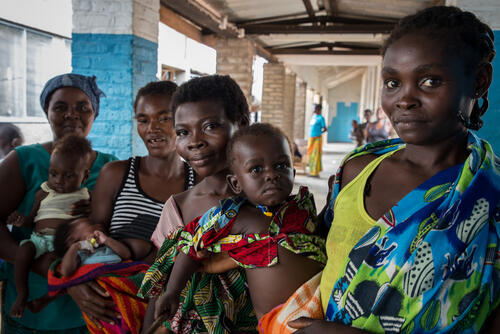
Four mothers posing in a corridor of the Hospital in Bili. All four of them are staying in the hospital with their child, that's suffering from a severe case of malaria. Since the beginning of the project in 2016, the pediatric ward already treated more than 4.000 cases of complicated/severe form of malaria.
Médecins Sans Frontières (MSF)

Independent medical humanitarian assistance

We provide medical assistance to people affected by conflict, epidemics, disasters, or exclusion from healthcare. Our teams are made up of tens of thousands of health professionals, logistic and administrative staff - most of them hired locally. Our actions are guided by medical ethics and the principles of independence and impartiality. We are a non-profit, self-governed, member-based organisation.

Learn more