




Ebola disease in DRC: find out how we're responding
Learn more
4633 Results
 
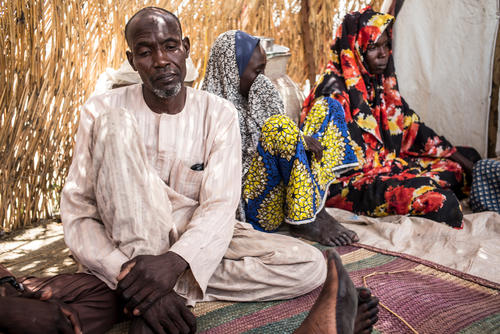
Mallan Ibrahim Kana, 43 years, (04.07.2017) from a village some 15 kms from Ngala. Fled twice before reaching Ngala camp. 

I arrived here with my family yesterday after walking for four days. We first left our village because of Boko Haram. For the past three years, there has been a lot of trouble. Boko Haram were outside our village and came to take our food and belongings. They took what we farmed and fished. They told us we could not go out at night. Many men have been killed in the village. We thought the military would come and bring security it didn't happen. Sometimes we heard planes dropping bombs outside of our village. I know people were injured in these bombings nearby. There was also fighting going on outside and we could not leave for fear of being caught up in the middle.
Life was very difficult and many people were sick and died. There is no hospital there and we could not go anywhere else. Most of the people in our village have fled. Many of them are here. We left empty handed and we have nothing.
Nigeria

“I feel ashamed of relying on others to live, but we can’t go home”

"People are stranded and in need of assistance. It is hard to see how their situation will improve in the near future." Voices from the Field - 17 Jan 2018
 
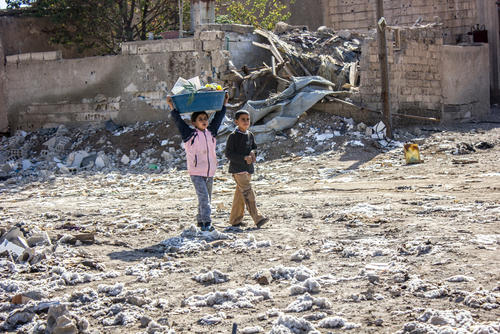
Two kids helping their parents cleaning their house from rubbles. Al Mishlab, east of Raqqa city.
Syria

33 blast victims treated by MSF in Raqqa in the first week of 2018

Demining activities need to be scaled up to protect Raqqa returnees from catastrophic but avoidable deaths and injuries. Statement - 15 Jan 2018
 
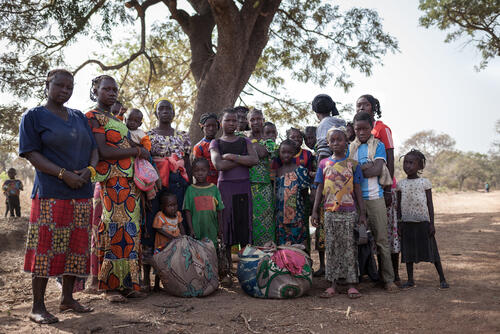
A group of women and children flee threats of attacks by an armed group on the town of Betoko, northwestern Central African Republic. On their way to the town of Paoua, they stopped in Beda village to share informations with the villagers. Beda, December 27, 2017.
Central African Republic

Thousands displaced by fighting north of Paoua

Those forced to flee tell of torched villages, extortion and indiscriminate attacks. Voices from the Field - 8 Jan 2018
 
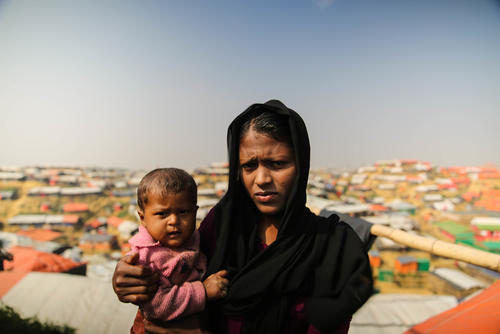
Yassin Tara, 20, and her 10-month-old daughter Asma have been refugees in Bangladesh since September. Tara’s food and pots were stolen, leaving the already desperate family with even less to get by on. She bought damaged pots to replace the ones she had, and she is trying to clean them, so she can cook for her family. Her husband is trying to find work but it is very hard. Her daughter has pneumonia and high fever. “I hope my children go to school, so that they can make a living and help us,” she says. Back in her village in Myanmar, she had three cows. She accuses the army of burning her house down and stealing her livestock.
Bangladesh

Building a hospital for Rohingya in three weeks

Watch our latest video on our 50-bed hospital build in 3 weeks. Project Update - 4 Jan 2018
 
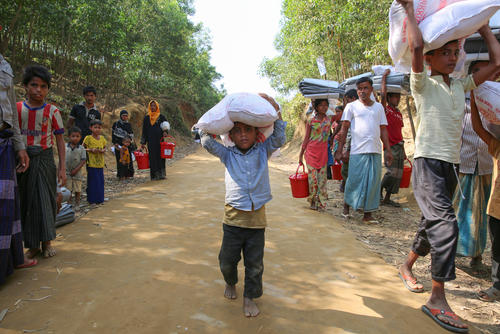
Mohammad Othman, a 10-year-old Rohingya refugee in Bangladesh, carries a heavy sack of food distributed by the Red Cross back to his family.
Rohingya refugee crisis

A living nightmare (part two)

Arriving at the Kutupalong makeshift refugee camp complex in Bangladesh, the first thing one is struck by is its sheer size. Home to close to 650,000 members of Myanmar’s Rohingya community, its population is comparable to Frankfurt or Memphis. Photo Story - 3 Jan 2018
 
MSF Netherlands project at the Kutupalong Makeshift Camp. Kutupalong makeshift camp A violent crackdown on stateless Rohingya living in Bangladesh has led thousands of people to seek safety at Kutupalong makeshift camp. Driven from their homes in the Cox's Bazaar area by local authorities and vigilante groups, around 2,000 people arrived in January alone, swelling camp numbers to nearly 30,000. New arrivals describe how they have suffered threats, beatings and in some cases escaped being forcibly returned to Myanmar. For decades, thousands of Rohingya, an ethnic and religious minority from Myanmar, have sought refuge in Bangladesh. However, a mere 28,000 are recognised as prima facie refugees by the Government, and live in official camps under the supervision of UNHCR. In sharp contrast, more than 200,000 people struggle to survive unrecognised and largely unassisted, vulnerable to ill health and exploitation. MSF runs a basic health programme in Kutupalong, providing much needed medical care to stateless Rohingya in Kutupalong makeshift camp and the host community.
Bangladesh

Emergence of diphtheria worsens situation of Rohingya refugees

Cases of diphtheria are increasing among Rohingya refugees living in densely-populated camps in Bangladesh. Project Update - 24 Dec 2017
 
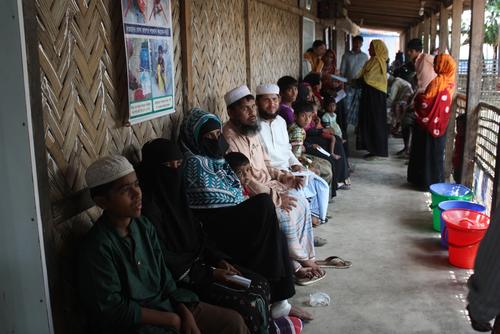
Waiting outside the Accident and Emergency room of the MSF clinic in Kutupalong, Cox’s Bazaar, Bangladesh.
Rohingya refugee crisis

Crisis update – December 2017

Cases of diphtheria are increasing among Rohingya refugees living in densely-populated camps in Bangladesh. Crisis Update - 23 Dec 2017
 
Humanitarian assistance in East Daraa, Syria
Syria

MSF reports show more assistance is needed to meet healthcare needs

Our data shows women and children have the most difficulty in accessing adequate healthcare. Humanitarian assistance must be increased. Report - 20 Dec 2017
 
Madhor
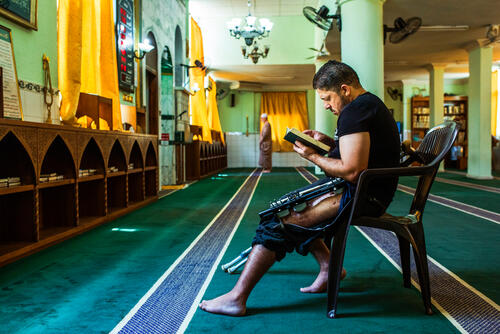
“Russian, Syrian… I don’t know. There were so many aeroplanes dropping bombs in those days in 2016,” says Madhor. A farmer from rural Hama governorate, in Syria, Madhor was sitting under an olive tree  with his seven children when a barrel bomb hit them, killing two of the children. He remembers the moment that the bomb dropped, but then he lost consciousness for three days. He awoke in a hospital in Hama to find he had lost an eye and his left leg was bloody and broken. “I just thought I would die,” says Madhor. “I also lost my teeth, and for three months I almost didn’t eat.” 
Madhor can now walk with crutches, but it remains painful. After multiple operations at MSF’s hospital in Amman, the intensive physiotherapy has had positive results: Madhor can now enjoy days away from the hospital visiting his wife Layla and their five remaining children in Jordan’s Azraq refugee camp. He can also walk the couple of hundred metres to the hopsital’s nearest mosque, for a calm moment of prayer in his ongoing recovery.
Jordan

A decade of healing at MSF’s reconstructive surgery hospital

Surgeons at our Amman-based reconstructive surgery hospital operate on victims of conflicts in the Middle East whose wounds are inflicted by bomb blasts, bullets, shrapnel and burns. Research and innovation are an important part of the hospital’s programme. Project Update - 20 Dec 2017
Four mothers posing in a corridor of the Hospital in Bili. All four of them are staying in the hospital with their child, that's suffering from a severe case of malaria. Since the beginning of the project in 2016, the pediatric ward already treated more than 4.000 cases of complicated/severe form of malaria.
Médecins Sans Frontières (MSF)

Independent medical humanitarian assistance

We provide medical assistance to people affected by conflict, epidemics, disasters, or exclusion from healthcare. Our teams are made up of tens of thousands of health professionals, logistic and administrative staff - most of them hired locally. Our actions are guided by medical ethics and the principles of independence and impartiality. We are a non-profit, self-governed, member-based organisation.

Learn more