



Ebola disease in DRC: find out how we're responding
Learn more
8007 Results
 
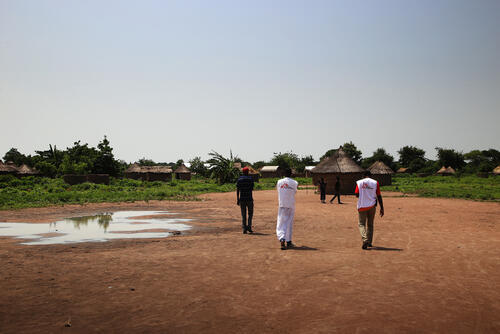
MSF staff walk through site B for displaced people in Kabo, a town in northern Central African Republic.
Central African Republic

Renewed conflict has displaced hundreds of thousands of people in Central African Republic

Fighting across the Central African Republic has left many people wounded, hundreds of thousands displaced, and continues to restrict organisations’ ability to provide healthcare. Project Update - 20 Aug 2021
 
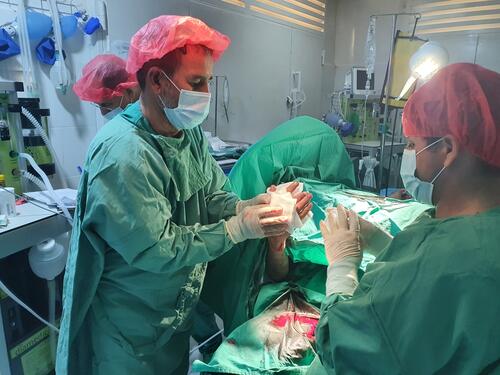
Operating theatre of the MSF Kunduz Emergency Trauma Unit, MSF surgical teams perform an operation on a patient injured by the fighting in Kunduz
Afghanistan

Medical needs urgent as ever in Afghanistan after Taliban takeover

As the government of Afghanistan collapsed last week and the Taliban have taken control, we continue to run activities across the country for myriad medical needs. Project Update - 18 Aug 2021
 
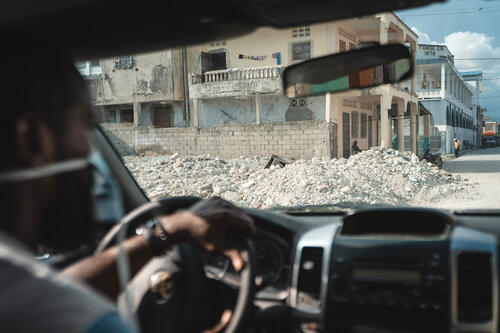
Rubbles from the earthquake in the city of Les Cayes.
Haiti

Death, destruction and thousands of injured people in wake of Haiti earthquake

After a 7.2 magnitude earthquake destroyed large swathes of Haiti’s infrastructure, killing over one thousand people, and leaving thousands injured, we are responding to the multiple needs in the country. Project Update - 17 Aug 2021
 
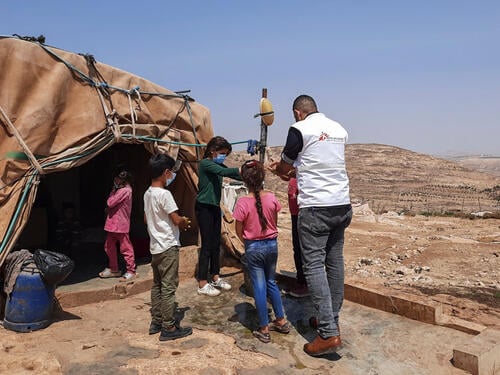
Nader Owidat (Counselor Educator) is conducting a COVID-19 health promotion activity with children in Masafer Yatta, a collection of 19 Palestinian hamlets in the Hebron Governorate (West Bank).
Palestine

“We are all afraid”: Settler attacks against Palestinians in Hebron on the rise

As Palestinians in Hebron have witnessed an increase in attacks by settlers since the beginning of the year, MSF continues to provide psychological treatment to people suffering from the impacts of living under occupation. Project Update - 16 Aug 2021
 
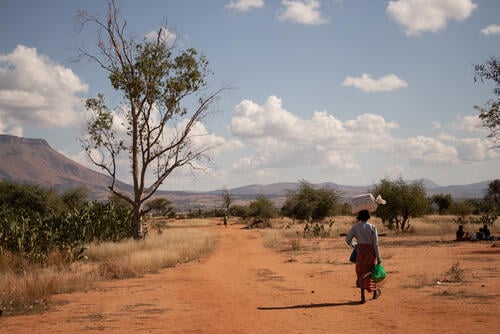
A mother returns after receiving the food distribution.
Madagascar

Emergency aid in Madagascar prevented as medical staff are denied access

We call on the Malagasy authorities to urgently grant entry visas to MSF staff in order to provide emergency medical care in the country. Press Release - 12 Aug 2021
 
Bonifácia de Oliveira, 109-years-old, was a COVID-19 patient that left a mark on everyone at Tefé Regional Hospital due to her determination and physical and emotional stability. She worked all her life in agriculture and became literate at the age of 100. 

Bonifácia was discharged the first week of March, 2021.
Coronavirus COVID-19 pandemic

Responding to COVID-19: Global Accountability Report 4 - January to April 2021

Read the fourth in a series of accountability and operational activities outline on MSF's response to the coronavirus COVID-19 pandemic. Report - 12 Aug 2021
 
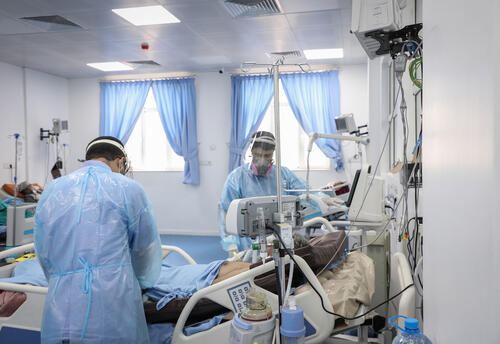
Health workers in the intensive care unit (ICU) of Al Jumhouri isolation centre
Yemen

Treating COVID-19 in Yemen amongst fear, stigma and misinformation

In Yemen, we are responding to COVID-19 through treatment centres and health promotion but there are many obstacles that make treating the disease in such a complex context particularly challenging. Project Update - 11 Aug 2021
 
Boost hospital is the only referral hospital in the province and is a lifeline for those living in Helmand.  MSF supports the emergency room, surgical unit, inpatient department, maternity department, neonatology unit, laboratory and radiology department, as well as the 82-bed paediatric department. The hospital serves a population of around 1.3 million people and in 2020 provided over 110,000 consultations, assisted over 17,000 births and performed over 4,900 surgical interventions.
Afghanistan

As violence soars across Afghanistan access to healthcare is dangerously limited

MSF insists that all working medical facilities must be respected as fighting surges in Afghanistan and hundreds of thousands of people have fled their homes, while many others have been killed or wounded. Project Update - 10 Aug 2021
 
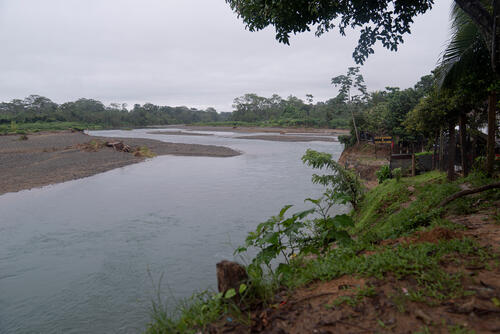
The Turquesa River flows through the village of Bajo Chiquito, in the Emberá-Wounaan comarca, or indigenous region, of Panama. Bajo Chiquito is one of the first populated places on the Panamanian side of the Darien Gap, a dangerous 60-mile (97-kilometer) stretch of roadless land that connects the North and South American continents between Panama and Colombia. Migrants heading north must travel for days through the jungle. They arrive in Bajo Chiquito either on foot, or, if they can pay a fee, by canoe for the last leg of the trip. Those piloting canoes have also rescued people in the jungle who were unable to continue the journey. Migrants arrive in Bajo Chiquito by the hundreds on a weekly basis.

El río Turquesa a su paso por el pueblo de Bajo Chiquito (comarca Emberá-Wounaan), en Panamá. Las personas migrantes que cruzan el peligroso Tapón del Darién, de Colombia a Panamá, llegan a Bajo Chiquito por decenas y centenares de forma diaria después de haber superado la selva. Llegan o bien caminando penosamente, o bien en ocasiones pagando un pasaje en piraguas capitaneadas por vecinos, que también tienen que realizar rescates de gente incapaz de seguir avanzando por la selva, a 3 o 4 días todavía de la población y cuyas vidas corren peligro.
Central American migration

COVID-19 forces thousands of migrants to cross perilous jungle from Colombia to Panama

As COVID-19 forces people to risk their lives while crossing the Darién jungle from Colombia to Panama in search of safety, MSF calls for the protection of migrants and safe routes for those making the journey. Project Update - 5 Aug 2021
 
Commune of Ranobe, Amboasary District.

People in the south-east of Madagascar are facing the most acute nutritional and food crisis the region has seen in recent years. MSF began setting up mobile clinics in Amboasary district in late March to screen and treat acute malnutrition in remote villages like those of Ranobe commune, providing ready-to-use therapeutic food and medical care.
Cameroon

Doctors Without Borders forced to withdraw medical teams from North-West Cameroon

After eight months of our activities being suspended by the Cameroonian authorities, we have been forced to withdraw teams from the North-West region while violence continues to divide the country. Press Release - 3 Aug 2021
Four mothers posing in a corridor of the Hospital in Bili. All four of them are staying in the hospital with their child, that's suffering from a severe case of malaria. Since the beginning of the project in 2016, the pediatric ward already treated more than 4.000 cases of complicated/severe form of malaria.
Médecins Sans Frontières (MSF)

Independent medical humanitarian assistance

We provide medical assistance to people affected by conflict, epidemics, disasters, or exclusion from healthcare. Our teams are made up of tens of thousands of health professionals, logistic and administrative staff - most of them hired locally. Our actions are guided by medical ethics and the principles of independence and impartiality. We are a non-profit, self-governed, member-based organisation.

Learn more