Ebola disease in DRC: find out how we're responding
Learn more
280 Results
 
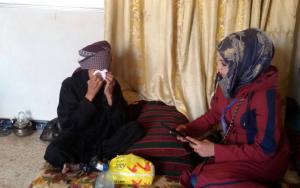
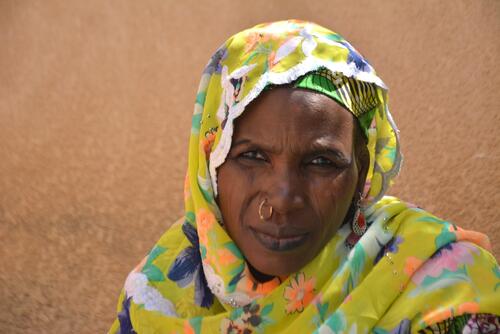
Fajimatou is 33 years old and has four children. She had been suffering from an obstetric fistula for three years ever since her last child was born. Thanks to the listening space set up in her village, she finally had the confidence to speak openly about her pain and MSF was able to help her get the necessary surgery.
Niger

In Diffa, listening spaces have been set up for and by women from the community

Three years ago, Fajimatou gave birth to her fourth child. Since then, she had been suffering from incontinence and regular urinary infections. Too embarrassed to raise this problem with the staff at the health post, she had kept it to herself. When she heard about the listening space for women set up by MSF in her village, it was a real relief. msf.lu - 4 May 2018
 
msf-placeholder
Women's health

Malaria in pregnancy: a call for a safe, efficient, and patient-centred approach to first-trimester treatment

World Malaria Day 2018 is themed “Ready to beat malaria”, but circulated key talking points ignore an important group: pregnant women. Unpublished reports from Médecins Sans Frontières (MSF) programmes, in contexts where up to 50% of women attending antenatal care routinely test positive for malaria, suggest that current WHO recommendations on malaria in pregnancy cause confusion and may risk poor outcomes in this highly vulnerable population. The Lancet Global Health - 24 Apr 2018
 
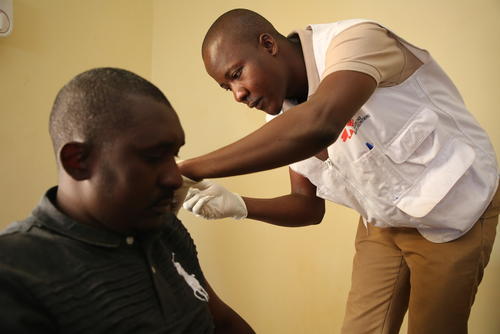
MSF staff giving vaccinations in Douentza.
Mali

Medical services in northeastern Mali

Photo Story - 13 Mar 2018
 
Half of the Syrian population has been forcibly displaced. Salma (* a pseudonym) fled with her children and brother-in-law from outside Damascus in Syria, south to Daraa, then crossed the border into Jordan. After a brief stay in Zaatari refugee camp, they moved to Irbid. A teacher, she left behind a “beautiful” life in Syria before the war. Five years later she and her family have adjusted to life in Jordan, assisted by the psychological care she sought for her youngest son and then herself at MSF’s mental health clinic.
Salma’s video is featured in the IWD 2018 package. See becauseimawoman.msf.org and, on the database, MSFSTO21277 for the video and transcript.
Website

Because I'm a woman

Women and girls forced to flee face health risks and further danger on their journey, simply because they are women. becauseimawoman.msf.org
 
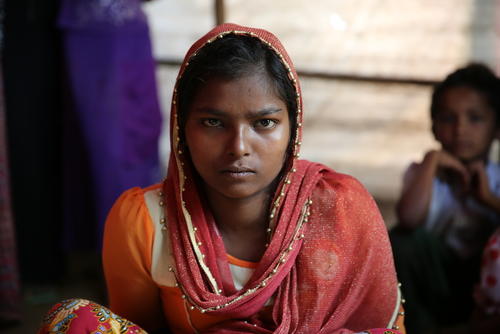
Farmin, aged 15, has been a refugee in Bangladesh since September. Her mother Nour al-Nahar died in the camp at the age of 35, in December 2017. The mother had been suffering from severe stomach pain for nearly two months. She is survived by five sons and two daughters. Her husband — Farmin’s father — was arrested in Myanmar in September. The family have not heard from him since.
International Women's Day

Caring for displaced women

For International Women’s Day 2018, against the backdrop of record levels of displacement, MSF is highlighting how health needs are exacerbated for women and girls on the move. Press Release - 6 Mar 2018
 
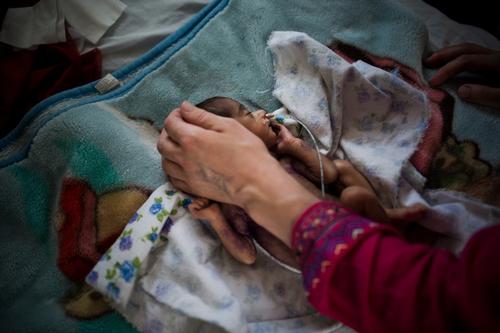
Pediatric nurse Isabelle Arnould examines a baby in the neonatal ward at the MSF Maternity Hospital in Khost, Afghanistan.
Afghanistan

Treating mums and babies in Khost, Afghanistan

Obstetrician/Gynaecologist Severine Caluwaerts blogs from a maternity hospital in Afghanistan, where MSF is working to provide women with a safe place to give birth. blogs.msf.org - 26 Jan 2018
 
Old Fangak, South Sudan, the river gate of the MSF hospital, through which patients arrived during mass casualty events.
South Sudan

“I left my namesake in Old Fangak”

Judith Elavian is a midwife from Kenya. She recently completed her first MSF assignment in Old Fangak, South Sudan. She shares the story of a patient she will never forget. blogs.msf.org - 23 Jan 2018
 
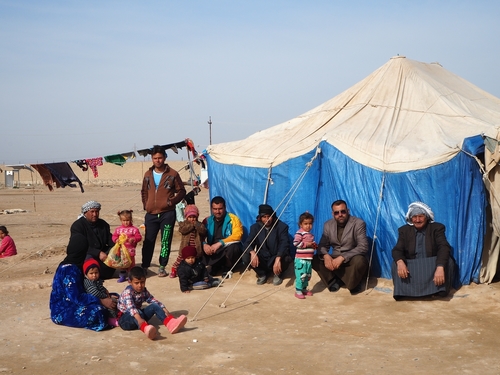
Providing care to displaced communities, Tikrit district, Iraq.
Iraq

Crisis update – December 2017

MSF has seen an increasing number of families leaving the camps and returning home but more than 2.9 million remain displaced. Crisis Update - 18 Jan 2018
 
Nine-day-old Mohammad was born at the Doctors Without Borders/ Médecins Sans Frontières (MSF) maternity unit in Domiz Refugee Camp, northern Iraq. His parents left Syria when the incessant bombing became too much. 

“I have three daughters and one son,” Mohammad’s mother Seva says. “Mohammad was born here at the maternity centre, as well as one of my daughters. The maternity unit [in Domiz camp] is much better than the other places where I gave birth.”

“The staff were really good [when I gave birth to Mohammad]. I feel relaxed when I know there are people from my community providing the services. It feels better than going outside.” 

MSF launched the sexual reproductive health and maternity project in Domiz Refugee Camp in 2013. We initially provided check-ups for women before and after birth and family planning services. In 2014, the project was expanded to a full maternity unit with a 24-hour delivery room, triage and gynaecological consultations. Over the past four years, MSF medical staff have delivered more than 3,400 babies and provided more than 27,400 gynaecological consultations.

MSF completed the project in Domiz Refugee Camp in November 2017 and has handed over the maternity unit to the Dohuk Directorate of Health. We currently have projects across Iraq in the governorates of Erbil, Diyala, Ninawa, Kirkuk, Salaheddin, Anbar and Baghdad and will continue to set up new projects where the needs are greatest.
Iraq

Giving Syrian refugees a safe place to give birth

The services here are really good and they take care of us. Voices from the Field - 18 Jan 2018
 
Humanitarian assistance in East Daraa, Syria
Syria

MSF reports show more assistance is needed to meet healthcare needs

Our data shows women and children have the most difficulty in accessing adequate healthcare. Humanitarian assistance must be increased. Report - 20 Dec 2017
Four mothers posing in a corridor of the Hospital in Bili. All four of them are staying in the hospital with their child, that's suffering from a severe case of malaria. Since the beginning of the project in 2016, the pediatric ward already treated more than 4.000 cases of complicated/severe form of malaria.
Médecins Sans Frontières (MSF)

Independent medical humanitarian assistance

We provide medical assistance to people affected by conflict, epidemics, disasters, or exclusion from healthcare. Our teams are made up of tens of thousands of health professionals, logistic and administrative staff - most of them hired locally. Our actions are guided by medical ethics and the principles of independence and impartiality. We are a non-profit, self-governed, member-based organisation.

Learn more