




Ebola disease in DRC: find out how we're responding
Learn more
519 Results
 
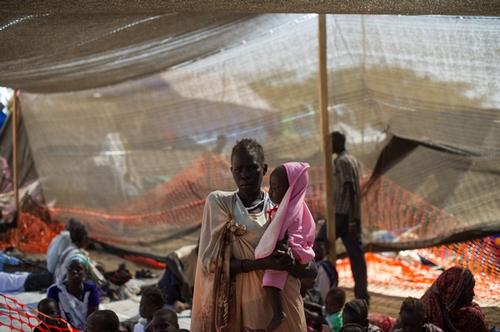
A lady stands with her daughter in the Médecins Sans Frontières (MSF) clinic set up at the camp for  displaced people in the grounds of the United Nations Mission to South Sudan (UNMISS) base in Juba, South Sudan, on January 12, 2014.
South Sudan

Attacks on MSF health facilities obstruct aid efforts

Assault on Malakal compound is second looting of an MSF facility in one week Press Release - 17 Jan 2014
 
msf-placeholder
Syria

MSF working hard to secure safe return of five staff taken in northern Syria

MSF continues to put all efforts in securing the safe return of five staff taken from an MSF house in northern Syria. Statement - 10 Jan 2014
 
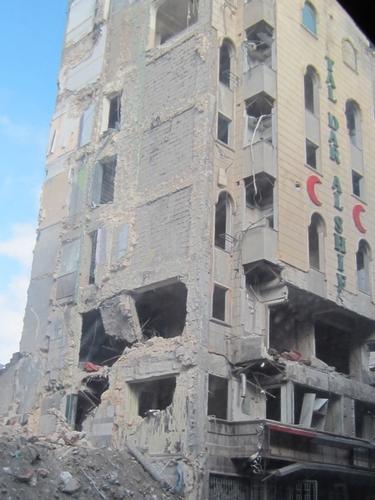
Dar al Shifah hospital *** Local Caption *** Aleppo (eastern part of the city held by the armed opposition), December 2012, after several months of intense fighting.
Syria

MSF calls on all parties to end targeting of schools and hospitals

MSF calls on both sides in the Syrian civil war to cease targeting schools and hospitals Press Release - 17 Dec 2013
 
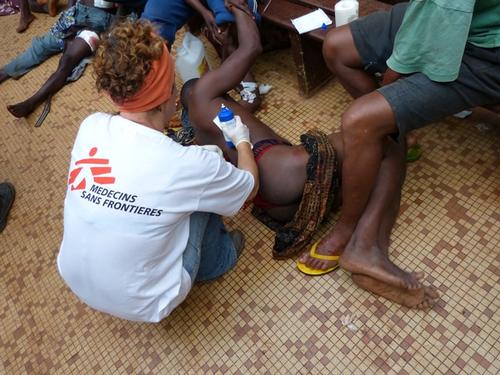
Taking care of the injured in the triage zone, red zone. First aid is delivered on benches or on the floor, before patients are hospitalised or transported to the surgical block.

Violent armed clashes took place in Bangui. In a few hours, MSF teams have joined the Community Hospital to cope with the influx of wounded. Our medical teams are working
now in emergency departments, surgical and hospitalization. 
Most people have supported injury by firearms or knives (machetes and knives). A second operating theater was opened, and several tents to receive the wounded and increase hospital capacity.
Central African Republic

Violence in Bangui Hospitals

MSF calls for a ban on any armed presence in healthcare facilities following summary executions inside Bangui hospitals. Press Release - 9 Dec 2013
 
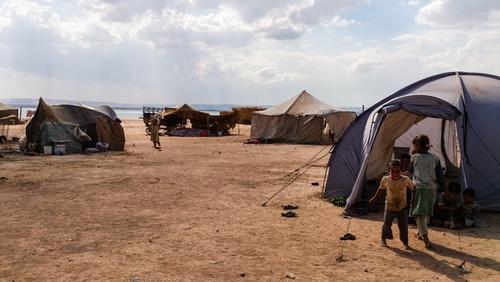
This IDP camp in Al Safira district (Aleppo province) is empty. After the October attack, IDPs  had fled north .
MSF had distributed some tents to IDPs. A medical student was running an OPD set up with MSF support
Syria

People try to live ordinary lives as conflict grinds on

Adam Sharp, a project coordinator for Médecins Sans Frontières (MSF) in Syria, gives a moving and personal account of MSF's work
Project Update - 29 Nov 2013
 
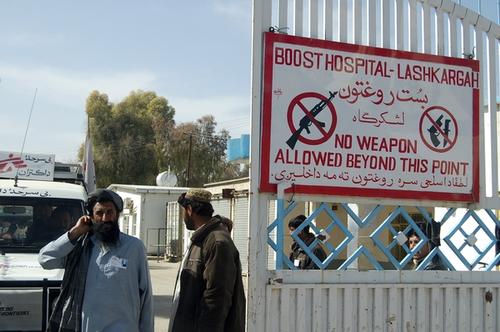
Boost hospital, Lashkargah, Helmand province.<br/>
Attacks on medical care

Don't Shoot the Ambulance: Medicine in the Crossfire

As physicians and hospitals in war zones multiply, their facilities have increasingly become military targets. Journal article - 24 Oct 2013
 
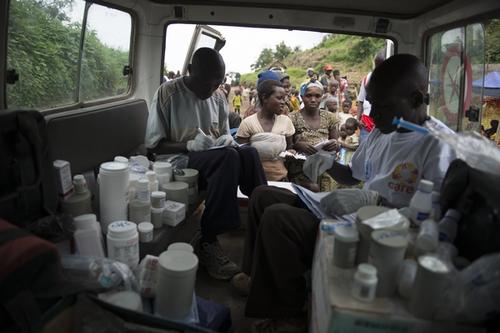
During an MSF mobile clinic in the village of Nyabiondo. 

MSF is providing primary and secondary health care in North Kivu Provinces. On the outskirts of Goma, MSF is working in the camps at Bulengo and Mugunga III and, since the end of May 2013, in Sotraki  Stadium as well. Elsewhere in North Kivu the organization is supporting referral hospitals in Mweso, Pinga, Masisi, Rutshuru, Walikale, and Kitchanga, working in health centers, and operating mobile clinics.
Democratic Republic of Congo

MSF limits medical activities in Mweso

MSF has limited its medical activities in and around Mweso hospital in North Kivu province after a succession of incidents where staff was intimidated, patients threatened, medical vehicles stopped and searched, and hospital grounds violated. Statement - 7 Oct 2013
 
msf-placeholder
Syria

MSF surgeon killed in Syria

A Syrian surgeon working for MSF, Dr Muhammad Abyad, has been killed in northern Syria. His body was found on 3 September in Aleppo province. Press Release - 5 Sep 2013
 
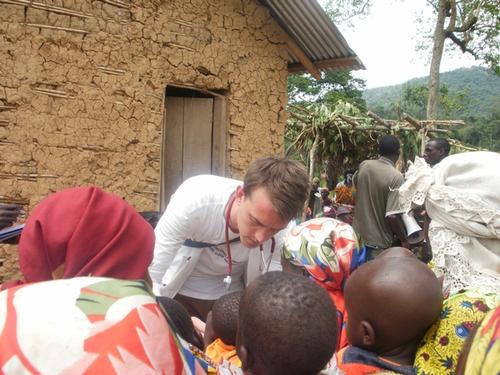
Dr Marcus Bergman has been working in the Democratic Republic of Congo for Médecins Sans Frontières since February 2013. Based in Pinga, a small town in the North Kivu province of the Democratic Republic of Congo, he has been providing medical care to people affected by conflict while trying to reach those cut off from assistance by insecurity. 
 
At present (August 2013) all medical activities in Pinga and its immediate surroundings have been suspended after increasing insecurity and threats to humanitarian workers.
Democratic Republic of Congo

Panic in Pinga

A powerful voice from the field by Dr Marcus Bergman, who has been working in Pinga since February. Voices from the Field - 19 Aug 2013
 
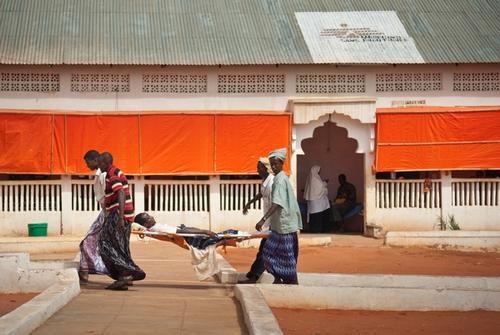
Patient on stretcher being carried to ward.
Many international staff were based here in previous years. But due to the insecurity, the hospital is now completely run by Somali staff paied and employed by MSF. It is MSF general policy to have all its structures ‘weapon free’. At the entrance of the Guri-el Hospital, all persons entering the hospital compound are checked with a metal detector. As a result of the ‘weapon free’ policy, the MSF structures are recognized as neutral places where patients feel safe in a country where weapons abound. Nearly all children arrive at the hospital with severe or moderate malnutrition. The paediatric wards are completely full. 
On top of the malnutrition, many have measles. Infectious diseases like watery and bloody diarrhea have recently become more common. The other main issues in children are lower respiratory tract infections, gastroenteritis and malaria. Because of the collapse of the healthcare system, a large proportion of the
population has not been vaccinated against measles and other diseases. The combination of acute malnutrition and measles can be deadly for children in Somalia.
Several camps for displaced people are located around the town of Guri-el. People have been fleeing violence (and more recently the iolence (and more recently the drought). They have abandoned everything and live in very basic makeshift shelters. An MSF teamcarries out medical and nutritional consultations several times a week in the camps.
Somalia’s humanitarian crisis continues to be one of the worst in the world. This year, Somalis have faced the system. Throughout 2011 Médecins Sans Frontières (MSF) ran medical projects in up to 22 different locations in south-central Somalia, the epicenter of the crisis, as well as large-scale programs in the Somali refugee camps in Ethiopia and Kenya. In the period from May to December 2011, MSF treated over 95,000 patients for malnutrition, and treated over 6,000 patients for measles and vaccinated almost 235,000 children against the disease. Within its various health care structures MSF assisted in over 5,500 deliveries and provided over 450,000 consultations. However, despite intense negotiations with armed groups, access to the most affected regions inside south-central Somalia has remained difficult. MSF first worked in Somalia in 1979 and has been present in the country with few interruptions since 1991, when a civil war erupted following the downfall of the country's dictator, Siad Barre. MSF has worked in several locations: Baidoa, Dinsor, Huddur, Jamaame, Jowhar, Kismayo, Marere, and the capital, Mogadishu, in the south; Galcayo and Guri El in the north-central area; and Belet Weyne in central Somalia. Teams have addressed a host of different crises in their many projects, focusing in particular on nutrition, emergency care for people wounded in conflict, mother and child healthcare, and treatment of infectious diseases, including cholera, measles, kala azar, and tuberculosis (TB). MSF is the only international organization providing medical and nutritional care in Guri-el town in Galgaduud region of South Central Somalia..Previously, more than 15 international staff were based here but they had to be withdrawn due to security threats. Somalis employed and trained by MSF now run the hospital, regional MSF staff from Somali origin ran the emergency projects. Access to health care is a major issue in Somalia. In a circle of 150km around Guri-el, there are no medical doctors except for those at the MSF supported hospital.
Somalia

MSF forced to close all medical programmes in Somalia

MSF today announced the closure of all its programmes in Somalia after working continuously in Somalia since 1991. Press Release - 14 Aug 2013
Four mothers posing in a corridor of the Hospital in Bili. All four of them are staying in the hospital with their child, that's suffering from a severe case of malaria. Since the beginning of the project in 2016, the pediatric ward already treated more than 4.000 cases of complicated/severe form of malaria.
Médecins Sans Frontières (MSF)

Independent medical humanitarian assistance

We provide medical assistance to people affected by conflict, epidemics, disasters, or exclusion from healthcare. Our teams are made up of tens of thousands of health professionals, logistic and administrative staff - most of them hired locally. Our actions are guided by medical ethics and the principles of independence and impartiality. We are a non-profit, self-governed, member-based organisation.

Learn more