



Ebola disease in DRC: find out how we're responding
Learn more
519 Results
 
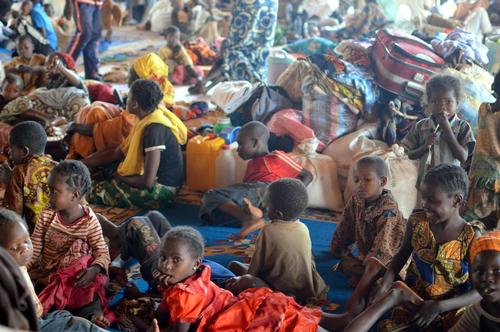
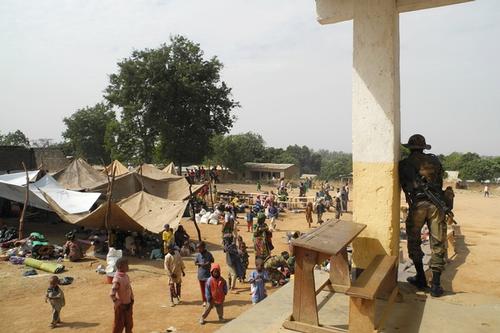
Deplaces a l'eglise a Carnot.<br/>Forced displaced in the church in Carnot. *** Local Caption *** Since February 1st, date of the anti-Balakas takeover of the city, a thousand people (mostly Peuls/Fulani in transit on their way to Cameroon) are trapped in the city ,victims of attacks and violences.
Central African Republic

Escalating violence endangering civilians and delivery of humanitarian aid

Escalating violence is endangering civilians Press Release - 7 Mar 2014
 
Muslim community leaving Bangui
Central African Republic

Trapped in PK 12 camp with nowhere to run

Desperate and dangerous conditions around PK 12 camp in Bangui Voices from the Field - 3 Mar 2014
 
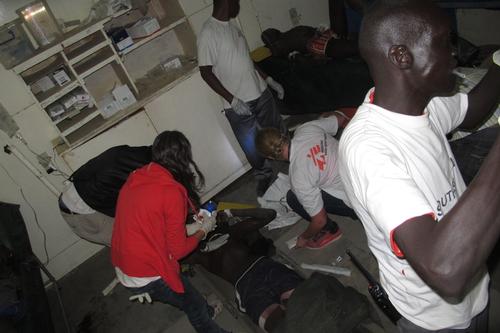
Photo taken by Jean-Pierre Amigo, MSF emergency coordinator, who went to support the team in Leer after he was evacuated from Benitiu. Here MSF’s medical team treats wounded people in an overcrowded   outpatient department. Very few other health centres were running, and less than two weeks later the team were forced to evacuate from Leer. They have not yet been able to return.
South Sudan

Medical care under fire in South Sudan

Medical care has come under fire in Malakal and Leer, leaving hundreds of thousands of people without lifesaving assistance. Press Release - 26 Feb 2014
 
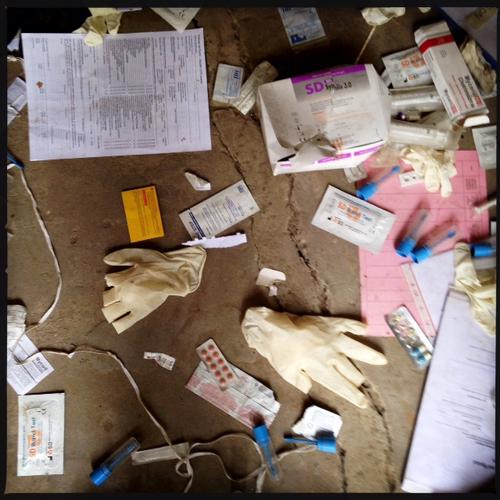
Ransacked medical supplies lie strewn on the floor at the MSF hospital in Leer, South Sudan, February 23, 2014.  The hospital was thoroughly looted, burned, ransacked, and effectively destroyed, along with most of Leer, sometime between the final days of January and early February, 2014, leaving hundreds of thousands of people cut off from critical, lifesaving medical care. The hospital, opened by MSF 25 years ago, was the only secondary health care facility in Unity State.
South Sudan

Violence 'jeopardising MSF work'

Violence in South Sudan is jeopardising MSF's work, says BBC In the Media - 26 Feb 2014
 
msf-placeholder
South Sudan

"The operating table had been burned, the fridges were melted"

Project Coordinator Sarah Maynard describes the devastation she encountered upon returning to MSF’s hospital in Leer Voices from the Field - 26 Feb 2014
 
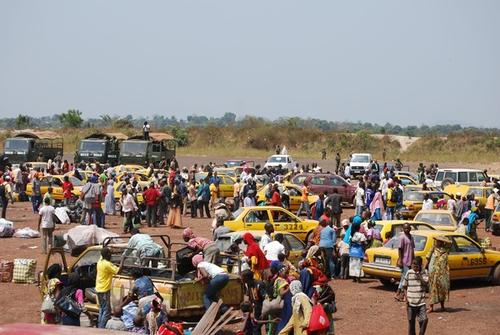
“Armed groups in the town looted our belongings and threatened to kill us,” says Mamadou, 33, owner of a grocery store in Bouar’s Haoussa district. “We had to leave to save our lives. We’d rather suffer in Cameroon than stay here.”
Central African Republic

"The people who leave take enormous risks"

Florent Uzzeni, deputy emergency programme manager, describes what he is seeing unfold on the ground. Voices from the Field - 24 Feb 2014
 
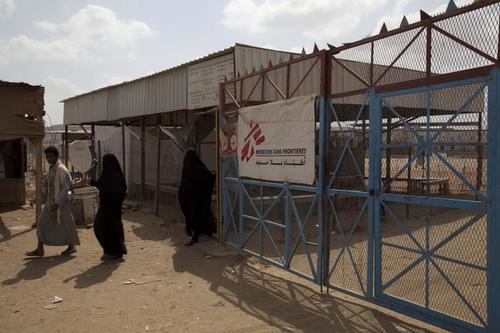
Yemen is a country of transit for the thousands of migrants who leave the Horn of Africa to try to get to the countries of the Arabian Peninsula, mainly from Ethiopia to Saudi Arabia. During the trip and especially in Yemen, these people are victims of traffickers who extort money from them and torture them. Last April, the Yemeni authorities carried out a campaign to release hundreds of migrants held by traffickers and begin to repatriate them to their home countries. Since then, the number of people who voluntarily approach the detention center for migrants seeking repatriation has greatly increased.
The detention center in Sana'a, Yemen's capital, has a maximum capacity of 200-250; the centre currently houses about 750.
Yemen

“No patients, no problems:” Exposure to risk of medical personnel working in MSF projects in Yemen’s governorate of Amran

This paper provides a better understanding of the various forms of insecurity affecting MSF projects in Yemen. Journal article - 18 Feb 2014
 
In June 2010, MSF opened a hospital on the outskirts of Al-Mazraq, in the north of Yemen’s Hajjah governorate, close to the region of Sadaa, with the aim of providing care to the displaced people living in the area. For nearly three years, MSF provided primary and specialist care to the displaced and local populations. The project closed in June 2013 because the IDP situation has stabilized.
Yemen

MSF suspends activities in Ad Dhale following security concerns

MSF suspends its support to the Al Nasser Hospital in Ad Dhale due to an increase in insecurity. Press Release - 15 Feb 2014
 
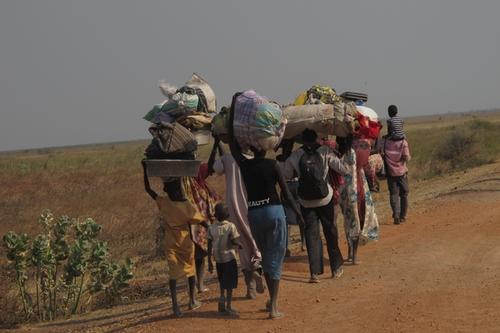
Ongoing insecurity in South Sudan has forced tens of thousands of people to flee their homes. This picture was taken by emergency coordinator, Jean-Pierre Amigo, who was forced to evacuate Bentiu, amid insecurity, along with the MSF team and thousands of displaced South Sudanese people. For ten days MSF returned to the road between Bentiu and Leer to distribute high energy food to the 10,000-15,000 people who walking along it.
South Sudan

Insecurity in Leer has devastating consequences for those hiding in the bush

Worsening security in Leer, South Sudan, makes MSF's job almost too difficult to continue Project Update - 11 Feb 2014
 
View of a Médecins sans frontières (MSF) clinic set up at the Tomping camp for  displaced people in the grounds of the United Nations Mission to South Sudan (UNMISS) base in Juba, South Sudan. MSF is currently carrying out around 230 consultations per day in the camp since three weeks.  Between 13,000 and 17,000 people are residing at the camp. The main diseases include respiratory diseases, acute diarrhea and malaria.
South Sudan

What we need to save lives in South Sudan

MSF General Director describes harrowing situation in South Sudan Voices from the Field - 30 Jan 2014
Four mothers posing in a corridor of the Hospital in Bili. All four of them are staying in the hospital with their child, that's suffering from a severe case of malaria. Since the beginning of the project in 2016, the pediatric ward already treated more than 4.000 cases of complicated/severe form of malaria.
Médecins Sans Frontières (MSF)

Independent medical humanitarian assistance

We provide medical assistance to people affected by conflict, epidemics, disasters, or exclusion from healthcare. Our teams are made up of tens of thousands of health professionals, logistic and administrative staff - most of them hired locally. Our actions are guided by medical ethics and the principles of independence and impartiality. We are a non-profit, self-governed, member-based organisation.

Learn more