



Ebola disease in DRC: find out how we're responding
Learn more
519 Results
 
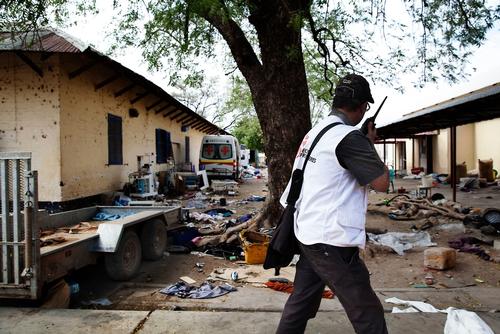
The South Sudanese key strategic town of Malakal came under attack on February 18. The clashes between government and opposition forces forced thousands of people to flee to other locations or to the UN compound in the town. The Malakal Teaching hospital was attacked by armed men. Upon their return to the hospital, MSF teams found eleven bodies. Some patients had been shot in their beds.
South Sudan

Healthcare on the frontline

Midwife Siobhan O’Malley on providing neutral and impartial care in Malakal and Bentiu, key towns hardest hit by the fighting. Voices from the Field - 4 Feb 2015
 
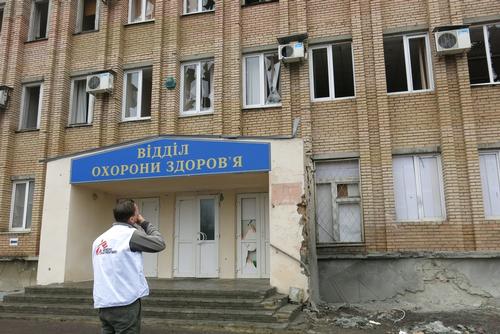
In the last two weeks of January 2014, fighting in eastern Ukraine has escalated. On 30 January, an MSF team returned to Marinka hospital, 35 kilometres west of Donetsk city, where they had delivered medical supplies five days earlier. The day after the delivery was made, 26 January, the hospital was hit by shelling and all staff were relocated to a nearby town. MSF has supported the hospital in nearby Kurakhovo and will distribute relief items to people in Marinka and surrounding communities.
Ukraine

Thousands trapped in eastern Ukraine: MSF calls for safety of civilians and respect for medical facilities

In just the last two weeks, five medical facilities supported by MSF have either been damaged or destroyed by shelling or rockets. Project Update - 3 Feb 2015
 
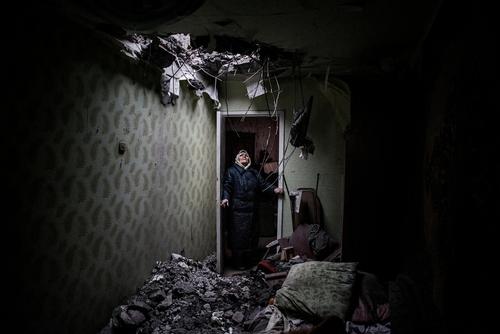
Galina, 86, looks at the hole where a shell hit her apartment in Kievsky district in Donetsk, Ukraine.
Ukraine

Gallery: MSF's support in Donetsk

Photo Story - 2 Feb 2015
 
msf-placeholder
Palestine

Occupied Minds: Looking for hope

Randa is 24 years old and lives in an area called Mfaqarain Massafer Yatta, South of Hebron. Mfaqara is one of the villages threatened to be demolished because it is considered a military zone by the Israeli army. Voices from the Field - 27 Jan 2015
 
msf-placeholder
Syria

Crisis update - January 2015

What began in 2011 in Syria as protests inspired by the Arab Spring has become an entrenched and bloody conflict that shows no sign of resolution.
Crisis Update - 26 Jan 2015
 
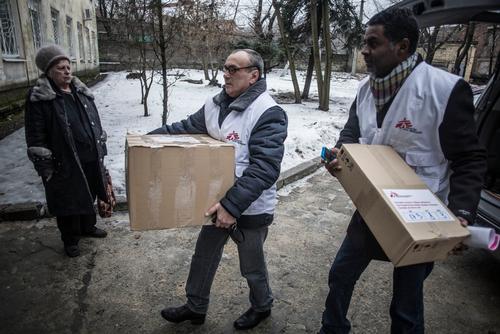
MSF staff deliver medicines, to treat chronic diseases, to Hospital no.6 in Donetsk, Ukraine.
Ukraine

Hospitals shelled and civilians cut off as fighting intensifies

As fighting escalates, the situation for civilians caught in the conflict zone is now dire. Project Update - 23 Jan 2015
 
On  20 January  2015,  the  hospital  managed  by MSF in Frandala village, South Kordofan  region in the Nuba Mountains, has been directly targeted during a bombing lead by Sudanese Air Force (SAF). This is one of the indiscriminate bombing  occurring  regularly in South Kordofan in the war between Khartoum Authorities  and  the  rebels  groups  in  the Nuba Mountains. 

The Frandala hospital  was  previously  bombed  on 16 June,  2014.  That attack took place despite Sudanese government’s knowledge of the MSF presence.
Sudan

MSF hospital bombed in South Kordofan

Press Release - 22 Jan 2015
 
msf-placeholder
South Sudan

Tackling a deadly outbreak of tropical disease

Casey O’Connor oversees MSF’s activities in Lankien and reflects on a tough year. Voices from the Field - 16 Jan 2015
 
msf-placeholder
Nigeria

“There are only two doctors in the whole of north Borno State”

Our programme manager in Nigeria tells us what MSF has achieved in the country and the organisation’s plans for 2015. Voices from the Field - 13 Jan 2015
Four mothers posing in a corridor of the Hospital in Bili. All four of them are staying in the hospital with their child, that's suffering from a severe case of malaria. Since the beginning of the project in 2016, the pediatric ward already treated more than 4.000 cases of complicated/severe form of malaria.
Médecins Sans Frontières (MSF)

Independent medical humanitarian assistance

We provide medical assistance to people affected by conflict, epidemics, disasters, or exclusion from healthcare. Our teams are made up of tens of thousands of health professionals, logistic and administrative staff - most of them hired locally. Our actions are guided by medical ethics and the principles of independence and impartiality. We are a non-profit, self-governed, member-based organisation.

Learn more