



Ebola disease in DRC: find out how we're responding
Learn more
280 Results
 
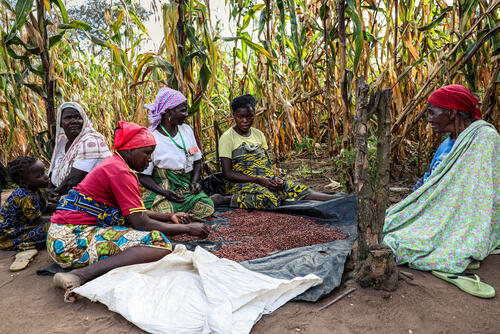
Atija Bacar, MSF traditional birth attendant (TBA), at Eduardo Mondlane camp, counsels Amina, 17 years old and 9 months pregnant, and the women in her family.
Mozambique

Overcoming the challenges of having a safe pregnancy in Cabo Delgado

In Cabo Delgado, Mozambique ongoing violence has forced hundreds of thousands of people to flee their homes in search of safety. Eduardo Mondlane camp, located in Mueda, is home to more than 2,000 displaced families. In the camp, many pregnant women have little to no information about pregnancy and there are many challenges to having a safe childbirth. Photo Story - 27 May 2022
 
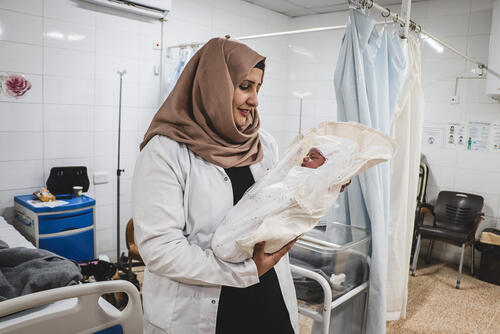
Rahma, Midwife supervisor, is holding a newborn named Rivan. “All the feedback I have received (about the facility) has been positive”, she says. “People say that our services are useful. One day, a patient left us a note to thank us, for the services but also for our attention and the human approach we’re taking (in providing our services).”
Iraq

Delivering babies in a city with few maternity services

Five years after the battle for Mosul, the healthcare system in the Iraqi city remains fragile. Pregnant women and their babies are among the most vulnerable needing access to quality healthcare. Project Update - 6 Apr 2022
 
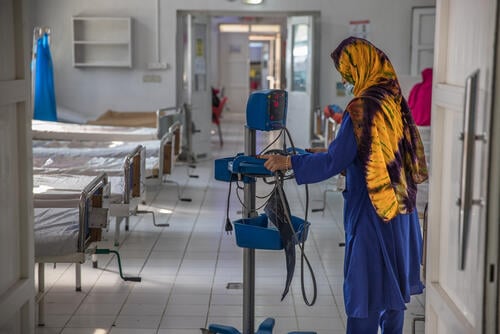
An MSF staff member inspects equipment in a ward for women to receive care following c-sections, Khost maternity hospital
Afghanistan

A hospital of women, for women: Preserving maternity care in Khost

Babies are still being born in Afghanistan despite the political upheaval - at MSF's hospital in Khost we continue to ensure women have a safe place to give birth. Project Update - 16 Dec 2021
 
On the occasion of International Safe Abortion Day on 28 September, international medical organisation Médecins Sans Frontières/Doctors Without Borders (MSF) launches its report Unsafe abortion, women at risk (link), based on data collected during its work across the country. Eighty-eight percent of the 428 patients treated by MSF in 2017-18 faced at least one barriers.
Safe abortion care

Putting patients first for safe abortion care

How MSF integrated safe abortion care into our medical projects around the world Interview - 18 Nov 2021
 
Abortion is a common experience—people of all ages, ethnicities, nationalities, and religions decide to end their pregnancies for various reasons. Yet in many places across the globe, people who have abortions face harmful stereotypes, blame, and social stigma. Doctors Without Borders/Médecins Sans Frontières (MSF) provides safe abortion care and also treats people for the consequences of unsafe abortion, a leading cause of maternal mortality. When our teams talk to people who are deciding to have an abortion, we often hear their personal stories. To mark International Safe Abortion Day, September 28, we want to help break abortion stigma by sharing some first-person stories from women in the places where MSF works. We hear from people all over the world—from Colombia to the Democratic Republic of Congo, Greece to India, people of many religions, students, midwives, people with children, and some without children. MSF is committed to using our voice to ensure that people everywhere have access to safe abortion care. Safe abortion care is essential health care.
Safe abortion care

A revolution in safe abortion care

Self-managed abortion with pills could open up access and uphold autonomy for millions of people - a revolution in safe abortion care Opinion - 28 Sep 2021
 
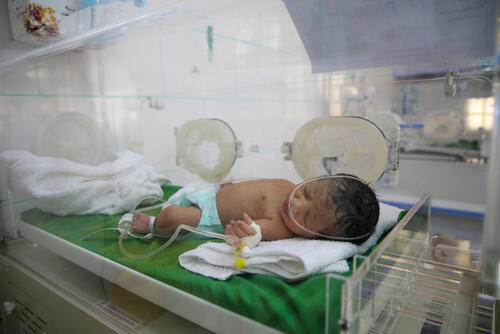
Newborn daughter of Aiesha*, admitted to the special care unit for critical care for respiratory distress at Al-Jamhouri hospital supported by MSF in Taiz City, Yemen.

*name of the patient changed upon her request.
Yemen

Seeking healthcare in Taiz, a city split by a frontline

More than six years of war has split the city of Taiz in two, with a frontline dividing the city from people who need access to healthcare - something often inaccessible and unaffordable in Yemen. Project Update - 24 Aug 2021
 
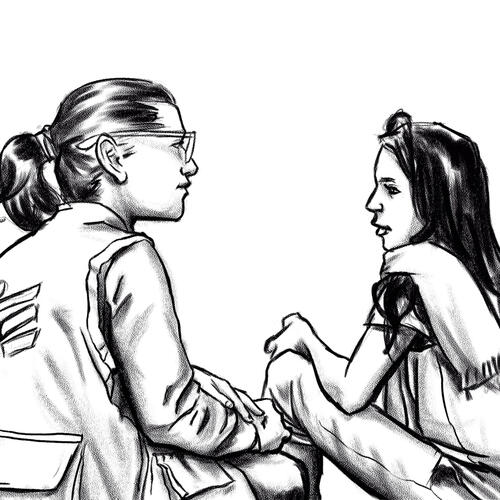
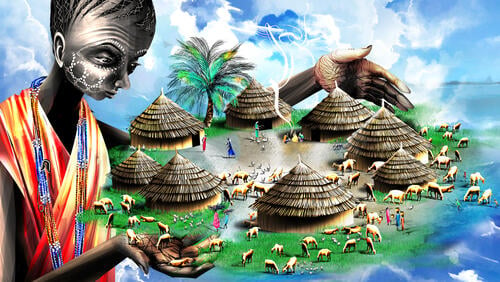
July 2021 marks the 10th birthday of South Sudan – the world's youngest country . In 2019, illustrator Ella Baron visited the town of Pibor to document the lengths that some mothers must go to reach maternity care in this part of the world.

The birth story of Maria and her mother Laito unravels as an extraordinary race with life-or-death stakes.

It is not, however, extraordinary at all. Their experience is a commonplace reality in areas of South Sudan where infrastructure is limited and where seemingly simple things can quickly become desperately complicated. The consequences of decades of violence are all around.

Having access to medical assistance in childbirth is important wherever you are in the world as complications can require specialist medical intervention to save the lives of both mother and baby. 

In 2020, of approximately 2,300 health facilities in South Sudan, more than 1,300 were non-functional.

Fewer than half of South Sudanese people live within five kilometres of a functional health facility. 

MSF is doing its part to help, and in 2020 MSF teams assisted 13,400 births in South Sudan.
South Sudan

South Sudan: The long walk for new life

This month, South Sudan – the world's youngest country – marks its 10th birthday. In 2019, illustrator Ella Baron visited the town of Pibor to document the lengths that some mothers have to go to reach maternity care in this part of the world. Voices from the Field - 2 Aug 2021
 
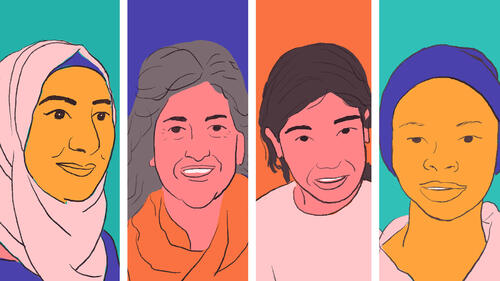
Illustration of women from various contexts and lived experiences, who all might seek self-care.
Women's health

Practicing self-care: empowering women to manage their own health

For International Women's Day, we explain how we empower women and girls around the world to practice self-care, by taking charge and managing their own health. Project Update - 4 Mar 2021
 
A sexual assault survivor working on her body map during MSF's Body Mapping workshop, Rustenburg, June 2018. 
MSF facilitated a 2-day Body Mapping workshop attended by adolescent survivors of sexual violence from across the Rustenburg area. In Rustenburg, South Africa, a 2016 MSF survey revealed that 1 in 4 women between the age of 18-49 has been raped in her lifetime. As part of MSF's comprehensive sexual violence project in Rustenburg, Body Mapping is used to help survivors of sexual violence identify the internal and external scars and hardships that they are living with and working through. Body Maps comprise a life-size outline of the body, which the survivor "maps" with their experiences and emotions.
Safe abortion care

MSF welcomes reversal of the Global Gag Rule on safe abortion

The new United States government has rescinded the 'Global Gag Rule', which restricted rights and access to safe abortion care. MSF urges the US to expand access to services. Statement - 29 Jan 2021
 
18 years old, she told us that she fell pregnant while in a relationship with a neighbour. She couldn't tell her family nor keep the child, so she went to the MSF-supported hospital in Kigulube for safe abortion care.
Women's health

Proposed changes to US Global Gag Rule threaten wider harm to women

Proposed changes to an-already damaging US policy which restricts access to safe abortion and other forms of healthcare will further limit care for people in need. Interview - 28 Sep 2020
Four mothers posing in a corridor of the Hospital in Bili. All four of them are staying in the hospital with their child, that's suffering from a severe case of malaria. Since the beginning of the project in 2016, the pediatric ward already treated more than 4.000 cases of complicated/severe form of malaria.
Médecins Sans Frontières (MSF)

Independent medical humanitarian assistance

We provide medical assistance to people affected by conflict, epidemics, disasters, or exclusion from healthcare. Our teams are made up of tens of thousands of health professionals, logistic and administrative staff - most of them hired locally. Our actions are guided by medical ethics and the principles of independence and impartiality. We are a non-profit, self-governed, member-based organisation.

Learn more