



Ebola disease in DRC: find out how we're responding
Learn more
519 Results
 
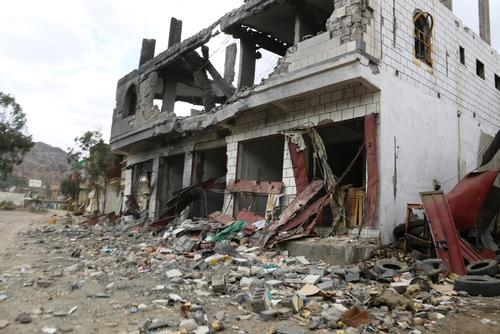
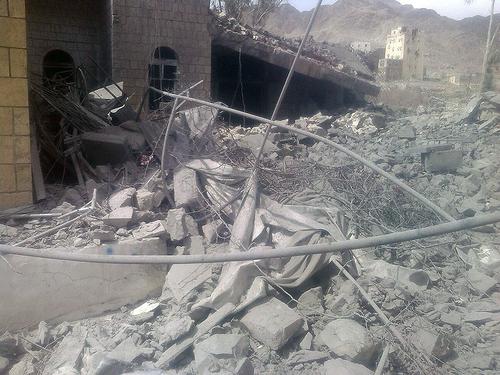
Haydan streets and buildings destroyed by the recent airstrikes.

The small hospital, in the Haydan district in Saada Province, was also hit by several airstrikes. With the hospital destroyed, at least 200,000 people now have no access to lifesaving medical care.
Yemen

“The air raids continued with 10 to 15 almost every day”

A Saudi-led coalition airstrike destroyed the hospital in Haydan that MSF supports. Programme coordinator Miriam Czech told us what she saw in the town in the days following the bombing. She added that the whole region is being targeted by the coalition airstrikes. Voices from the Field - 13 Nov 2015
 
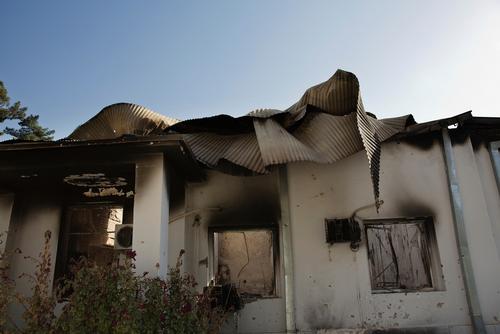
A view of part of the MSF Trauma Centre in Kunduz, 14 October 2015, damaged and burnt-out following the 03 October 2015 airstrike on the facility. Photo: Victor J Blue.
Attacks on medical care

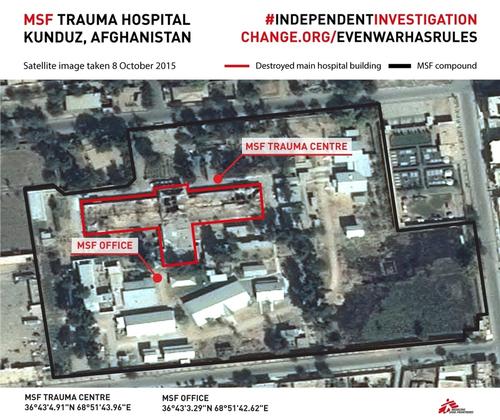
Kunduz, Afghanistan, 36°43’4.91’’N, 68°51’43.96’’

"We say: if there's no room for humanity in times of war, human civilisation as a whole will lose out in the long run. So, it's up to all of us to mobilise and urge politicians, governments and non-state armed groups to respect medical facilities. Together we shout loudly and clearly:“Stop bombing hospitals!” Opinion - 10 Nov 2015
 
Infographic of the Kunduz MSF Hospital with satellite image that shows the state of the building after the attack.

ILLUSTRATOR FILE ON MSF155042
Kunduz hospital attack

MSF releases internal review of the Kunduz hospital attack

MSF today released an internal review of the 3 October US air strikes on its hospital in northern Afghanistan. The chronological review of the events leading up to, during, and immediately following the air strikes shows no reason why the hospital should have come under attack. Press Release - 5 Nov 2015
 
msf-placeholder
Kunduz hospital attack

Interactive map of our Trauma Hospital in Kunduz before and after the attack

Hover over the interactive images showing satellites images of the Kunduz Hospital before and after the attack. Project Update - 4 Nov 2015
 
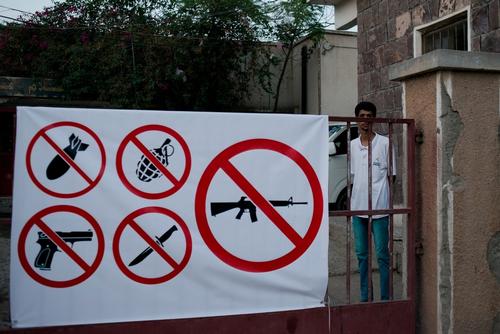
A tarp stating no guns, knives, grenades, bombs, or rifles are allowed inside, hangs from one of MSF supported hospital gates on July 21, 2015 in Qataba, Yemen.
Global

Primer: Protection of medical services under International Humanitarian Law

An introduction to the main principles guiding the protection of medical services under international humanitarian law. Journal article - 3 Nov 2015
 
msf-placeholder
Syria

At least 550 wounded in horrific market-bombing in Damascus besieged area

At least 70 people have been killed and 550 injured in an airstrike on a marketplace in the Douma neighbourhood near Damascus, Syria. "This was an extremely violent bombing," says the director of a nearby MSF-supported hospital who assisted in the first wave of mass-casualty response. "The wounds were worse than anything we've seen before, and there were large numbers of dead." Press Release - 31 Oct 2015
 
From the grounds of the bombed hospital, the MSF staff in Kunduz send their deep appreciation to everyone around the world who stood in solidarity with them. Three weeks after the event this is the first time they see each other again.
Afghanistan

MSF staff gather In Kunduz

Three weeks after the bombing in Kunduz, Afghanistan, our MSF colleagues gathered together for the first time on the grounds of the ruined hospital. Project Update - 30 Oct 2015
 
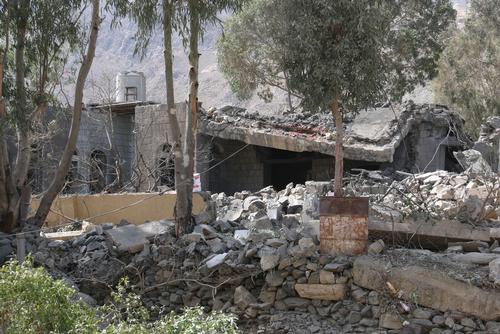
Overview of what is left of Haydan hospital after october 26th airstrike.
Yemen

Denial of hospital bombing by Saudi-led coalition contradicts all facts

Despite denials by the Saudi-led coalition, it is beyond doubt that it struck and destroyed a hospital supported by MSF in Haydan on 26 October.
Press Release - 29 Oct 2015
 
Massive displacement
Syria

Massive displacement in Northern Syria as violence escalates and intensifies

At least 35 Syrian patients and medical staff have been killed, and 72 wounded, in a significant increase of air strikes on hospitals in Northern Syria, according to health staff supported by MSF inside Syria. As a result of the wider attacks in the region, tens of thousands of people have been forced to flee their homes. Crisis Update - 29 Oct 2015
 
On october 26th, the Haydan hospital we support in northern Yemen has been hit by several air strikes. The first bombing took place at 22:30 local time and last midnight.
Miriam, project coordinator in Saada, went this morning Haydan, but could not enter the building because there were still bombs that had not exploded.
The hospital is completely destroyed: the emergency room, OPD, IPD, the laboratory, motherhood and the block. But the bombing did not cause any casualties. Only one person was slightly injured. Staff and two hospitalized patients could leave the building after the first strike.
This hospital was still functional only for the whole Haydan region which has a population of about 200,000 inhabitants. On average 150 patients had received emergency a week by personnel from the Department of Health that is supported with incentives.
The Haydan region bordering Saudi Arabia is in Sa'ada governorate, which is controlled by the Houthis. It is bombarded every day by the coalition led by Saudi Arabia.
Yemen

MSF hospital destroyed by airstrikes

Airstrikes carried out late last night by the Saudi-led coalition in northern Yemen destroyed a small MSF supported hospital. Hospital staff and patients managed to escape before subsequent airstrikes occurred over a two hour period. With the hospital destroyed, at least 200,000 people now have no access to lifesaving medical care. Press Release - 27 Oct 2015
Four mothers posing in a corridor of the Hospital in Bili. All four of them are staying in the hospital with their child, that's suffering from a severe case of malaria. Since the beginning of the project in 2016, the pediatric ward already treated more than 4.000 cases of complicated/severe form of malaria.
Médecins Sans Frontières (MSF)

Independent medical humanitarian assistance

We provide medical assistance to people affected by conflict, epidemics, disasters, or exclusion from healthcare. Our teams are made up of tens of thousands of health professionals, logistic and administrative staff - most of them hired locally. Our actions are guided by medical ethics and the principles of independence and impartiality. We are a non-profit, self-governed, member-based organisation.

Learn more