



Ebola disease in DRC: find out how we're responding
Learn more
519 Results
 
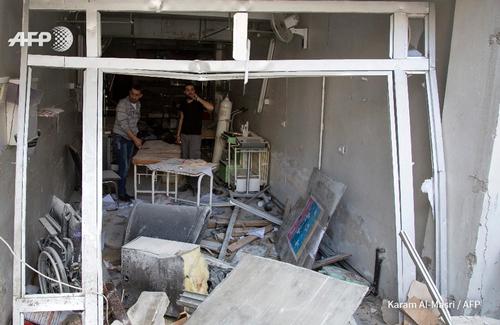
A picture taken on April 28, 2016 shows Syrian men inspecting the damage at the Al-Quds hospital building following reported airstrikes on the rebel-held neighbourhood of Sukkari in the northern city of Aleppo.
Doctors Without Borders condemned Thursday the "outrageous" air strike on a hospital it was supporting in the war-torn northern Syrian city of Aleppo, where doctors were among those killed. Local rescue workers said the overnight strike on the Al-Quds hospital  and a nearby residential building left 30 people dead. Among them was the only paediatrician operating in the rebel-controlled eastern parts of Aleppo city, they said. Doctors Without Borders, which is also known by the acronym MSF, said two doctors were among 14 people killed in the strike on the hospital. In an online statement Thursday, Doctors Without Borders (MSF) said it had been donating medical supplies to Al-Quds since 2012. MSF said it had been donating medical supplies since 2012 to the 34-bed Al-Quds hospital, where eight doctors and 28 nurses worked full time. Karam Al-Masri/AFP
Syria

MSF urges Syrian government and its allies to stop indiscriminate bombing in Aleppo

“Bombs are raining from Syria-led coalition planes and the whole of east Aleppo has become a giant kill box. The Syrian government must stop the indiscriminate bombing; and Russia as an indispensable political and military ally of Syria has the responsibility to exert the pressure to stop this,” says Xisco Villalonga, director of operations at MSF. Press Release - 30 Sep 2016
 
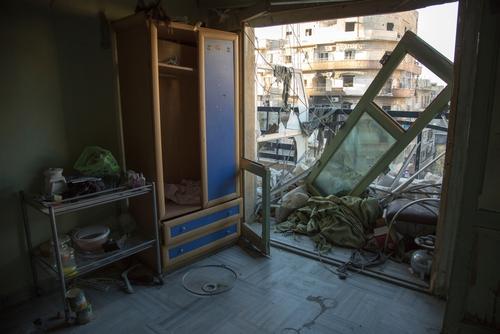
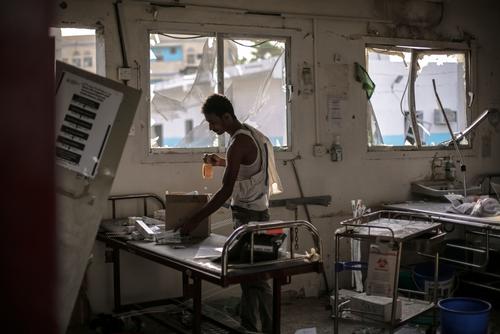
 A room on the second floor of the hospital. Since 2013, MSF has been providing drugs, supplies and medical equipment to health facilities in east Aleppo.
Syria

Two surgical hospitals bombed in east Aleppo

Project Update - 28 Sep 2016
 
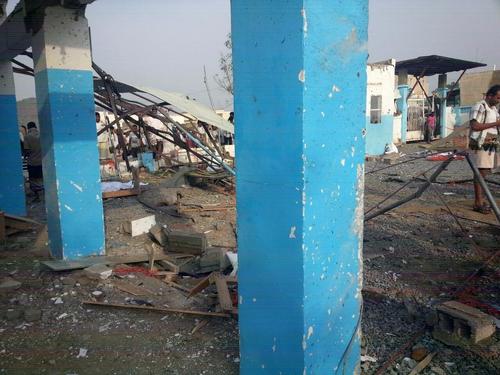
Abs hospital, in Hajjah governorate, northwestern Yemen, was hit by an airstrike in the afternoon of August 15 at 3.45pm local time, killing at least 14 people and injuring at least 19. The blast immediately killed nine people, including an MSF staff member. Two patients died while being transferred to Al Jamhouri hospital. Five patients remain hospitalised. Abs hospital, supported by MSF since July 2015, was partially destroyed. All remaining patients and staff have been evacuated. The location of the hospital was well known, and the hospital’s GPS coordinates were repeatedly shared with all parties to the conflict, including the Saudi-led coalition.
United Nations

MSF International President to UN Security Council: "This failure reflects a lack of political will"

Speech delivered 28 September 2016, in New York Speech - 28 Sep 2016
 
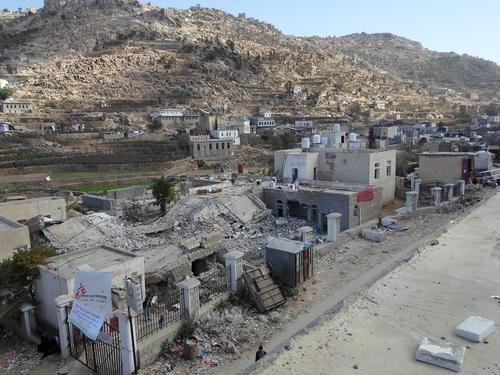
The Shiara hospital, an MSF-supported facility in Razeh district (Northern Yemen), was hit by a projectile in northern Yemen on January 10thm resulting in five deaths, eight injured and the collapse of several buildings of the medical facility. One of the critical injured victim, passed away on Sunday 17th after being transferred to the ICU at the MSF hospital in Saada. More than 130 health centres and hospitals have been affected by the conflict ravaging the country in the last ten months.
Yemen

Crisis update - September 2016

Crisis Update - 27 Sep 2016
 
A hospital worker salvages the remains of undamaged medication and equipment left in the emergency room after the 15 August Saudi-led coalition airstrike which destroyed the hospital killing 19. 

In a country where access to healthcare is already extremely limited, the Abs hospital was the only facility catering to over 2,000 IDPs in the area and thousands more along the coast, from the northwestern border of Yemen to the outskirts of Hodeidah. With the destruction of Abs hospital, the closest hospital is now over 3 hours drive away.
Yemen

MSF releases detailed documentation of attacks on two medical facilities ahead of UNSC closed session on protection of medical mission

Member states must advance concrete measures to protect access to medical care in conflict zones. Report - 27 Sep 2016
 
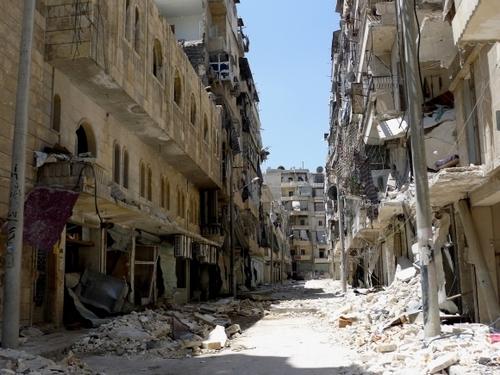
Street scene in Aleppo, from April 2013.
Syria

Aleppo hospitals report sharp increase of wounded following days of heavy bombing

MSF denounces indiscriminate bombing of civilian areas and the resulting civilian deaths in the besieged city Project Update - 23 Sep 2016
 
MSF Medical team leader, Crystal Vanleeuwen in front of the outpatient department in Al-Thawra hospital in the besieged area of Taiz. A siege has been imposed on the city by Houthis since late August 2015. MSF was not able to enter medical aid into the enclave area for five months. Only on January 16th, MSF got the authorization and delivered medical aid to Al-Thawra hospital inside the enclave area.
Yemen

Healthcare at breaking point

"In the public hospitals that are still functioning in Yemen, beds are full – those people who are able come from all over the country to access what medical care is available," says Crystal van Leeuwen, an MSF nurse. "For others, all that remains are private clinics that, in the current economic crisis, people can barely afford." Voices from the Field - 9 Sep 2016
 
Mustafa is a volunteer in one of MSF supported hospitals in the city of Aleppo
Syria

We cannot go and leave our people behind; we do not have the right to leave them alone

Mustafa Karaman volunteers as a physiotherapist in one of the only eight functional hospitals in east Aleppo, where 250,000 people are now living under siege and constant bombing, and medical staff like Mustafa are fighting a daily struggle to care for the sick and the wounded. Voices from the Field - 9 Sep 2016
Four mothers posing in a corridor of the Hospital in Bili. All four of them are staying in the hospital with their child, that's suffering from a severe case of malaria. Since the beginning of the project in 2016, the pediatric ward already treated more than 4.000 cases of complicated/severe form of malaria.
Médecins Sans Frontières (MSF)

Independent medical humanitarian assistance

We provide medical assistance to people affected by conflict, epidemics, disasters, or exclusion from healthcare. Our teams are made up of tens of thousands of health professionals, logistic and administrative staff - most of them hired locally. Our actions are guided by medical ethics and the principles of independence and impartiality. We are a non-profit, self-governed, member-based organisation.

Learn more