




Ebola disease in DRC: find out how we're responding
Learn more
280 Results
 
Chatuley Hospital
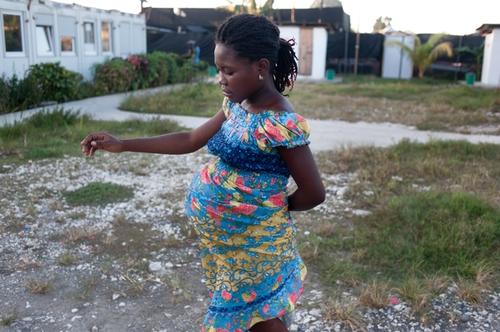
Ermsolida Linot, 17 years old is waiting to give birth.
Women's health

International Women's Day: Early pregnancy poses risks for mother and baby

In many countries where MSF works, pregnancy during adolescence is extremely common – and often unsafe. Project Update - 4 Mar 2015
 
msf-placeholder
Nigeria

International Women's Day: Delivering comprehensive obstetric care for young mothers in Nigeria

eenage pregnancy is the norm in Jahun, Nigeria, leading to high maternal mortality rates. Project Update - 4 Mar 2015
 
msf-placeholder
Kenya

International Women's Day: “If he asks me to get pregnant again, I will advise him to wait until our baby is two or three years old.”

Nineteen-year old Laventa lives in Kibera, a slum area in Nairobi, and discusses the importance of family planning with her husband. Voices from the Field - 3 Mar 2015
 
Asina

Excerpt from IWD 2015 communications package available on MSF Connect:

Adolescent women often miss out on the family planning they need to plan their pregnancies and their lives. Asina was still in high school when she fell pregnant with her first child in Kibera, a slum settlement in Nairobi, Kenya. She dropped out of school and ran away from home due to the shame she felt around the pregnancy. After coming to the Médecins Sans Frontières clinic for antenatal care and to deliver her baby, she finally received some crucial information about family planning. “I listened carefully and I am now on a three-month contraception method in injection form. It is important to plan myself as the cost of living is high. I cannot afford to raise many children,” says Asina, now 19. 

Médecins Sans Frontières established programmes in Nairobi’s Kibera slum in 1997. The Kibera Project now provides comprehensive outpatient care for HIV, tuberculosis and non-communicable diseases (e.g. hypertension, diabetes, asthma), mother and child care including family planning and maternity services, nutritional diagnosis and treatment, mental health services, and referrals of emergencies.
Kenya

International Women's Day: Negotiating family planning during the teenage years

Adolescent women often miss out on the family planning they need to plan their pregnancies and their lives Project Update - 3 Mar 2015
 
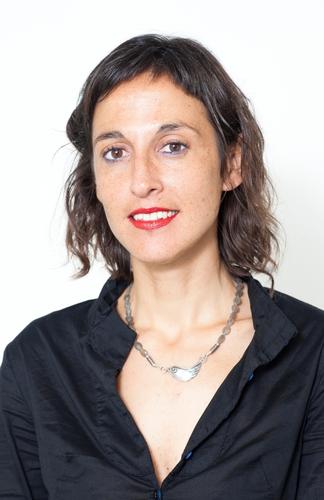
Tane Luna Ramirez, MD
Obstetrican and Gynaecologist
Women’s Health Advisor OCP

Based in the Medical Unit Sydney, Tane supervises women’s health activities in countries including Ivory Coast, Nigeria and Pakistan. She also advises on sexual violence.
International Women's Day

Why adolescent health?

As a medical humanitarian organisation, Médecins Sans Frontières values International Women’s Day (IWD) as an opportunity to reflect on the medical needs facing women in the countries where we work. Project Update - 2 Mar 2015
 
 *** Local Caption *** Since May 2011, MSF runs a gynecology and obstetrics 30-beds hospital in Peshawar. The neonatology unit now has 15 inpatients beds for newborns with serious medical complications. The care offered by MSF are totally free. If there are many private maternity hospitals in the district of Peshawar, specialist obstetric services are not very accessible to the most vulnerable women (refugees, displaced, poor) or from FATA (Federal Administration Tribal Areas) as often expensive or of poor quality when they exist in public structures.
In 2013, 374 new born and 3 717 women were admitted to the MSF hospital in Peshawar, nearly 40% with complications during pregnancy. Every week, an average of 62 deliveries were attended (the figure has doubled since 2012), 10 by caesarean section.<br/>
Depuis mai 2011, MSF gère un hôpital gynéco-obstétrique de 30 lits à Peshawar. L’unité de néonatalogie dispose désormais de 15 lits d’hospitalisation pour les nouveau-nés présentant de graves complications médicales. Les soins offerts par MSF sont totalement gratuits. S’il existe de nombreuses maternités privées dans le district de Peshawar, les services obstétriques spécialisés sont très peu accessibles aux femmes les plus vulnérables (réfugiées, déplacées, démunies) ou originaires des FATA (zones tribales sous administration fédérale), car souvent coûteux ou de mauvaise qualité quand ils existent dans les structures publiques.
En 2013, 374 nouveau-nés et 3717 femmes ont été admises à l’hôpital MSF de Peshawar, dont près de 40% présentant des complications lors de la grossesse. Chaque semaine, 62 accouchements ont été assistés en moyenne (le chiffre a doublé par rapport à 2012), dont 10 par césarienne.
Pakistan

Six months at Peshawar’s neonatal unit

A look back at Dr Ley's experience heading up the neonatal unit at MSF’s obstetrics and gynaecology hospital. Voices from the Field - 9 Feb 2015
 
msf-placeholder
Sierra Leone

Adama - a mother saved against all odds

This is the first day of her new life. Voices from the Field - 29 Jan 2015
 
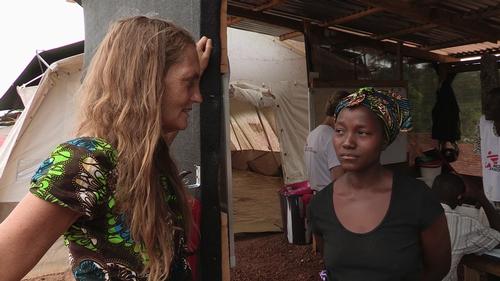
MSF Midwife Ruth Kauffman with Kumba at the Kailahun Ebola Treatment centre in Sierra Leone, October 2014. Kumba was fighting infection with the Ebola virus and at  seven months pregnant it was feared she would not survive. Midwife Ruth Kauffman worked to provide care that supported Kumba through the critical period of delivery. The feotus was still born, having died due to the effects of the virus however Kumba made a full recovery.
Sierra Leone

Sierra Leone: "This has been the hardest but also the best thing that I have done"

“In all of my years with MSF, this has been the hardest but also the best thing that I have done.” Voices from the Field - 29 Jan 2015
 
msf-placeholder
Malawi

Daughter of the floods – a new life amidst chaos

Berita didn't run when the floods hit. She was eight months pregnant, and there was nowhere to go. Voices from the Field - 29 Jan 2015
 
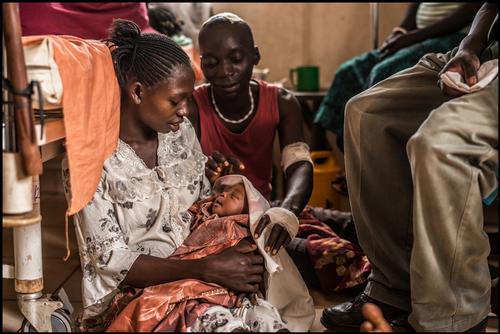
Parents, bonding with their newborn.
South Sudan

Maternal and Child Health in Yambio, South Sudan

Western Equatoria has the highest maternal mortality (2,327 deaths per 100.000 live births) in South Sudan, which in turn has one of the highest rates of maternal deaths in the world (2,054 deaths/ 100,000 live births). Photo Story - 20 Jan 2015
Four mothers posing in a corridor of the Hospital in Bili. All four of them are staying in the hospital with their child, that's suffering from a severe case of malaria. Since the beginning of the project in 2016, the pediatric ward already treated more than 4.000 cases of complicated/severe form of malaria.
Médecins Sans Frontières (MSF)

Independent medical humanitarian assistance

We provide medical assistance to people affected by conflict, epidemics, disasters, or exclusion from healthcare. Our teams are made up of tens of thousands of health professionals, logistic and administrative staff - most of them hired locally. Our actions are guided by medical ethics and the principles of independence and impartiality. We are a non-profit, self-governed, member-based organisation.

Learn more