



Ebola disease in DRC: find out how we're responding
Learn more
280 Results
 
msf-placeholder
Iraq

Crisis Update – October 2015

Humanitarian response has so far been insufficient, concentrated in safer areas and short term. Recent cuts in funding have been increasingly affecting the level of assistance offered to Syrian refugees, displaced populations and host communities. Crisis Update - 11 Nov 2015
 
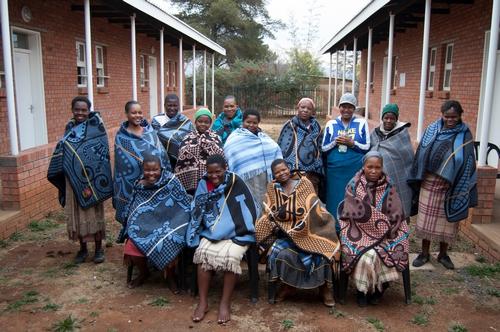
Expectant mothers at the Waiting Mother's Lodge, St. Joseph’s District Hospital, Roma, Lesotho.
Lesotho

Free maternal care has an impressive return on investment

Free maternal healthcare is a relatively cheap measure that has a large impact in saving lives of women and newborns. Press Release - 3 Nov 2015
 
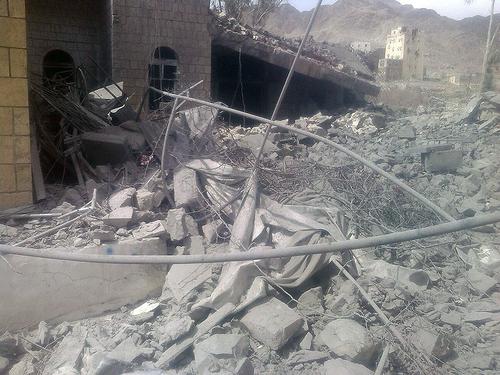
On october 26th, the Haydan hospital we support in northern Yemen has been hit by several air strikes. The first bombing took place at 22:30 local time and last midnight.
Miriam, project coordinator in Saada, went this morning Haydan, but could not enter the building because there were still bombs that had not exploded.
The hospital is completely destroyed: the emergency room, OPD, IPD, the laboratory, motherhood and the block. But the bombing did not cause any casualties. Only one person was slightly injured. Staff and two hospitalized patients could leave the building after the first strike.
This hospital was still functional only for the whole Haydan region which has a population of about 200,000 inhabitants. On average 150 patients had received emergency a week by personnel from the Department of Health that is supported with incentives.
The Haydan region bordering Saudi Arabia is in Sa'ada governorate, which is controlled by the Houthis. It is bombarded every day by the coalition led by Saudi Arabia.
Yemen

MSF hospital destroyed by airstrikes

Airstrikes carried out late last night by the Saudi-led coalition in northern Yemen destroyed a small MSF supported hospital. Hospital staff and patients managed to escape before subsequent airstrikes occurred over a two hour period. With the hospital destroyed, at least 200,000 people now have no access to lifesaving medical care. Press Release - 27 Oct 2015
 
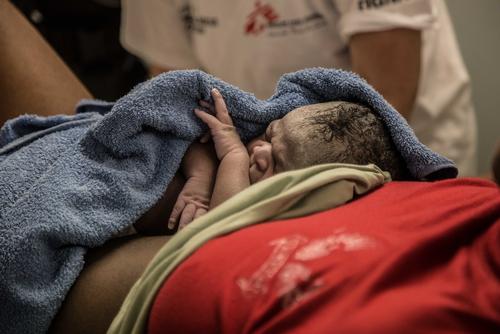
Divan, newborn boy, lays on a belly of his mother Collins minutes after a successful delivery.
Mediterranean migration

Childbirth in the Mediterranean

On Sunday, 25-year-old Collins from Cameroon was rescued by the Dignity I, one of the MSF rescue ships in the Mediterranean. 240 people were rescued that morning. In the rubber boat she was travelling in, there were 120 people, with six children among them. She was nine months pregnant. Voices from the Field - 20 Oct 2015
 
MSF is working in the district hospital of Degahbour. Medical help is provided in the fields of Tuberculosis, malnutrition for children under five, maternity and in the emergency room of the hospital.
Ethiopia

"I don’t want to go without my baby!"

One woman’s bravery secures her a safe birth Voices from the Field - 16 Oct 2015
 
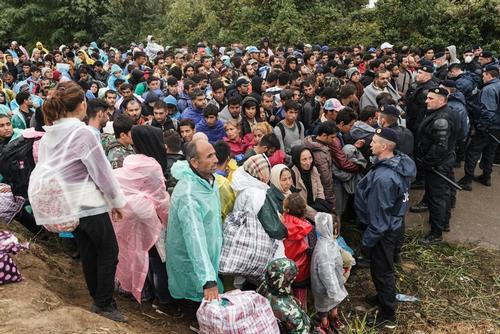
Refugees and migrants wait on the Serbian side of the Bapska border crossing, hoping to enter into Croatia.
Mediterranean migration

“The determination of the refugees to reach their destination is shocking.”

Interview with Jota Echevarría, MSF medical coordinator first in Hungary and Serbia and later in Croatia, who describes MSF activities since the beginning of its operations in Hungary. Voices from the Field - 15 Oct 2015
 
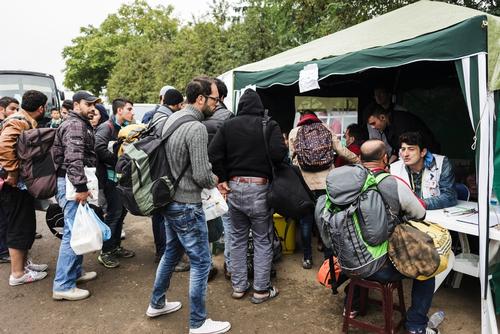
Refugees waitt to be examined at a MSF mobile clinic at the Bapska border crossing in Serbia.
Mediterranean migration

Thousands crossing the Balkans exposed to unnecessary suffering

MSF warns that thousands of refugees and migrants in the Balkans have been exposed to conditions that pose a real threat to their health as assistance fails to meet minimum standard.“The lack of basic services is already having an impact on their health, and the situation will only get worse this winter if adequate shelters, warm food and hygiene facilities at registration and transportation points are not rapidly provided," says Aurelie Ponthieu, MSF’s Humanitarian Adviser on Displacement. "We cannot wait for a dramatic event to happen, safe and adequate transit conditions, adapted to the coming low temperatures, need to be guaranteed now”. Project Update - 15 Oct 2015
 
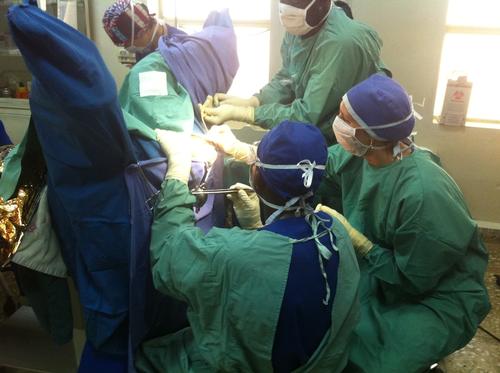
Senior VVF surgeon Dr. Said and VVF Nurse Manager Kate Norgang discuss a VVF repair. Dr. Said is an avid teacher; all staff involved with the VVF program learns from him on a regular basis.
Nigeria

“Providing a safe childbirth to Nigerian mothers”

Interview with Dr Sivapalan Namasivay, MSF anaesthesiologist, back from Jahun Hospital in the North of Nigeria, where MSF is responsible for maternity care. Voices from the Field - 30 Sep 2015
 
msf-placeholder
Yemen

“The majority of our patients suffered from war injuries.”

Testimony from an MSF midwife coming back from Yemen where she spent six weeks in Sa’ada hospital maternity department. "We don't only treat patients, we deal with human beings." Voices from the Field - 14 Sep 2015
 
msf-placeholder
Hungary

MSF providing medical care to refugees on the Serbia-Hungary border

"The needs in Roszke are enormous. This is the first place they arrive after having been on the road for weeks since setting off from Greece,” explains Teresa Sancristoval, project manager for MSF's Emergency Unit in Roszke. “They can stay here for up to a few days so they need information, food, water, latrines, showers and protection from the cold as temperatures can drop to three degrees at night. With the heavy rains that we are facing now, the conditions are worsening. We have to be ready as we foresee that this situation will continue for a while." Voices from the Field - 11 Sep 2015
Four mothers posing in a corridor of the Hospital in Bili. All four of them are staying in the hospital with their child, that's suffering from a severe case of malaria. Since the beginning of the project in 2016, the pediatric ward already treated more than 4.000 cases of complicated/severe form of malaria.
Médecins Sans Frontières (MSF)

Independent medical humanitarian assistance

We provide medical assistance to people affected by conflict, epidemics, disasters, or exclusion from healthcare. Our teams are made up of tens of thousands of health professionals, logistic and administrative staff - most of them hired locally. Our actions are guided by medical ethics and the principles of independence and impartiality. We are a non-profit, self-governed, member-based organisation.

Learn more