



Ebola disease in DRC: find out how we're responding
Learn more
1993 Results
 
msf-placeholder
Philippines

Typhoon Haiyan: Video interview with Dr Natasha Reyes

Video interview with Dr Natasha Reyes, MSF emergency coordinator, on MSF response to Typhoon Haiyan. Project Update - 15 Nov 2013
 
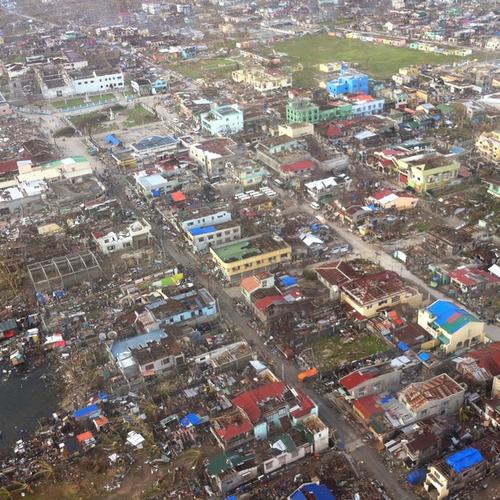
Guiuan is municipality of 45,000 people. 87 people dead but the devastation is massive. 99% of Guiuan is flattened. Trees, houses, infrastructures, livelihood means such as rice fields, fishing boats were destroyed. Marie Jeanne Bertol, an orthopaedic surgeon, one of the three MSF staff who assessed the situation and needs in Guiuan, said “from the medical stand point, it doesn’t mean that if you have small number of lives lost the damage is less. As a doctor I don’t want the number of deaths to increase by neglecting the needs of the injured people, open wounds slowly becoming infected, upper respiratory tract infection cases especially in children. Right now there are no reported cases of diarrhea so the earlier we could get our team in the community, the higher chance we prevent more lives being wasted.”
Philippines

Typhoon Haiyan: MSF reaches centre of storm path

Teams reach northern Cebu island, eastern Samar island, Panay Island, and western Leyte province Project Update - 13 Nov 2013
 
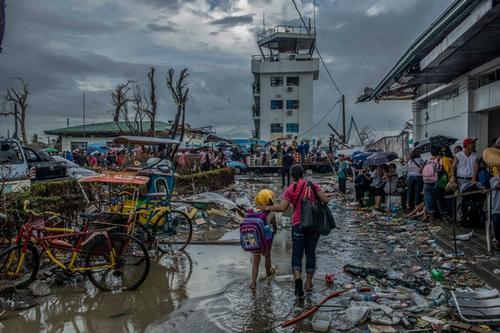
Survivors gathered at the airport, hoping for an evacuation. — at tacloban City, Leyte.
Philippines

Typhoon Haiyan: MSF medical activities start taking shape

137 staff now in Philippines, 232 tonnes of supplies arrived Project Update - 13 Nov 2013
 
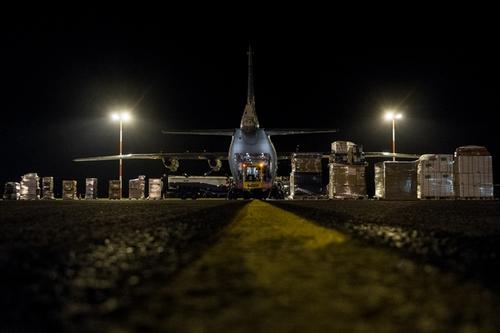
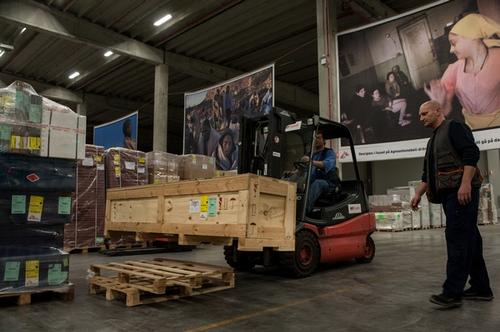
Medical and logistical supplies are being loaded at Ostend airport, from where two cargo planes will take off tomorrow morning to support the relief effort in the Philippines. MSF is sending 329 tonnes of medical and relief items which will arrive in Cebu within the next few days in four cargo planes, which are leaving today and tomorrow – 2 from Dubai and 2 from Ostende. The humanitarian cargo includes medical kits for treating wounded, material for medical consultations, tetanus vaccines, water and sanitation equipment, and relief items such as tents and hygiene kits. An additional cargo is being prepared due to leave later this week from Bordeaux with an inflatable hospital and medical material.
Philippines

Typhoon Haiyan: MSF working to reach worst affected areas

“People have lost everything” Project Update - 12 Nov 2013
 
Medical and logistical supplies are being loaded at MSF Supply's warehouse in Brussels, Belgium. The trucks will travel tonight to Ostende airport, from where two cargo planes will take off tomorrow morning to support the relief effort in the Philippines. MSF is sending 329 tonnes of medical and relief items which will arrive in Cebu within the next few days in four cargo planes, which are leaving today and tomorrow – 2 from Dubai and 2 from Ostende. The humanitarian cargo includes medical kits for treating wounded, material for medical consultations, tetanus vaccines, water and sanitation equipment, and relief items such as tents and hygiene kits. An additional cargo is being prepared due to leave later this week from Bordeaux with an inflatable hospital and medical material.
Philippines

MSF sends two cargo planes of medical and relief items while first teams arrive in Cebu

Update on Typhoon Haiyan response. Project Update - 10 Nov 2013
 
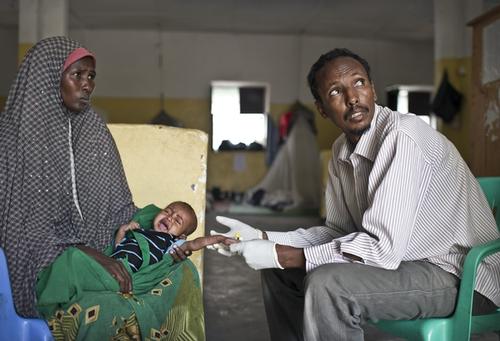
Nurse Abdi Somad Ahmed Moktar (38) places an IV with a malnourished child.
Somalia

A timeline of MSF in Somalia

Médecins Sans Frontières (MSF) first worked in Somalia in 1979 and was present in the country with few interruptions between 1991 and 2013. Project Update - 4 Nov 2013
 
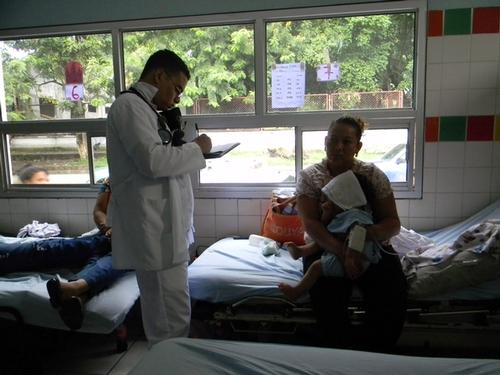
In Honduras, there are four different types of dengue, the population are in high risks of infection particularly during the rainy season, from May to November, when the mosquito responsible for spreading the disease proliferates.
Honduras

MSF fights deadly outbreak of dengue fever

MSF teams are responding to an epidemic of haemorrhagic dengue fever that is spreading through San Pedro Sula, Honduras’ second city. Project Update - 23 Oct 2013
 
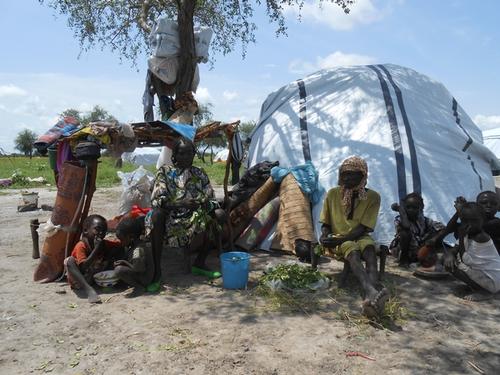
Some 2,500 Sudanese from the troubled South Kordofan State continue to arrive to Kodok and Lelo towns, in Fashoda and Malakal counties  in South Sudan’s Upper Nile State in dire need of humanitarian assistance The biggest concern is nutrition, children are very weak when they arrive and their condition can worsen even further if they don´t get proper care. In Kodok, more than 200 children under five are now receiving treatment in the ambulatory therapeutic feeding program. MSF medical teams are running a nutrition program through mobile clinics within the communities focusing on children under five years and women.
South Sudan

New refugees from Sudan in need of assistance

Some 2,500 Sudanese from the troubled South Kordofan State have arrived South Sudan’s Upper Nile state, in need of humanitarian assistance. Project Update - 11 Oct 2013
 
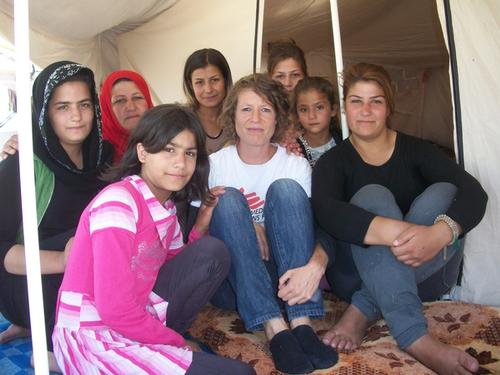
Dr Henrike Zellmann is the supervising psychologist for MSF in Domeez refugee camp in northern Iraq. She is pictured here with some of the Syrian refugees who MSF has been assisting.
Iraq

As soon as the door is closed, we spend time with them, and we listen

An insight into mental healthcare for Syrian refugees in Domeez camp, Iraq Project Update - 8 Oct 2013
 
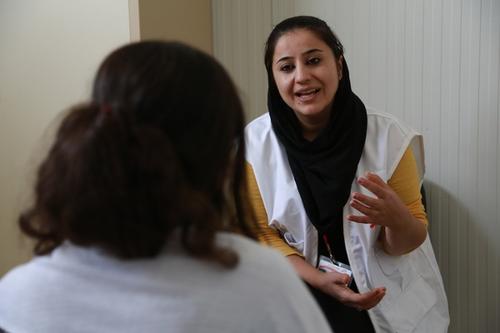
Alma is a 16 year old girl from Syria who is receiving counselling from MSF in Domeez refugee camp, northern Iraq. Her testimony is below. The war and its aftermath have had far reaching consequences for the mental health of children. As of October 2013 in Domeez, children and adolescents comprise 50 percent of all MSF’s new patients. Every week, between 15 and 20 children and adolescents aged 18 and under are admitted to the program. 

"We’ve been living in the camp for six months, after coming from Damascus to escape the war. There are six people in my family and we all live in one tent. At first we were happy to be here, and to be safe. Compared to Damascus, it is better. There we lived amidst war, at least here it is safe. 

But I am not happy here. After I arrived here, when I got upset or angry, I would faint. Last week, this happened twice. In the last month, it has happened six times. 

I don’t know why it happens. After I faint, and I have gained consciousness, I lie there for an hour or so then I get up. I have shortness in breath after it happens and it takes an hour to feel ok again. 

Most of the time there is no reason.

I don’t sleep very well and I am scared when I sleep. When I wake up, I am still scared. I am afraid of the tents. They remind me of the funeral procession when my cousin was killed in Syria. I remember people crying and I feel that I have dark things in front of my eyes. 

Every second night, I have nightmares. 

I also don’t eat very much. From yesterday until now, I did not eat. 

My biggest wish is to go back to Syria with my family. I want to study, but it’s not possible, either here or in Syria. It is difficult to have hope for the future when we don’t know what will happen."
Syria

An invisible crisis - alarming psychological needs among refugees in Iraq

MSF is seeing an alarming deterioration in the mental health situation of Syrian refugees in Domeez refugee camp in northern Iraq. This deterioration is linked not only to what they have witnessed in Syria, but also the ongoing life of uncertainty, inadequate conditions, and the lack of hope for the future they face living in the camp. Project Update - 8 Oct 2013
Four mothers posing in a corridor of the Hospital in Bili. All four of them are staying in the hospital with their child, that's suffering from a severe case of malaria. Since the beginning of the project in 2016, the pediatric ward already treated more than 4.000 cases of complicated/severe form of malaria.
Médecins Sans Frontières (MSF)

Independent medical humanitarian assistance

We provide medical assistance to people affected by conflict, epidemics, disasters, or exclusion from healthcare. Our teams are made up of tens of thousands of health professionals, logistic and administrative staff - most of them hired locally. Our actions are guided by medical ethics and the principles of independence and impartiality. We are a non-profit, self-governed, member-based organisation.

Learn more