



Ebola disease in DRC: find out how we're responding
Learn more
214 Results
 
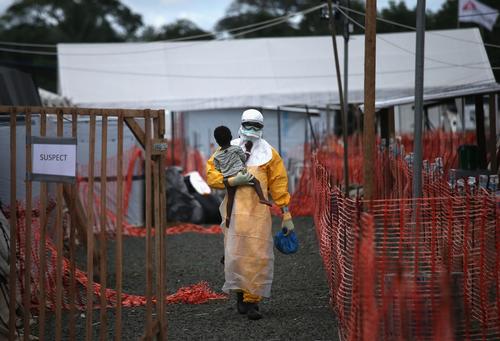
A Doctors Without Borders (MSF), health worker in protective clothing carries a child suspected of having Ebola in the MSF treatment center on October 5, 2014 in Paynesville, Liberia. The girl and her mother, showing symptoms of the deadly disease, were awaiting test results for the virus. The Ebola epidemic has killed more than 3,400 people in West Africa, according to the World Health Organization.  (Photo by John Moore/Getty Images)
Liberia

The psychological scars of Ebola

Interview with MSF psychiatrist Frédéric Gelly Project Update - 20 Oct 2016
 
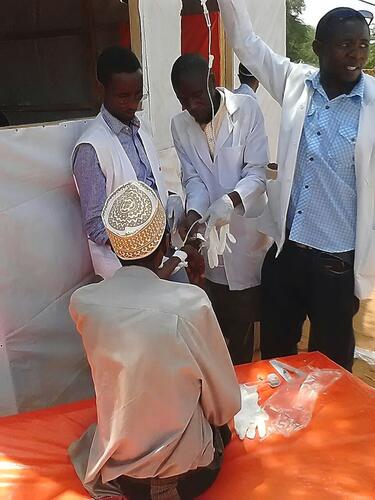
Mandera County in Kenya’s North Eastern Region is the latest county to be affected by a cholera outbreak that has been ongoing in the country for approximately 17 months. Since April, almost 800 cases have been reported in Mandera including 11 deaths. 
The outbreak is mainly concentrated in Mandera Township, home to around 90,000 people. 
At the same time, an outbreak of the mosquito-borne disease chikungunya is placing further pressure on already stretched health services. There are an estimated 260 suspected cases according to the Ministry of Health, seven of which have been confirmed by laboratory tests. Several health staff are among those affected. 
Mandera Referral Hospital has been quickly overwhelmed with cholera patients, and teams from Médecins Sans Frontières (MSF) are now urgently supporting the Ministry of Health to respond. MSF has constructed an 80-bed cholera treatment centre in the grounds of the hospital which started receiving patients on 26 May.
Kenya

Double cholera and chikungunya epidemic in Mandera town is under control

“The number of cholera patients has been reduced thanks to the combined efforts of the County health authorities and other organisations involved in the response,” says Liesbeth Aelbrecht, Head of Mission for MSF in Kenya. “The smooth collaboration with the local authorities and the other actors was a key element in tackling this outbreak, and we are grateful to all partners for their support. However, we have not yet reached zero cases. Only with sustained efforts to improve hygiene and living conditions, future outbreaks can be avoid Project Update - 14 Jul 2016
 
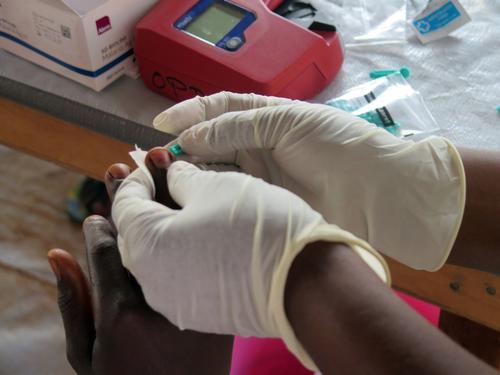
95% of the patients who are coming to the health facilities in Pawa and Boma-Mangbetu areas are tested positive to malaria. After one month of intervention, 40000 patients have been taken care of.
Democratic Republic of Congo

40,000 people treated for malaria as disease surges

Project Update - 21 Jun 2016
 
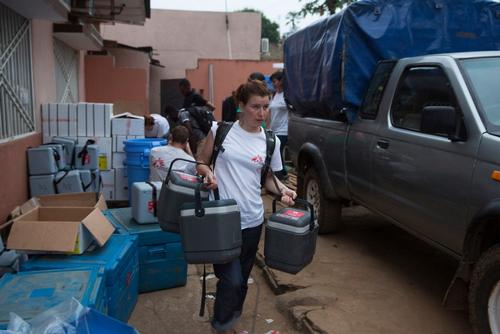
A Medecins Sans Frontieres (MSF) staff member carries cold boxes containing yellow fever vaccines on the first day of the vaccination programme in Matadi, DRC.
Angola

MSF teams help curb yellow fever

Project Update - 31 May 2016
 
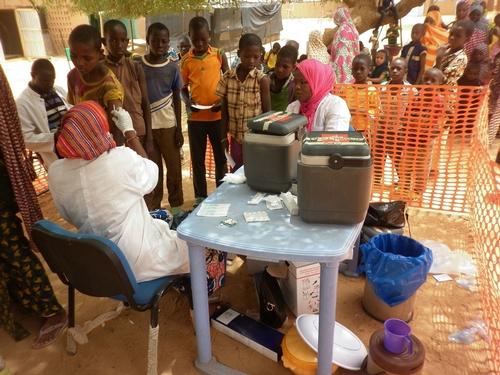
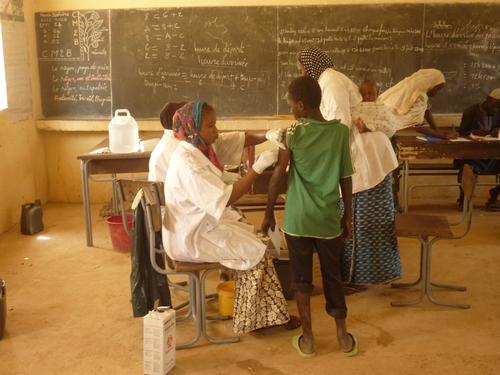
In Mangaize, Tillabery region, western Niger, around 15000 people have been vaccinated against measles. The priority to prevent outbreaks from multiplying is to vaccinate in areas where mobile populations are living alongside indigenous people.
In addition to vaccination activities, MSF is supporting the health authorities to prepare the response to new measles and meningitis outbreaks by strengthening epidemiological surveillance and providing free treatments to health facilities.
Niger

MSF teams respond to two epidemics and ward off a third

With simultaneous epidemics of meningitis and measles in Niger, teams from MSF have been supporting the Ministry of Health in its efforts to bring them under control, while taking steps to prevent cholera spreading from neighbouring Nigeria. “In the struggle to prevent the epidemics from spreading, our current priority is to administer vaccinations in areas where displaced people are coming into contact with the local population,” says MSF emergency coordinator Augustin Ngoyi. Project Update - 26 May 2016
 
Vaccination nurses (from the ministry of health) vaccinate against meningitis on the sitesof the sanitary district of Kollo, Tallabéri region, west of Niger.
Niger

MSF responds to a meningitis epidemic

Project Update - 4 May 2016
 
msf-placeholder
Ebola and haemorrhagic fevers

The Ebola outbreak - a brief history

A short video looking back on MSF's response to the West Africa Ebola epidemic Project Update - 14 Jan 2016
 
msf-placeholder
Ebola and haemorrhagic fevers

End of Ebola outbreak in West Africa: World must learn lesson for future outbreaks

As Liberia celebrates 42 days without any new Ebola infections - effectively marking the end of the Ebola outbreak in West Africa - MSF calls on the global health community to draw on lessons learned in order to be better prepared for similar outbreaks in the future. Project Update - 14 Jan 2016
 
Deddeh has recovered from Ebola and celebrates her joy. Out of solidarity she decides to stay in the Ebola confirmed area to take care of Elijah, a young boy (3 months) who has lost his mother to Ebola and has been infected himself.
Ebola and haemorrhagic fevers

Antimalarial drug reduced patient mortality by 31%

Project Update - 6 Jan 2016
 
A cholera epidemic that has been spreading in Kenya for over a year hit Dadaab refugee camp complex in November 2015. As at 16 December, around 541 people in Dadaab had reportedly been affected, the majority of whom are living in Dagahaley camp. MSF has expanded its regular hospital activities in Dagahaley and has constructed a cholera treatment centre to deal with the influx of patients. In the space of three weeks, MSF admitted 307 patients to its treatment centre.
Kenya

Cholera outbreak spreads to Dadaab refugee camp

A cholera epidemic that has been spreading in Kenya for over a year has now hit the Dadaab Refugee Camp complex, on the border with Somalia. So far around 541 people have reportedly been affected, the majority of whom are living in Dagahaley Camp. Project Update - 17 Dec 2015
Four mothers posing in a corridor of the Hospital in Bili. All four of them are staying in the hospital with their child, that's suffering from a severe case of malaria. Since the beginning of the project in 2016, the pediatric ward already treated more than 4.000 cases of complicated/severe form of malaria.
Médecins Sans Frontières (MSF)

Independent medical humanitarian assistance

We provide medical assistance to people affected by conflict, epidemics, disasters, or exclusion from healthcare. Our teams are made up of tens of thousands of health professionals, logistic and administrative staff - most of them hired locally. Our actions are guided by medical ethics and the principles of independence and impartiality. We are a non-profit, self-governed, member-based organisation.

Learn more