



Ebola disease in DRC: find out how we're responding
Learn more
1993 Results
 
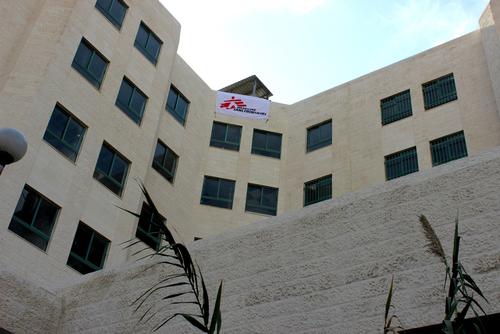
After long months of intensive work, the new Médecins Sans Frontières (MSF) hospital for specialized reconstructive surgery for war victims from the Arab region is almost ready to run. The hospital will be the largest structure of its kind MSF is currently running.
Jordan

New home for MSF specialised reconstructive surgery project set for completion

After months of intensive work, the new Médecins Sans Frontières (MSF) specialized reconstructive surgery hospital for war victims from the Middle East and North Africa region is almost ready to run. It will be the largest hospital for th Project Update - 22 Dec 2014
 
msf-placeholder
Yemen

MSF provides medical care to IDPs and injured people lacking access in Al-Bayda governorate

The newly formed Yemen Emergency Pool has provided medical consultations and non-food items to IDPs. Project Update - 18 Dec 2014
 
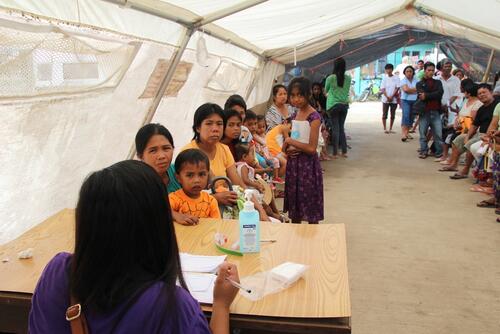
Registration area in the Rural Health Unit (RHU) in Guiuan that MSF is supporting to.
More than one month after the typhoon Haiyan hit in the Philippines, the humanitarian needs seen by MSF teams vary from place to place, and there are still some areas that are under-served by aid. In some areas we are seeing people’s medical needs declining, but in other areas there is still a need for our support. Taking into account the progressive deployment of aid to rural areas and the number of organisations providing primary healthcare, MSF is adapting its activities in the Philippines.

MSF will gradually decrease its activities in areas of Ormoc and Burauen on Leyte island, and in northern Iloilo province on Panay island, starting from the end of December. MSF will however continue working in Tacloban, on Leyte island, and in Guiuan, on Samar island, providing surgery, inpatient care, psychological care and other support until the health system is functioning again at adequate levels.
Philippines

MSF teams reach areas most impacted by typhoon Hagupit and find a population well prepared

Conclude there is no need for an MSF medical intervention Project Update - 11 Dec 2014
 
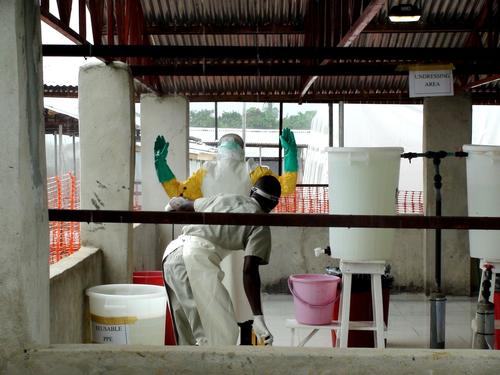
A member of the hygienist team in the MSF Ebola case management centre in Bo, Sierra Leone has left the High Risk Zone. In the undressing area he is sprayed with chlorine before undressing safely with the help of his colleague.
Ebola and haemorrhagic fevers

On the frontline against Ebola

What hygienists in an Ebola case management centre do, and why their job is so important. Project Update - 4 Dec 2014
 
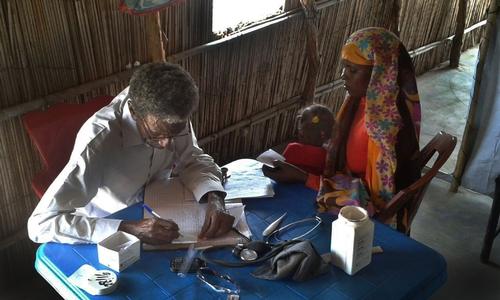
Patient being treated by MSF medical staff in White Nile State in Sudan.
Sudan

Separated by borders, united by needs

MSF provides medical assistance to South Sudanese in White Nile State, Sudan Project Update - 27 Nov 2014
 
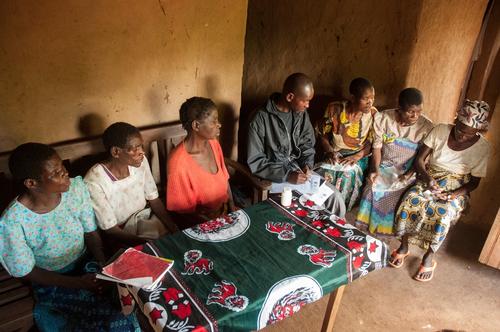
Community ART Group (CAG) member holding  her remaining pills.
In a CAG, members get together to count their remaining pills at the end of the month, as a means to check if everyone has taken their pills regularly After the pill count they will discuss about adherence and challenges they encountered. The following day.aCAG representative will go to the health cCentre to pick up the drug refill  for all group members.
HIV/AIDS

Community models of care explained

Explaining patient-centred care of HIV/AIDs, and the community models of care that support it. Project Update - 26 Nov 2014
 
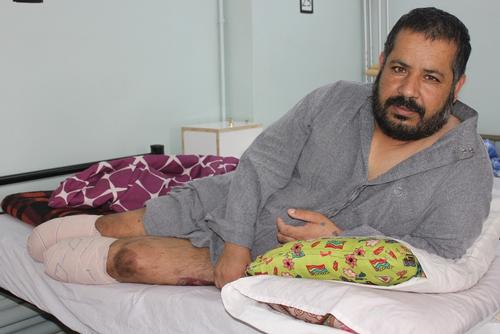
Nawaf, a 45-year-old patient:“I was blown up by a landmine while herding sheep and I lost both my legs. Two weeks later, my brother was also wounded in the same way. After four months of treatment, I tried on my prosthetics two days ago, I feel so happy. It’s a feeling that you can’t explain. I didn’t know that it would be possible. I can’t wait to go back to Syria to show my family that I can walk again.”
Jordan

A year of saving Syrian lives

Learn more about MSF's trauma surgery project on Jordan's border with Syria. Project Update - 24 Nov 2014
 
msf-placeholder
Mali

MSF expands activities to fight Ebola outbreak

Swift and coordinated action is of paramount importance in the days immediately after new cases are reported, the medical organisation says Project Update - 20 Nov 2014
 
A patient with suspected TB at Malalaua health centre provides a sputum sample for testing at Kerema General Hospital using the newly arrived GeneXpert machine.

MSF attached the sputum sample to the UAV to be transported by air as part of the UAV trial.
Papua New Guinea

Innovating to reach remote TB patients and improve access to treatment

Tuberculosis prevalence is among the highest in the world, with major access challenges Project Update - 14 Nov 2014
 
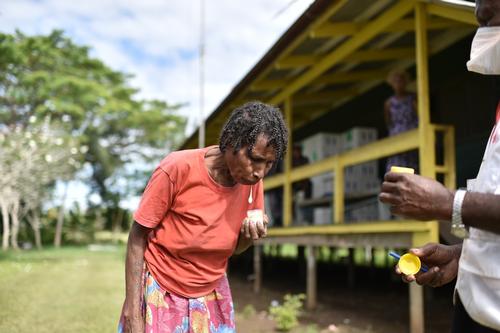
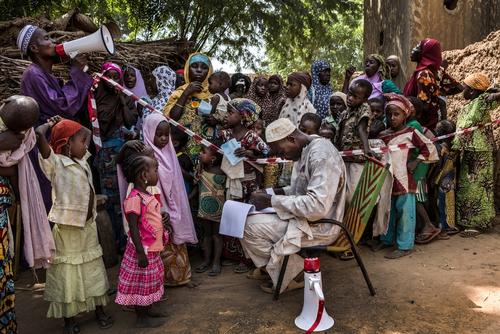
Tounfafi, a village of 6,000 people, is one of the sites within the Madaoua district where seasonal malaria chemoprevention (SMC) has been implemented in Niger.
The combination of malnutrition and malaria is fatal. Both diseases pose a threat to younger children between June and October. It is a critical period because of the so-called hunger gap in between harvests when child malnutrition increases and because during the rainy season malaria cases are more frequent.
In 2013, MSF and the Ministry of Health jointly implemented seasonal malaria chemoprevention for the first time in Niger - a strategy that consists of administering a full anti-malarial treatment course during the seasonal malaria peak to children between 3 and 59 months of age. During these four months, children take three amodiaquine tablets and one sulfadoxine/pyrimethamine tablet for three days each month.
Malaria

MSF provides preventive treatment to 735,000 children in Niger, Mali and Chad

“This year, we have treated more than double the number of children we treated last year and we have reached more areas” Project Update - 14 Nov 2014
Four mothers posing in a corridor of the Hospital in Bili. All four of them are staying in the hospital with their child, that's suffering from a severe case of malaria. Since the beginning of the project in 2016, the pediatric ward already treated more than 4.000 cases of complicated/severe form of malaria.
Médecins Sans Frontières (MSF)

Independent medical humanitarian assistance

We provide medical assistance to people affected by conflict, epidemics, disasters, or exclusion from healthcare. Our teams are made up of tens of thousands of health professionals, logistic and administrative staff - most of them hired locally. Our actions are guided by medical ethics and the principles of independence and impartiality. We are a non-profit, self-governed, member-based organisation.

Learn more