


Ebola disease in DRC: find out how we're responding
Learn more
214 Results
 
Healthcare staff in the district was trained in these centres by MSF staff experienced in hemorrhagic fevers outbreaks. The main fields of training included the safe management of suspect and confirmed cases, collection of laboratory samples and community surveillance.
Uganda

MSF ends its intervention in response to the Marburg fever outbreak

“This is the first time that Marburg fever has been diagnosed in these districts of Uganda, but strong national surveillance meant that the epidemic was noticed and confirmed early enough to allow for a rapid and effective collaborative response” Project Update - 11 Dec 2017
 
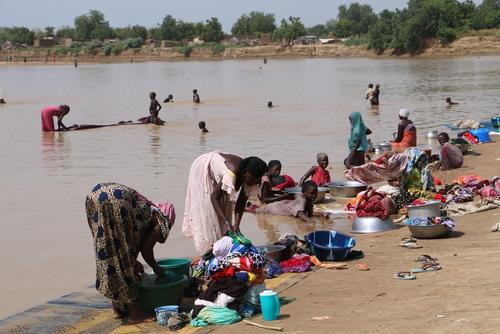
Life along the Barh-Azoum River – used by many for washing, bathing and even drinking.
Chad

Misinformation and lack of resources hamper cholera response

"They are afraid to say they have cholera because it has a stigma attached to it” Project Update - 16 Nov 2017
 
From October 19 2012, following the suspicious deaths of five people from the same family, cases of Marburg have been confirmed in Kabale District, southwest Uganda. In support of the Ministry of Health, a team of Doctors Without Borders (MSF) ensure health checks and care for infected patients to the hospital Kabale.In banda and Mbarara where few cases of fever were detected MSF has provided some trainings to medical staff and made donations of equipment and drugs.
Uganda

MSF responds to an outbreak of Marburg fever

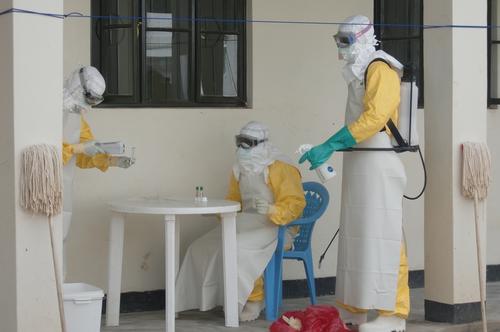
MSF is focusing its intervention around case management, and support to contact tracing and mapping. Project Update - 30 Oct 2017
 
Innocente, 33 years old, is a Doctor in a Hospital 45 km away from Tamatave, where MSF is supporting the local hospital.

“For five days, I was really tired; I had aches, headaches and chest pain. I thought I was suffering from angina. On 5 October, I had an alarming symptom: I started spitting blood. As I had done training about pneumonic plague with some colleagues, I went to Tamatave’s hospital to do some tests. I was clearly a suspect case, and then they confirmed that I was infected by the plague. I got an injection and stayed at the hospital. My family was panicked. From the second day, the symptoms began to disappear: swollen glands, headaches etc… As I was feeling better, I began to help the medical staff here even though I was still recovering. There were a lot of patients, a lot of plague cases the first week of the epidemic. Now, it has slowed down. The medical staff told me to take two weeks off to rest. I don’t know if my family is ready for me to come back home. They say they are but I can feel that they’re still afraid of me. So I stay away to leave my family in peace. I’m feeling positive. I don’t want to live with this secret: I had the plague and I was cured.”
Madagascar

MSF provides support in tackling plague outbreak

The plague is understandably a scary disease, but quick, hands-on action can drastically lower the number of fatalities and bring the outbreak to an end. Project Update - 19 Oct 2017
 
Algoni  and his wife Khadija, live in Muna Camp, having fled their homes in Dikwa, Borno state. They have been receiving treatment in MSF’s cholera treatment unit for three days.
Nigeria

MSF scales up activities as cholera spreads in Borno state

“We remain alert and through our community health workers continue to monitor the spread of the outbreak, and respond to it across Borno state.” Project Update - 19 Sep 2017
 
msf-placeholder
Chad

In eastern Chad, cholera continues to spread

MSF is working with the Chadian Ministry of Public Health to cope with an outbreak of cholera in the east of the country. Project Update - 15 Sep 2017
 
An MSF medical team is working together with MoH staff in the cholera treatment center in Al-Sadaqa hospital in Aden.
Besides the medical support, MSF logistic team has repaired the center as the building had been abandoned for two years after the war. MSF proceeded to emergency rehabilitation as it required heavy cleaning work, electricity, water system repairs as well as installing air conditions. Considering the hot and humid weather during the summer, heat becomes an issue in any health structure in the coast, most especially when it comes to hospitalise severely dehydrated patients.
Yemen

Cholera continues to spread

The number of suspected cholera cases reported by WHO and national health authorities in Yemen has escalated. Project Update - 21 Jun 2017
 
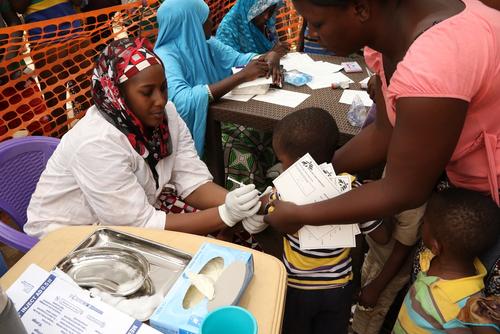
April 2017. Meningitis vaccination campaign in Niamey region. A teenager is being vaccinated at a site installed by MSF’s emergency team. 

MSF emergency teams in April 2017 seen here supporting the meningitis vaccination campaign in Niamey region. 
In response to an outbreak of meningitis C, MSF supported the Ministry of Health’s vaccine response in the regions of Niamey, Tahoua, Dosso and Tillabéry. Over 358,800 people aged between 2 and 20 were vaccinated.
Meningitis

MSF responds to declared outbreaks in Nigeria and Niger

In Niger, MSF conducted vaccination campaigns with local authorities for more than 463,800 people – aged between two and 20 years – in 28 health areas Project Update - 30 May 2017
 
April 2017. Meningitis vaccination campaign in Niamey region. A little boy is getting vaccinated at a site set up by MSF’s emergency team.

MSF emergency teams in April 2017 seen here supporting the meningitis vaccination campaign in Niamey region. 
In response to an outbreak of meningitis C, MSF supported the Ministry of Health’s vaccine response in the regions of Niamey, Tahoua, Dosso and Tillabéry. Over 358,800 people aged between 2 and 20 were vaccinated.
Niger

MSF teams support vaccination campaign against meningitis C outbreak

The Ministry of Public Health and MSF teams have vaccinated more than 358,800 people in the most affected areas. Project Update - 22 May 2017
 
msf-placeholder
Democratic Republic of Congo

Team dispatched following Ebola confirmation

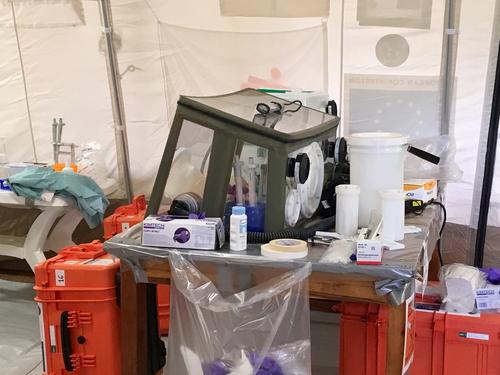
One case of Ebola has been confirmed by the World Health Organisation (WHO) in the Likati health zone of Bas Uele Province in the north of the Democratic Republic of Congo. A total of nine cases, including three deaths are so far being investigated. Project Update - 12 May 2017
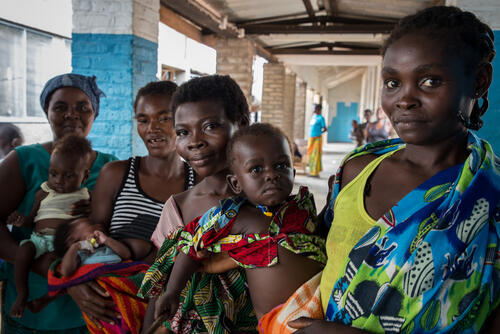
Four mothers posing in a corridor of the Hospital in Bili. All four of them are staying in the hospital with their child, that's suffering from a severe case of malaria. Since the beginning of the project in 2016, the pediatric ward already treated more than 4.000 cases of complicated/severe form of malaria.
Médecins Sans Frontières (MSF)

Independent medical humanitarian assistance

We provide medical assistance to people affected by conflict, epidemics, disasters, or exclusion from healthcare. Our teams are made up of tens of thousands of health professionals, logistic and administrative staff - most of them hired locally. Our actions are guided by medical ethics and the principles of independence and impartiality. We are a non-profit, self-governed, member-based organisation.

Learn more