



3451 Results
 
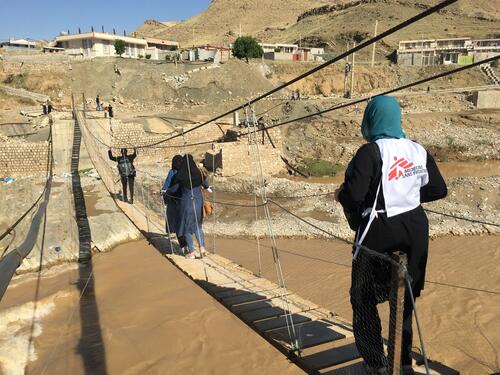
MSF Medical Team crossing Kyan Abad rope bridge to deploy a mobile clinic in Paran Parvis village on the ride side of Kashkan River.
Iran

Providing health care to vulnerable people in Lorestan after floods in Iran

Two months since violent flash floods stormed areas along the Kashkan River, in Lorestan province, west Iran, life is starting to return to normal. In Pol-e Dokhtar town, most of the sludge and rubble have been cleaned out while reconstruction of a few houses and shops are beginning in this devastated area. Project Update - 6 Jun 2019
 
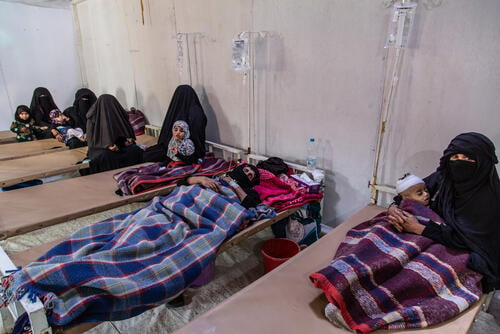
Yemen, Amran governorate, Khamer Cholera treatment Centre, 25 April 2019 - Women ward, Khamer CTC. Between 1 January and 26 March 2019, MSF has admitted 7,938 suspected cholera cases to its health facilities in Amran, Hajjah, Ibb and Taiz governorates, 50% of them coming from Ibb governorate. Over this period, the number of cholera patients treated by MSF increased from 140 to 2,000 per week. Results of rapid diagnostic tests done in MSF projects show that, in the same period, the percentage of cholera-positive cases increased from 58% to 70%.
MSF has scaled up its response: teams have opened a 42-bed cholera treatment centre in Khamer. Since March, there are around 30 patients every day in Khamer CTC, they are staying between 2 and 3 days. MSF teams have also increased the bed capacity of the cholera treatment unit in Taiz; have bolstered centres in Ibb and Kilo; and opened a cholera treatment centre in Al Kuwait hospital in Sana’a. During the last two weeks of April, our teams have observed a decrease of suspected cases in most of our projects. 
Cholera is endemic in Yemen: between 2016 and 2017, two waves of cholera hit the country. Although the disease was subsequently brought under control, health authorities and medical organisations have continued to see cholera cases in almost all governorates of the country since then.
Yemen

Endemic in Yemen, cholera still hits Yemenis hard

VIDEO REPORT: Although cholera is endemic in Yemen, a collapsed health system has resulted in waves of the disease over the last three years. Earlier this year, MSF teams saw yet another spike in cases, witnessing the impact on ordinary people struggling to cope. Project Update - 5 Jun 2019
 
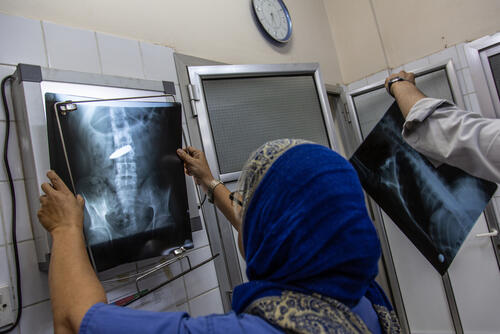
Yemen, Hodeidah, Al Salakhana hospital, 28 April 2019 - Maria Teresa Ingalla, ortho surgeon is watching the Xray of a patient injured by a gunshot in the abdomen. Mohammed, 18, was sitting in a street in Hodeidah, around 4.00pm when he was injured by a stray bullet: the bullet entered through his hip to his abdomen, next to one of his arteries. Luckily the bullet did not touch the spinal cord. It was removed after a laparotomy.
Yemen

A day treating wounded in Yemen's Al Salakhana hospital

VIDEO report: MSF teams started working in Al Salakhanah hospital, in the northeast of the port city of Hodeidah, Yemen, in September 2018 to provide care to the injured, including war-wounded civilians. Project Update - 30 May 2019
 
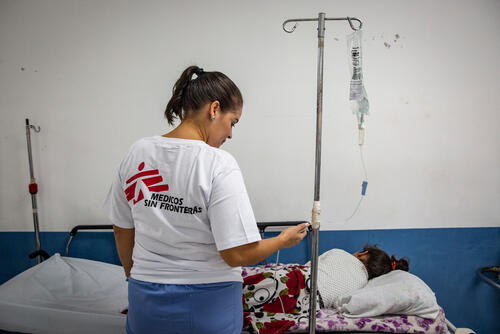
MSF medical staff checks on a 6 year old girl, hospitalized for Dengue fever at the Mario Catarino Rivas Hospital in San Pedro Sula. To ease the overcrowding of the hospital due to the recent alarming increase in dengue fever cases in Honduras this year, MSF has set up an emergency ward at the Mario Catarino Rivas Hospital where so far more than 850 patients have been treated. San Pedro Sula, April 10th, 2019.
Honduras

MSF expands efforts to control dengue epidemic in northern Honduras

MSF is ramping up its efforts to control the epidemic of dengue fever in northern Honduras’ Cortes department. Project Update - 29 May 2019
 
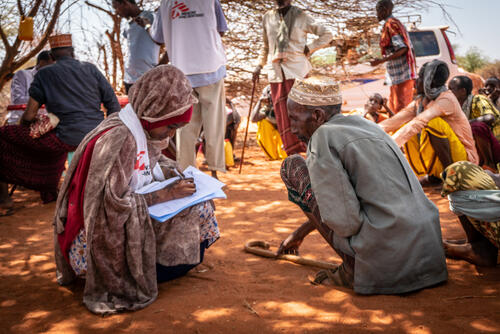
75-year-old Hassan is one of the community leaders in the village Ton-Habalan. He has 21 children with three wives: “Now that I am old, my grown up children work for me. Before, my work was to take care of my livestock. I do not have any education. But me and my family had many camels and goats. The big draught in 2017 killed almost all my livestock, and now we only have a very small number of livestock left. The biggest problem is water, most of the berkits (rainwater ponds) are now empty, and there is no water here. It is good that we have access to healthcare but we do not have water. It is now the driest season here. And also food is a problem, we don’t have enough and we did not get food and water distribution.”
Ethiopia

Bringing healthcare to places where no health posts exist

MSF runs 17 mobile clinics in Doolo zone, a vast, arid area in Ethiopia’s Somali region, where patient numbers have consistently increased, indicating that we are reaching the right places. Project Update - 27 May 2019
 
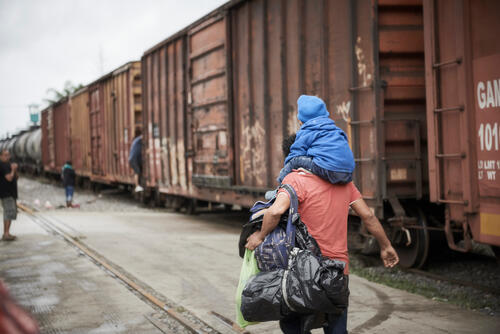
MSF teams have seen a general increase in the number of women, children and whole families traveling North.
Central American migration

“Mexico is not an option for my family to stay”

Thousands of migrants and asylum seekers from across Central America, trying to cross to the United States, are stuck in Mexico and currently living in shelters and on the streets of violent border cities, such as Reynosa, Mexicali and Nuevo Laredo. Project Update - 24 May 2019
 
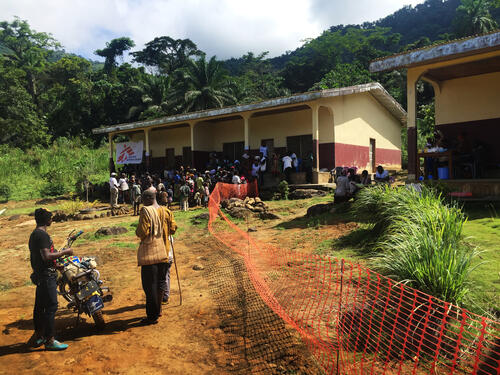
Image Description: People in Menka, in the North-West Region of Cameroon, wait to receive medical assistance from MSF. In an area which violence and displacement has interrupted access to healthcare, MSF teams are  distributing essential non-food items such as soap and mosquito nets; conducting consultations for preventative and curative care; and referring emergency cases.
Cameroon

Five things to know about the violence in North-West and South-West Cameroon

Since 2016, conflict has been steadily growing in the North-West and South-West regions of Cameroon. The violence has displaced hundreds of thousands of people, creating a little-known humanitarian crisis. Read the five things to know more about this emergency. Project Update - 23 May 2019
 
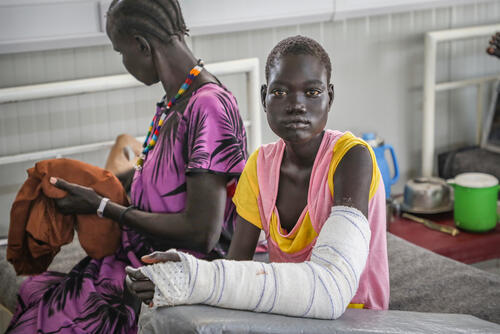
Aguek Deng, 14, and her mother Achol Ngor are from Mabunny, near Agok market. Aguek was bitten on the arm by a snake while she was sleeping on the floor under a mosquito net. She cried out, but her mother didn’t know why. She is mentally disabled and hasn’t spoken since she was little. When they came to the Agok hospital the swelling had spread to her shoulder. She was given antivenom and then operated on.
Snakebite

Antivenom, not frogs, needed to cure snakebite

MSF teams in Agok, South Sudan, are having to find new ways to treat people bitten by snakes, after a key antivenom stopped production. For the victims of snakebite, it is a race against time, distance and overcoming traditional methods to cure snake envenoming. Project Update - 21 May 2019
 
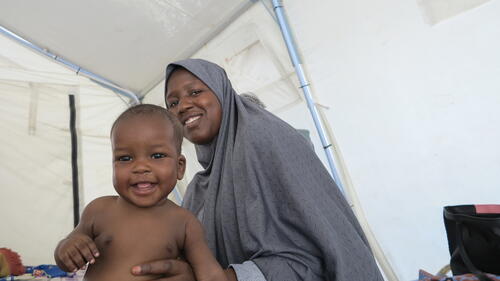
Hajara Adamu fled Damasak, about 150 kilometers to Maiduguri back in 2011. She started a new life. Seven years later, she holds her 5months son Abubakar Abdullahi at the State Specialist Hospital. Abubakar was brought in when he showed measles-like symptoms. Since November 2018, (MSF) has treated over 2922 children for the potentially life-threatening disease.
Nigeria

“I have not seen such high numbers of measles cases”

Maiduguri, in Borno State, northeastern Nigeria, is experiencing a severe measles outbreak, with thousands of children admitted to MSF treatment units in hospitals. The outbreak of the highly infectious disease has spread because of low vaccination coverage rates. Project Update - 17 May 2019
 
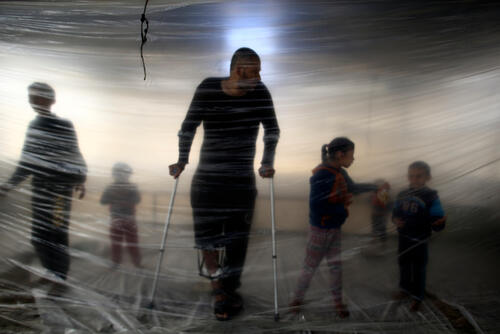
Ahmed, 38, a Palestinian shot and wounded by the Israeli army on 14 May 2018.
Palestine

Gaza, one year after the protests’ bloodiest day

On 14 May 2018, the Israeli army shot more than 1,300 Palestinians. A year later, many of those injured are still struggling with the devastating consequences of their wounds. Project Update - 14 May 2019
Four mothers posing in a corridor of the Hospital in Bili. All four of them are staying in the hospital with their child, that's suffering from a severe case of malaria. Since the beginning of the project in 2016, the pediatric ward already treated more than 4.000 cases of complicated/severe form of malaria.
Médecins Sans Frontières (MSF)

Independent medical humanitarian assistance

We provide medical assistance to people affected by conflict, epidemics, disasters, or exclusion from healthcare. Our teams are made up of tens of thousands of health professionals, logistic and administrative staff - most of them hired locally. Our actions are guided by medical ethics and the principles of independence and impartiality. We are a non-profit, self-governed, member-based organisation.

Learn more