


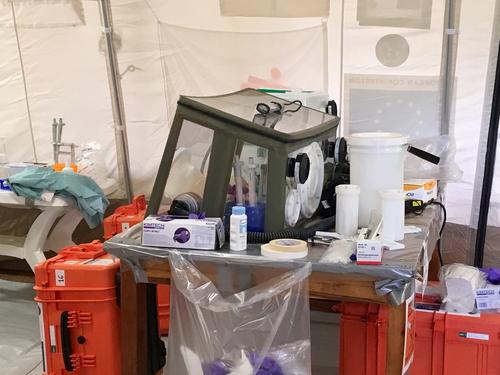
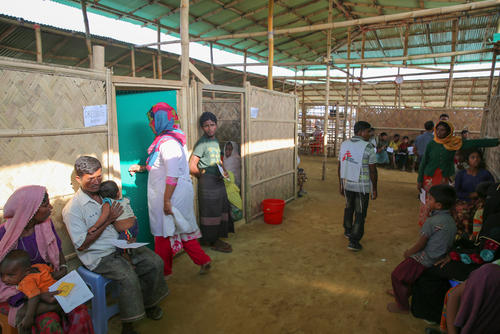
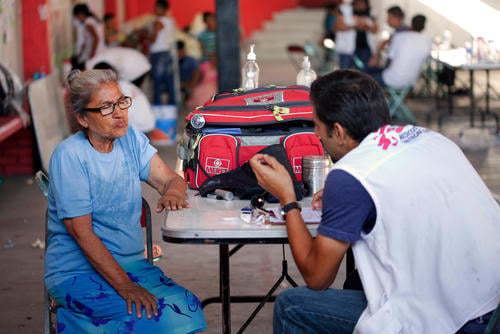
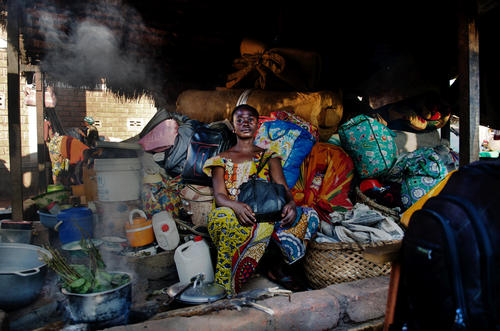
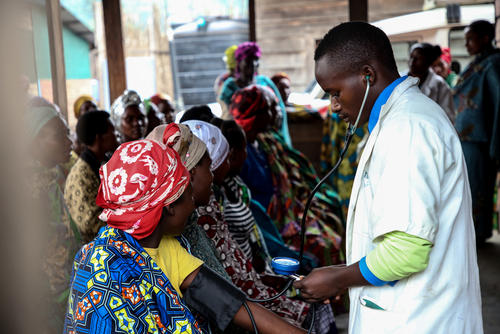
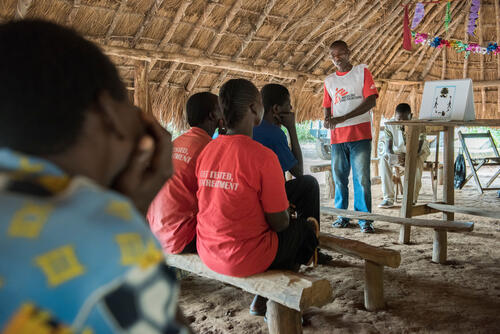

Ebola disease in DRC: find out how we're responding
Learn more
1993 Results
 
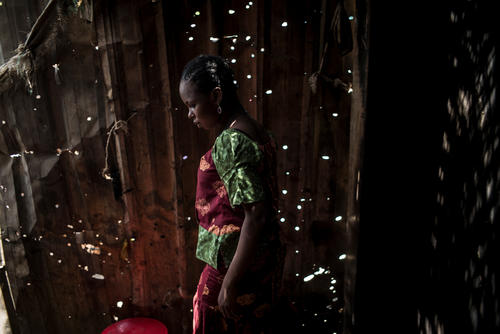
Markings of the January 17 bomb blast on a house in Rann
Nigeria

Rann bombing - one year on

On the one year anniversary of the bombing, we remember the victims. Project Update - 17 Jan 2018
 
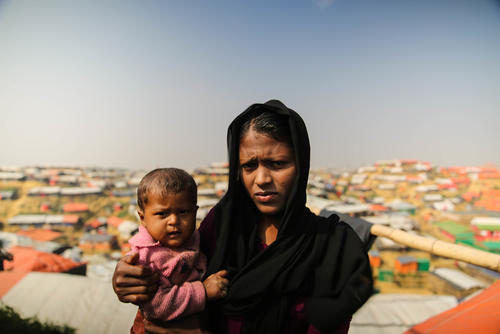
Yassin Tara, 20, and her 10-month-old daughter Asma have been refugees in Bangladesh since September. Tara’s food and pots were stolen, leaving the already desperate family with even less to get by on. She bought damaged pots to replace the ones she had, and she is trying to clean them, so she can cook for her family. Her husband is trying to find work but it is very hard. Her daughter has pneumonia and high fever. “I hope my children go to school, so that they can make a living and help us,” she says. Back in her village in Myanmar, she had three cows. She accuses the army of burning her house down and stealing her livestock.
Bangladesh

Building a hospital for Rohingya in three weeks

Watch our latest video on our 50-bed hospital build in 3 weeks. Project Update - 4 Jan 2018
 
MSF Netherlands project at the Kutupalong Makeshift Camp. Kutupalong makeshift camp A violent crackdown on stateless Rohingya living in Bangladesh has led thousands of people to seek safety at Kutupalong makeshift camp. Driven from their homes in the Cox's Bazaar area by local authorities and vigilante groups, around 2,000 people arrived in January alone, swelling camp numbers to nearly 30,000. New arrivals describe how they have suffered threats, beatings and in some cases escaped being forcibly returned to Myanmar. For decades, thousands of Rohingya, an ethnic and religious minority from Myanmar, have sought refuge in Bangladesh. However, a mere 28,000 are recognised as prima facie refugees by the Government, and live in official camps under the supervision of UNHCR. In sharp contrast, more than 200,000 people struggle to survive unrecognised and largely unassisted, vulnerable to ill health and exploitation. MSF runs a basic health programme in Kutupalong, providing much needed medical care to stateless Rohingya in Kutupalong makeshift camp and the host community.
Bangladesh

Emergence of diphtheria worsens situation of Rohingya refugees

Cases of diphtheria are increasing among Rohingya refugees living in densely-populated camps in Bangladesh. Project Update - 24 Dec 2017
 
Madhor
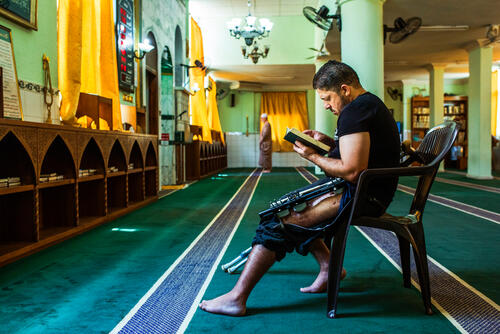
“Russian, Syrian… I don’t know. There were so many aeroplanes dropping bombs in those days in 2016,” says Madhor. A farmer from rural Hama governorate, in Syria, Madhor was sitting under an olive tree  with his seven children when a barrel bomb hit them, killing two of the children. He remembers the moment that the bomb dropped, but then he lost consciousness for three days. He awoke in a hospital in Hama to find he had lost an eye and his left leg was bloody and broken. “I just thought I would die,” says Madhor. “I also lost my teeth, and for three months I almost didn’t eat.” 
Madhor can now walk with crutches, but it remains painful. After multiple operations at MSF’s hospital in Amman, the intensive physiotherapy has had positive results: Madhor can now enjoy days away from the hospital visiting his wife Layla and their five remaining children in Jordan’s Azraq refugee camp. He can also walk the couple of hundred metres to the hopsital’s nearest mosque, for a calm moment of prayer in his ongoing recovery.
Jordan

A decade of healing at MSF’s reconstructive surgery hospital

Surgeons at our Amman-based reconstructive surgery hospital operate on victims of conflicts in the Middle East whose wounds are inflicted by bomb blasts, bullets, shrapnel and burns. Research and innovation are an important part of the hospital’s programme. Project Update - 20 Dec 2017
 
Healthcare staff in the district was trained in these centres by MSF staff experienced in hemorrhagic fevers outbreaks. The main fields of training included the safe management of suspect and confirmed cases, collection of laboratory samples and community surveillance.
Uganda

MSF ends its intervention in response to the Marburg fever outbreak

“This is the first time that Marburg fever has been diagnosed in these districts of Uganda, but strong national surveillance meant that the epidemic was noticed and confirmed early enough to allow for a rapid and effective collaborative response” Project Update - 11 Dec 2017
 
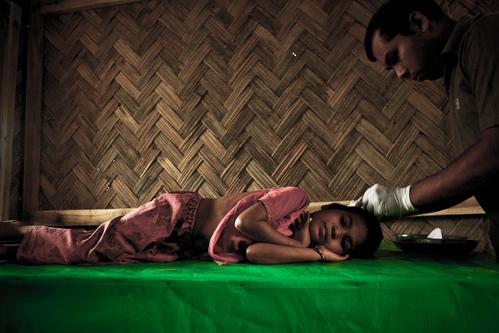
MSF staff treat Rohingya refugee patients at a clinic in a camp in Bangladesh.
Rohingya refugee crisis

Rohingya crisis - a summary of findings from six pooled surveys

On 25 August 2017, a counter-insurgency military operation in Rakhine State, Myanmar, led to a mass displacement of Rohingya civilians into Bangladesh. Over the following three months, some 626,000 Rohingya crossed into Bangladesh to escape the violence.
Project Update - 9 Dec 2017
 
In the state of Puebla, Mexico, MSF teams identified as the main medical conditions among the population both respiratory problems and aggravations of chronic diseases, such as hypertension or diabetes, and psychosomatic symptoms
Mexico

MSF ends emergency response after the earthquakes

In November, Médecins Sans Frontières (MSF) teams in Mexico City, Mexico State, Puebla, Oaxaca and Morelos concluded the medical, mental health and heath promotions activities that were launched in response to the emergency situations created by two major earthquakes in September.

Project Update - 8 Dec 2017
 
While settling in the hospital in Batangafo might seem the safest in terms of security, it also contains hidden risks such as contracting contagious diseases. A hospital is still a place to treat sick people.
Central African Republic

“In Batangafo, people are afraid for their lives. It’s the only thing they have left.”

Since late July 2017 fighting between ex-Seleka and Anti-balaka factions has once again set Batangafo and its surroundings on fire. The fighting in the area, in the north of the Central African Republic, has forced tens of thousands of people to abandon the temporary shelters where they had been seeking refuge since the crisis began in 2013-2014. Many have found refuge in the compound of the hospital supported by MSF.
Project Update - 6 Dec 2017
 
MSF supports a network of health centres (Mpati, Bibwe, Kalembe, Kashuga and Bukama) and has significantly expanded its programme to provide assistance to people affected by the conflict, especially victims of sexual violence at MSF Tumaini clinics in Mweso and Kitchanga.
Democratic Republic of Congo

MSF strongly condemns violent robbery of compound in North Kivu

During the early morning of 4 December, several armed men broke into the Médecins Sans Frontières (MSF) compound in Mweso, in Masisi territory, North Kivu Province, Democratic Republic of Congo.
Project Update - 4 Dec 2017
 
CAG meeting
South Sudan

Delivering HIV treatment to conflict areas

For people in rural South Sudan, HIV testing and antiretroviral therapy (ART) can be nearly impossible to obtain. Moving between villages is extremely difficult and the war has forced many to flee to isolated locations. But in Yambio County (southwest of the country), things are different. Mobile and same day testing and treatment, provided by Médecins Sans Frontières (MSF), is improving the lives of people coping with HIV. Project Update - 29 Nov 2017
Four mothers posing in a corridor of the Hospital in Bili. All four of them are staying in the hospital with their child, that's suffering from a severe case of malaria. Since the beginning of the project in 2016, the pediatric ward already treated more than 4.000 cases of complicated/severe form of malaria.
Médecins Sans Frontières (MSF)

Independent medical humanitarian assistance

We provide medical assistance to people affected by conflict, epidemics, disasters, or exclusion from healthcare. Our teams are made up of tens of thousands of health professionals, logistic and administrative staff - most of them hired locally. Our actions are guided by medical ethics and the principles of independence and impartiality. We are a non-profit, self-governed, member-based organisation.

Learn more