



3451 Results
 
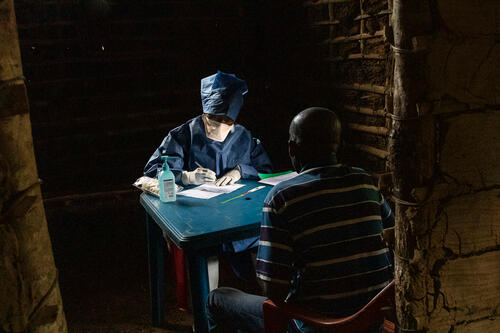
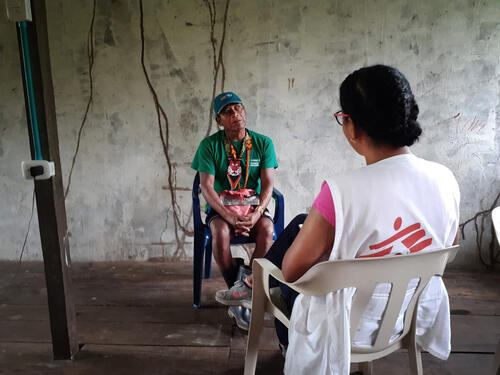
Dr Tathy, an MSF doctor, sees patients considered as non-Ebola suspects in consultation, as part of the mobile intervention clinic and training of local medical staff in the Ebola context, in the village of Bobua. This decentralization-based device aims to detect and isolate, if necessary, any person presenting symptoms close to Ebola (fevers, diarrhea, headaches, bleeding, etc.). But at the same time to treat other pathologies which are rife in the area, such as malaria or severe acute malnutrition. This is in order to increase the acceptance of MSF by the population in the area, and to avoid the stigmatization that affects Ebola patients, by getting as close as possible to the patients, and taking care of them where they live. Bobua.

***

Dr Tathy, médecin MSF, reçoit en consultation des patients considérés comme non suspects Ebola, dans le cadre des activités de clinique d'intervention mobile et de formation du personnel médical local en contexte Ebola, dans le village de Bobua. Ce dispositif axé sur la décentralisation, a pour but de déceler, et isoler le cas échéant, toute personne présentant des symptômes proches d'Ebola (fièvres, diarhhées, céphalées, saignements...). Mais de soigner en même temps d'autres pathologies qui sévissent dans la zone, telles que le paludisme ou la malnutrition aïgue sévère. Ceci afin d'augmenter l'acceptance de MSF par la population dans la zone, et d'éviter la stigmatisation qui affecte les patients Ebola, en se rapprochant au plus près des patients, et en les prenant en charge sur leur lieu de vie. Bobua.
DRC Ebola outbreaks

Improved medical response sees the end of DRC’s eleventh Ebola outbreak

Almost six months since the eleventh outbreak of Ebola was declared in DRC, new tools and an improved medical response have seen the epidemic come to an end. Project Update - 19 Nov 2020
 
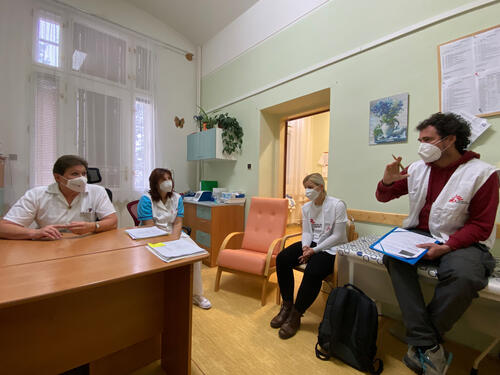
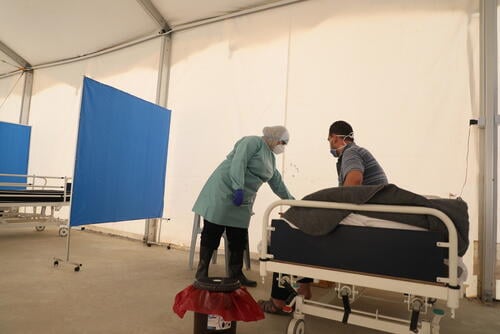
As a part of COVID-19 response in Czech Republic, MSF mobile team (consisted of a nurse and a logistician) visited care home in Božice, Southern Moravian region, Czech Republic. During the day, MSF staff with the care home's staff assessed and discussed improving IPC measures to protect clients of the home from COVID-19.
Coronavirus COVID-19 pandemic

MSF supports COVID-19 response in nursing homes in Czech Republic

MSF has started activities for the first time in the Czech Republic, where mobile teams are visiting nursing homes as part of the response to coronavirus COVID-19. Project Update - 13 Nov 2020
 
With the Syria crisis entering its ninth year in 2019, Jordan is hosting around 1.3 million Syrians of which 670,000 are registered as refugees.

With the arrival of winter, the suffering is renewed for Syrian refugees, let alone for those suffering from life-long diseases. Adding to this, winter is a season of additional torment that they still cannot avoid.

NCDs is one of the main health problems affecting Syrian and Jordanian population; it is estimated NCDs to account for 78% of all death in Jordan. Heart disease has become a leading threat to the health of the Jordanian population, with 41.5% of deaths last year 37% of them were related to heart disease.

Death due to NCDs is mainly due to complications of uncontrolled other Chronic Diseases like Diabetes and Hypertension. The lack of follow-up, diagnostics and clinical investigations, health awareness and high cost of secondary and tertiary health care like cardiac interventions are also significant reasons.( e.g.: Catheterization may reach 5000 JDs/7000 USD, excluding Hospital fees).

Like most of NCDs, the difficult economic conditions make life harder for those affected. The NCDs care and management is expensive in general and requires long term medications and regular follow ups, not a lot of patients have the financial ability to afford the treatment. It affects the access of medicines for patients. As a result, MSF intervened and operated two clinics in northern Jordan in Irbid governorate to respond to the NCDs needs between Syrian refugees and vulnerable Jordanians. MSF is helping both in Irbid governorate by providing these life-saving medications and follow up consultations free of charge.

At both clinics, MSF currently has cohort of 5500 patients out of which 3,639 are Syrian refugees and 1,619 are vulnerable Jordanian in the NCD program, out of which Type I Diabetes: 163 and Type II Diabetes: 3251, Hypertension: 3,773, Asthma 453, and Cardiovascular 1406. Many patients have more than one of these diseases.

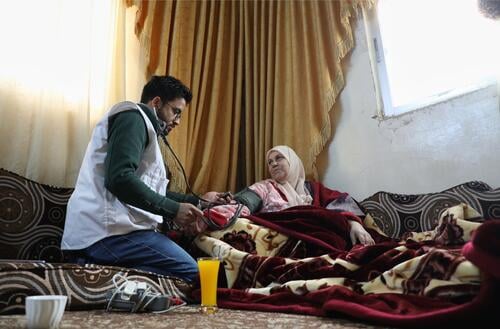
MSF teams provide medical and mental healthcare,  including psychosocial support, physiotherapy and health promotion, and home visits to patients unable to visit the clinics due to mobility constrains.

MSF contribution doesn’t stop at providing health care to Syrian refugees. MSF believes that increasing patient’s familiarity about NCDs is important, given the lifelong nature of these diseases.

Some of the NCDs services available are provided with some cost taken from the patients. For many Syrian patients that cost is not affordable and would require a global support from donors and agencies to have affordable access to NCD treatment and health care.
Non-communicable diseases

Eight reasons why diabetes is a humanitarian emergency

Diabetes is a common, chronic disease - which can be managed with drugs such as insulin and a good diet. But it can be life-threatening for people living in conflict zones or refugee camps. Project Update - 13 Nov 2020
 
Most of the people admitted to Covid+ centres are homeless people sent from emergency shelters. When MSF mobile teams who intervene in these shelters diagnose someone as possibly having contracted the virus they try to test them——if they have the necessary kits.
From the medical perspective, we know the symptoms of the virus, so we can identify anyone suspected of having the disease. The Regional Health Authority then calls on the Red Cross, which handles transportation, to take them to Covid+ centres set up across Paris and the suburbs. 

In Chatenay-Malabry Covid+ centre (Paris suburbs), there are places for 50 people with confirmed or suspected Covid-19. We provide social support and paramedical/medical care in partnership with NGO Alteralia. This includes checking vital signs: blood pressure, temperature and oxygen saturation to see whether people are breathing properly. We also give advice on hygiene, wearing a mask and hand washing to prevent the infection spreading to other people. We also give medical examinations and, when necessary, take care of patients requiring long-term treatment for other conditions. We monitor them regularly, so if all of a sudden someone who’s really struggling to breathe—remember, this isn’t a hospital so we don't necessarily have the equipment to keep them on oxygen for any length of time—requires further tests, this is the kind of person we call the emergency services for so that they can take them to the hospital. 

MSF teams are on hand throughout the care chain: from the mobile teams, mobile clinic and care provided in the emergency centres through to the medical team who treat patients admitted to the Covid-19 treatment centres.
Coronavirus COVID-19 pandemic

MSF supports nursing home staff as urgent appeal for medical personnel in France launched

MSF is providing support to nursing home staff, and appealing for more medical staff to come forward, as the second wave of the coronavirus pandemic mounts in France. Project Update - 11 Nov 2020
 
Abou Obaida area in Deir Hassan.
Syria

Taking risks to survive as COVID-19 spreads in the northwest

Three displaced people in northwest Syria recount their struggles, frustrations and fears as COVID-19 cases rise against the backdrop of an economic crisis. Project Update - 11 Nov 2020
 
Majd Osama, 23 years old from Syria, married and has a daughter. Majd is receiving medical care in COVID-19 treatment centre in Zaatari camp for Syrian refugees. “One day I woke up feeling feverish and I was referred to MSF COVID-19 hospital, I have been in the MSF hospital for two days, I don’t cough and I do not have a runny nose and the fever is gone. God will help me, I’m not worried.”
Coronavirus COVID-19 pandemic

MSF responds as COVID-19 arrives in Jordan’s largest refugee camp

Given the often rapid spread of diseases inside refugee camps, MSF is providing medical care for coronavirus COVID-19 to refugees in Zaatari camp, Jordan. Project Update - 28 Oct 2020
 
MSF in Nariño
Colombia

MSF responds to a resurgence of violence in Norte de Santander and Nariño

MSF is providing general and mental healthcare in Colombia’s Norte de Santander and Nariño, where violence has led to mass displacements and confinements Project Update - 28 Oct 2020
 
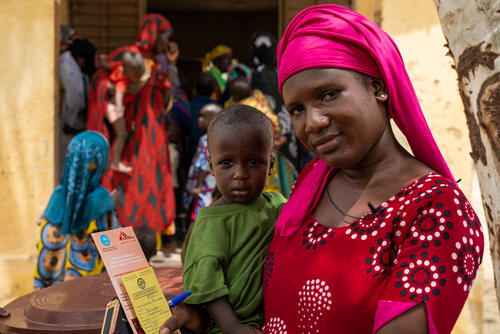
Mariam Maïga, holding her son and his vaccination card after his measles vaccination. Arnassaye, one of the outlying vaccination sites.
Mali

Prevention is better than cure – vaccinating against measles in Timbuktu

MSF and the Ministry of health recently vaccinated 50,000 children against measles in Timbuktu, Mali, where displacement and violence mean coverage is low. Project Update - 27 Oct 2020
 
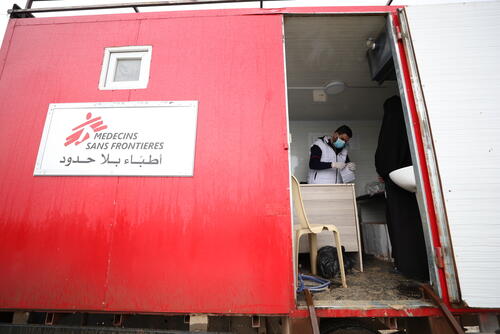
A consultation at MSF’s mobile clinic, in an IDP camp in Northwest Syria.
Syria

Dozens of people treated following an airstrike in Idlib

Dozens of people have been treated at a hospital co-managed by MSF, following an airstrike in a relatively stable part of Idlib governorate, northwest Syria. Project Update - 26 Oct 2020
 
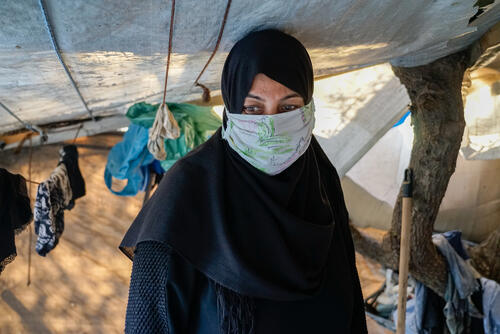
Omaima is 52 years old and suffers from neurological problems, asthma, hyper-tension and mental health issues.
She says:
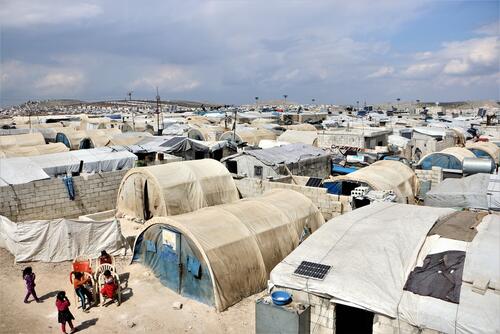
"We have been in this camp for one year, it is a terrible camp; full of rats, dirt, there is not enough food and all of this causes mental health problems.
The health system in the camp has deteriorated and, because I am asthmatic, I don’t want to see the doctor here because I am afraid of being put in quarantine.
I prefer to be in my tent which is full of rats and snakes, but at least I am not going to be in direct contact with other sick people from different communities in the same container.”
Greece

Negligent and dangerous COVID-19 response in Vathy camp, Samos

On Greece's Samos island, the inadequate COVID-19 response in Vathy camp is dangerous and should be immediately addressed. Project Update - 26 Oct 2020
Four mothers posing in a corridor of the Hospital in Bili. All four of them are staying in the hospital with their child, that's suffering from a severe case of malaria. Since the beginning of the project in 2016, the pediatric ward already treated more than 4.000 cases of complicated/severe form of malaria.
Médecins Sans Frontières (MSF)

Independent medical humanitarian assistance

We provide medical assistance to people affected by conflict, epidemics, disasters, or exclusion from healthcare. Our teams are made up of tens of thousands of health professionals, logistic and administrative staff - most of them hired locally. Our actions are guided by medical ethics and the principles of independence and impartiality. We are a non-profit, self-governed, member-based organisation.

Learn more