



Ebola disease in DRC: find out how we're responding
Learn more
1993 Results
 
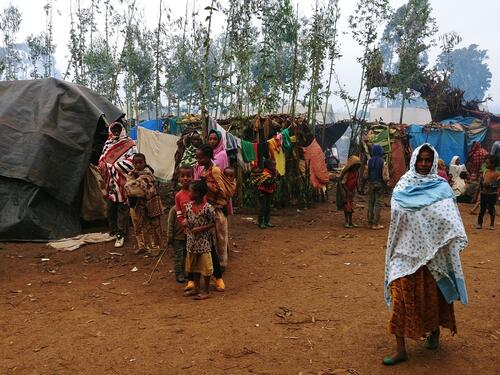
Temporary shelters in a camp for internally displaced people in Gedeb, Gedeo zone, in Ethiopia’s SNNP region.
Ethiopia

More aid needed for people caught in multiple displacement crises

MSF is ending one emergency response in the south of the country while preparing to respond wherever the next crisis arises. Project Update - 21 Dec 2018
 
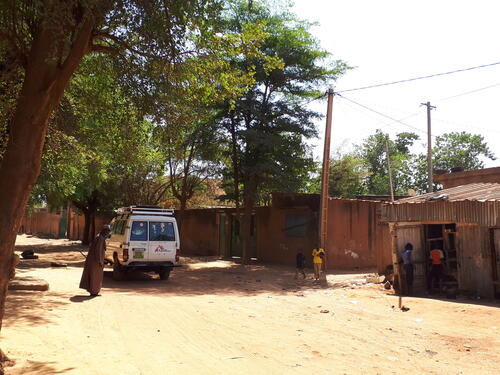
MSF medical team also conducts regular mobile clinics in Niamey and provide on-the-spot consultations. Here on its way to one of the migrant sites.
Niger

Medical care for people on the move in Niamey

Between May and November 2018, MSF staff carried out about 4,500 consultations for people on the move in the capital of Niger, a hub of migration in Africa. Project Update - 19 Dec 2018
 
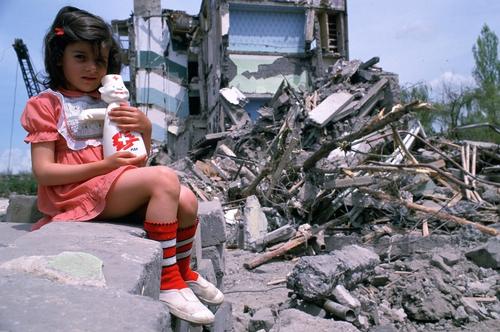
Gyumri, Armenie. Tremblement de terre : petite fille devant des décombres. Little girl in front of ruins caused by an earthquake.
On December 7, 1988, a catastrophic earthquake struck Armenia. A tragedy of enormous proportions, the earthquake claimed the lives of at least 60.000 people. Three days after the earthquake, on December 10, MSF was one of the first international non-government organizations to arrive in Leninakan (Gyumri) to help.
Armenia

Earthquake response: 30 years of MSF in Armenia

The first in a three-part series commemorating 30 years of MSF activities in Armenia, which began when MSF was the first international organisation to respond to the 1988 Spitak earthquake. Project Update - 19 Dec 2018
 
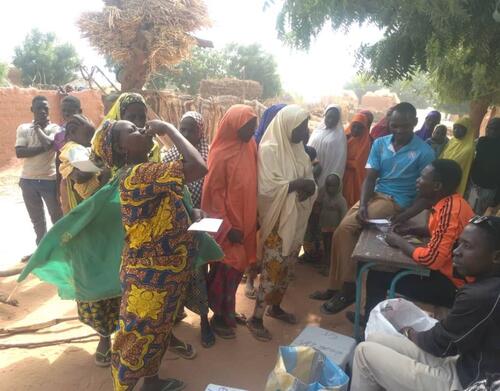
Since early July, Niger has been battling the worst cholera outbreak in years, which affected over 3,800 people and caused 78 deaths. As the disease ebbs, Médecins Sans Frontières and local health authorities shift focus to preventing future outbreaks in the southern region of Maradi, most affected by the current epidemic and known as a hotspot for cholera along the border of Niger and Nigeria. These efforts include vaccination of over 145,000 people with an easy-to-administer oral vaccine in three of Maradi’s health zones: Tchadoua, Aguié and Gazaoua. MSF has provided local health authorities with logistic and technical support. Epicentre is supporting the intervention with a post-vaccination survey.
Niger

Preventing future outbreaks in a cholera hotspot

Since early July, Niger has been battling the worst cholera outbreak in years. As the disease ebbs, MSF and local health authorities shift their focus to preventing future outbreaks in the southern region of Maradi, most affected by the current epidemic and known as a hotspot for cholera along the border of Niger and Nigeria. Project Update - 17 Dec 2018
 
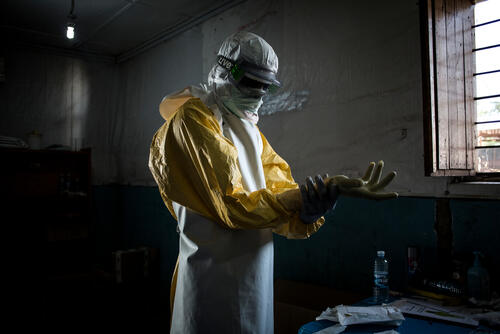
A health worker is seen putting on his personal protective equipment (PPE) before entering the red zone of a MSF supported Ebola Treatment Centre(ETC), where they will check up on patients on November 06, 2018 in Bunia.
DRC Ebola outbreaks

Ebola spreads further into urban communities and isolated areas in North Kivu

The Ebola epidemic continues to spread through the Democratic Republic of Congo (DRC)’s North Kivu province. The newest areas to be affected include the city of Butembo and a number of isolated areas. Project Update - 3 Dec 2018
 
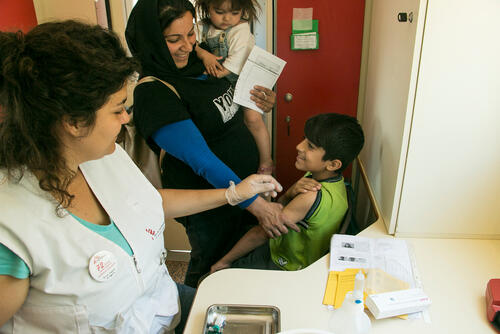
Nurse Katerina Katopodi getting ready for the vaccination of a young boy at the MSF clinic next to Moria camp.
Greece

Vaccinating over 2,000 refugee children in Moria, Lesbos

Médecins Sans Frontières (MSF) will conduct a multi-antigen vaccination campaign for all migrant children aged under 16 on Lesbos island from 21 to 23 November Project Update - 21 Nov 2018
 
5,000 still displaced in MSF-supported Batangafo Hospital
Central African Republic

More than 5,000 people sheltering in MSF-supported Batangafo hospital after violent clashes

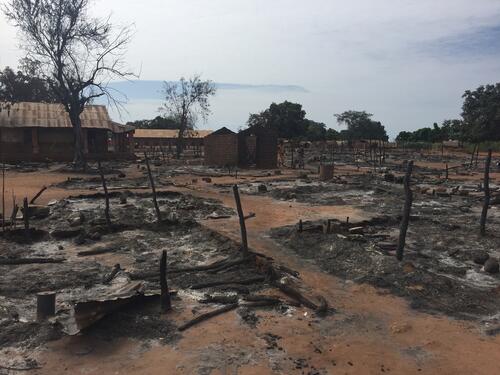
Fighting between two armed groups in Batangafo, in northern Central African Republic, in late October drove more than 10,000 people to seek shelter in Batangafo hospital, where 5,000 still remain. Project Update - 14 Nov 2018
 
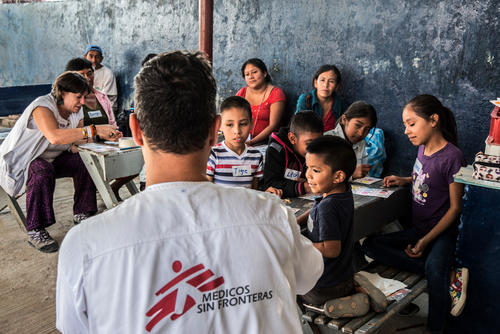
MSF psychologists during a group mental health session for children in a village in Guerrero state. Violence across the region is taking a toll on children’s mental health. In many cases, patients are suffering from night terrors and display aggressive or irritable behaviour. 

ESP Los niños sufren asimismo la violencia y la tensión del ambiente: en muchos casos los niños presentan miedos nocturnos, agresividad o irritabilidad constante.
Mexico

Mobile teams respond to escalating violence and trauma in Guerrero state

As violence escalates in Mexico’s Tierra Caliente region, north and central Guerrero state, we are expanding our mobile teams to provide medical and psychological assistance in more areas more quickly. Project Update - 26 Oct 2018
 
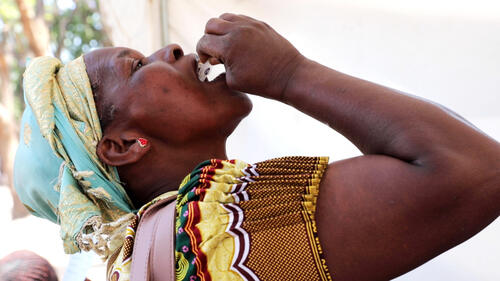
Juliet a resident of Glenview, Harare, the epicenter of the cholera outbreak takes the oral cholera vaccine during the mass vaccination campaign that took place in Glenview, Harare recently. The government of Zimbabwe with support from MSF and other partners rolled out the oral cholera vaccination campaign to protect people from cholera.
Zimbabwe

A collective response to cholera in Harare

MSF is supporting local authorities and mobilising community health clubs to implement a unique combination of emergency responses and longer-term solutions in the face of the country’s second biggest cholera outbreak to date. Project Update - 25 Oct 2018
 
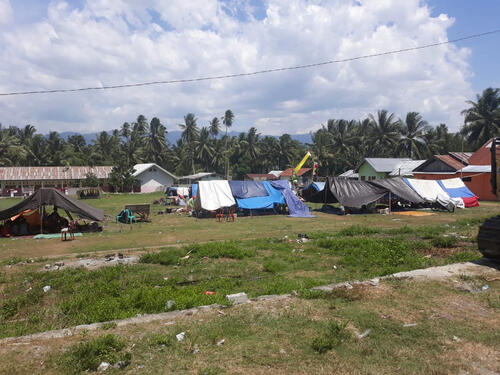
Emergency tents established by the community affected by the 7.7 magnitude earthquake which hit Central Sulawesi on 28 September 2018, in Sigi Regency, Central Sulawesi.
Indonesia

Getting healthcare and safe water to remote areas in Central Sulawesi

An MSF team from Indonesia is helping health centres in remote parts of Central Sulawesi get back on their feet and working to ensure communities have access to safe water, having assessed the medical and humanitarian needs in areas affected by the earthquake and tsunami that hit the island on 28 September. Project Update - 11 Oct 2018
Four mothers posing in a corridor of the Hospital in Bili. All four of them are staying in the hospital with their child, that's suffering from a severe case of malaria. Since the beginning of the project in 2016, the pediatric ward already treated more than 4.000 cases of complicated/severe form of malaria.
Médecins Sans Frontières (MSF)

Independent medical humanitarian assistance

We provide medical assistance to people affected by conflict, epidemics, disasters, or exclusion from healthcare. Our teams are made up of tens of thousands of health professionals, logistic and administrative staff - most of them hired locally. Our actions are guided by medical ethics and the principles of independence and impartiality. We are a non-profit, self-governed, member-based organisation.

Learn more