



Ebola disease in DRC: find out how we're responding
Learn more
214 Results
 
people waiting at Ayilo MSF hospital, Adjumani, Uganda
Women's health

Women and girls face greater dangers during COVID-19 pandemic

During COVID-19, MSF teams all over the world are seeing the challenges women face in accessing essential sexual and reproductive health services. We know the consequences can be deadly and we fear a massive increase in maternal and neonatal mortality. Project Update - 2 Jul 2020
 
MSF supports the Ebola Transit Center in Bunia
DRC Ebola outbreaks

Six lessons learned as Ebola outbreak in northeastern DRC ends

With the DRC Ministry of Health announcing the end of the country's tenth Ebola outbreak - while still tackling the eleventh - valuable lessons have been learned for all involved in the response. Project Update - 26 Jun 2020
 
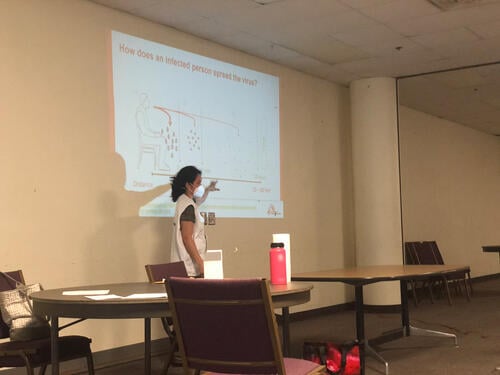
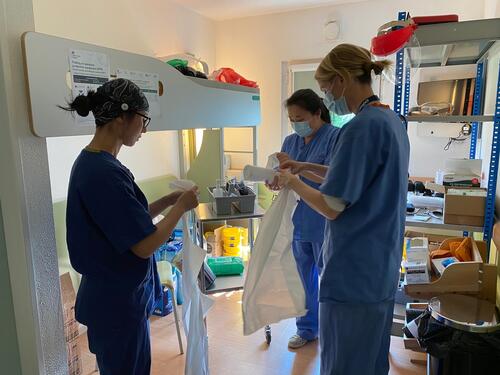
Dr. Maria Guevara conducts an Infection Prevention and Control training on how to stop the spread of COVID-19 for both the medical and non-medical staff at the Samaritan Community Center in Detroit, Michigan.
United States of America

MSF helping to curb COVID-19 in nursing homes in US

After having worked in nursing homes across Europe to help reduce the spread of COVID-19 amongst the elderly and staff, MSF is now working in nursing homes in Michigan, the United States. Project Update - 23 Jun 2020
 
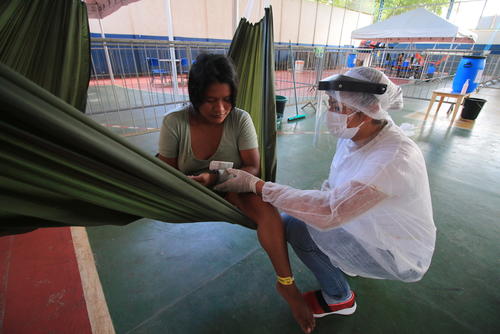
In partnership with the municipality of Manaus, MSF runs an isolation and observation center for indigenous Warao people with mild cases of COVID-19. As a large part of this population, who came from Venezuela to Brazil, lives in shelters in the city, Warao people are especially vulnerable to the disease due to the difficulty of maintaining adequate measures of hygiene and social distancing. 

The isolation center opened in Manaus has the capacity to support and to assist nine families simultaneously. The space was adequate with tents, hammocks, tables and chairs, as well as sanitation adjustments in order to help hygiene maintenance.
Coronavirus COVID-19 pandemic

Brazil’s COVID-19 nightmare is far from under control

With the second-most number of both cases and deaths worldwide from the new coronavirus, it is clear that the COVID-19 situation in Brazil is catastrophic. Project Update - 17 Jun 2020
 
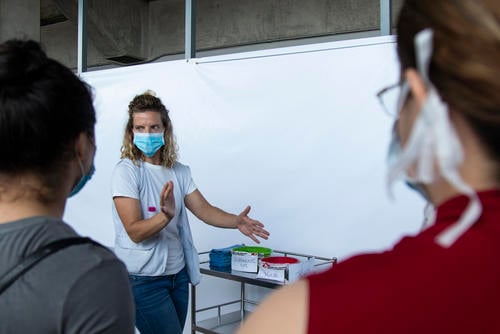
MSF team on training before opening COVID-19 centre in Tegucigalpa
Coronavirus COVID-19 pandemic

Caring for COVID-19 patients in Tegucigalpa

As numbers of COVID-19 cases rise in Tegucigalpa, Honduras, an MSF has started caring for patients with severe symptoms of the disease. Project Update - 13 Jun 2020
 
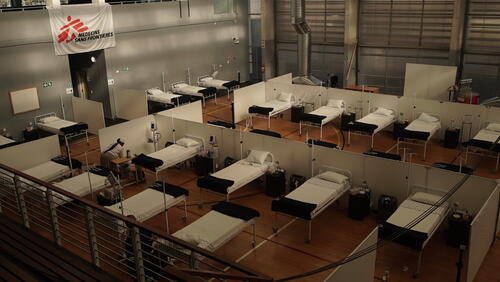
Doctors Without Borders (MSF), in support of the Khayelitsha District Hospital, opens a COVID-19 treatment facility to meet the needs of the local community during the epidemic. Established in Khayelitsha Multi-purpose Centre, a City of Cape Town-owned community sports centre in close proximity to the hospital.Khayelitsha Field Hospital, it will help manage hospital overflow for moderate COVID-19 cases. The facility will be operational from 01 June, providing a capacity of 60 beds.

6 medical doctors and 8 nurses employed by MSF will staff the treatment facility. Officially named Khayelitsha Intermediate Care Facility, it will operate during the time of the projected peak of transmission in the Cape Metropolitan area. MSF will continue to support the Khayelitsha District Hospital until needs have subsided.
South Africa

MSF opens field hospital as South Africa braces for COVID-19

The Khayelitsha community has borne the brunt of COVID-19 infections in the country, spurring Médecins Sans Frontières (MSF) to develop a 60-bed overflow treatment facility in a field hospital next to the district hospital. Project Update - 12 Jun 2020
 
In April, 11 MSF staff joined the University College London Hospital (UCLH) Find and Treat team in establishing the UK’s only Covid care facility for people experiencing homelessness.

The project provided rapid testing, accommodation for self-isolation and medical care for members of the London homeless community with suspected or confirmed COVID-19.  

MSF brought expertise on outbreak and emergency response, helping the facility to be opened rapidly and safely with nursing and logistical support.

At the time of opening, people with suspected or confirmed COVID-19 had already been identified in several homeless hotels across London and were transferred to the facility for care.

As surveillance in the hotels, other accommodation, and in hospitals continued, people experiencing homelessness with symptoms of COVID-19 were identified and transferred to the Covid Care Centre for testing, isolation, and nursing support. 

As patient numbers in the Covid Care Centre began to decrease, MSF nurses joined UCLH’s Find & Treat teams on their screening programmes.  Initially, this was to screen for COVID-19 in homeless accommodation across London, as well as joining the street teams who engage with those still rough sleeping.

The screening aimed to identify patients and detect any clusters of cases that may be occurring in this vulnerable population. To date, over 1,300 people experiencing homelessness have been tested for COVID-19 through this approach.

In late May, as the number of positive COVID-19 cases reduced, the Find & Treat teams evolved their screenings to include blood-borne viruses including HIV, hepatitis C, as well as syphilis. These are diseases that people experiencing homelessness are at risk of.

With large numbers of this vulnerable community staying in hotels, it was an opportunity for medical teams to try and engage them within the health system.  

MSF staff joined the Find & Treat teams to undertake this screening, with 600 people being fully screened over a two-week period. It is hoped that these screenings will help health services better engage with homeless populations in the longer term. 


Following this screening period, MSF has now concluded its involvement with the project and members of our nursing team have joined the UCLH team for the coming weeks as the project winds down due to consistently low numbers – in line with the decrease in cases we are seeing across the UK.

This project represented the first time since MSF was founded in 1971 that we were providing medical assistance in the UK.

We intended this to be a short-term project in the UK and now the NHS has more capacity to cope, it is the right time to withdraw our staffing support and continue to focus our work in regions of the world most affected by medical and humanitarian crises.

We remain ready to rapidly increase our support again should the situation deteriorate in the future and we identify critical gaps in the UK response to COVID-19.
United Kingdom

MSF support to London COVID-19 care centre ends

msf.org.uk - 11 Jun 2020
 
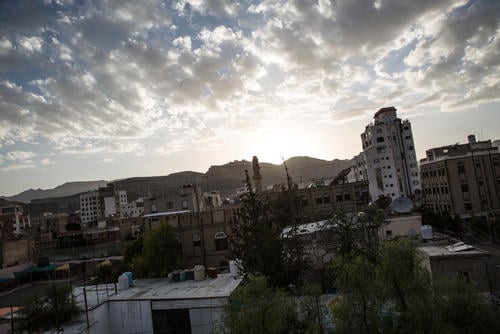
Yemen, gouvernorat de Sanaa, mars 2018. Vue du toit du bureau de MSF à Sanaa.

Sanaa governorate in Yémen, March 2018. View from MSF office rooftop in Sanaa.
Coronavirus COVID-19 pandemic

“COVID-19 has made the health system's collapse complete” in Yemen

MSF is treating patients severely ill with coronavirus at our COVID-19 centre in Sana’a, Yemen, where the 15-bed ICU has been mostly full for the past four weeks. People are dying of the new coronavirus at a high rate as our teams try to save lives.

Project Update - 10 Jun 2020
 
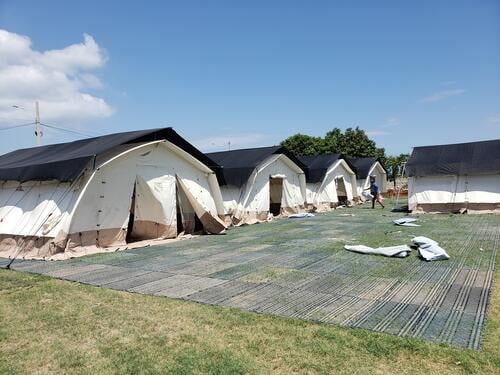
Médecins Sans Frontières (MSF) has opened a COVID-19 treatment center in Drouillard, Cité Soleil, with a capacity of 20 beds. MSF will treat patients tested positive for COVID-19 who need hospitalization or oxygen, and have been referred by the Ministry of Public Health and Population. Patients will then spend 14 days recovering in these tents, on the hospital grounds.
Coronavirus COVID-19 pandemic

COVID-19 cases in Haiti spike dramatically as MSF opens treatment centre

In response to the growing spread of COVID-19 in Haiti, MSF opened the Drouillard treatment centre in Port-au-Prince, to care for people with severe cases of the coronavirus.  Project Update - 5 Jun 2020
 
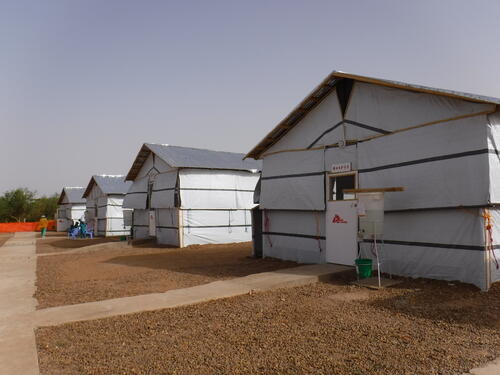
The MSF treatment centre for COVID-19 patients at the Amirou Boubacar Diallo National Hospital in Niamey, Niger, has 50 beds, with the potential to accommodate up to 100 beds in case of a peak in patient numbers. The semi-permanent structure is completely autonomous to treat patients and limit the risk of transmission to the neighbouring hospital. The centre has superior infection control conditions and is divided into five main buildings. One of these receives suspected cases with complications, while the other four are for confirmed cases requiring hospitalisation.
Coronavirus COVID-19 pandemic

Facing multiple challenges in responding to COVID-19 in Niger

MSF teams are supporting health authorities in Niger to manage the COVID-19 pandemic, in a context where insecurity is rife and persistent rumours and misinformation add to the complexity of the response. Project Update - 3 Jun 2020
Four mothers posing in a corridor of the Hospital in Bili. All four of them are staying in the hospital with their child, that's suffering from a severe case of malaria. Since the beginning of the project in 2016, the pediatric ward already treated more than 4.000 cases of complicated/severe form of malaria.
Médecins Sans Frontières (MSF)

Independent medical humanitarian assistance

We provide medical assistance to people affected by conflict, epidemics, disasters, or exclusion from healthcare. Our teams are made up of tens of thousands of health professionals, logistic and administrative staff - most of them hired locally. Our actions are guided by medical ethics and the principles of independence and impartiality. We are a non-profit, self-governed, member-based organisation.

Learn more