



Ebola disease in DRC: find out how we're responding
Learn more
1993 Results
 
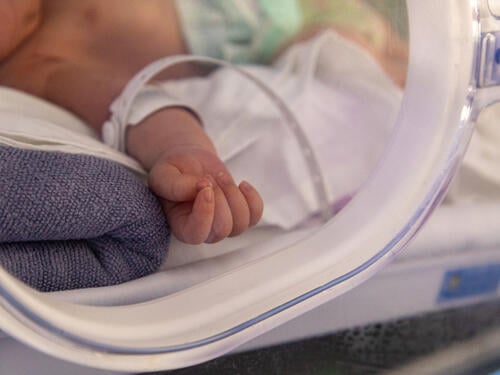
Close-up of an infant lying in an incubator in the neonatal ward of Al Jahmouri Hospital, in Taiz City, Yemen. Since May 2021, MSF together with the Ministry of Health (MoH) have been running the maternal and neonatal services in Al Jamhouri hospital (AJH), in Taiz City. MSF also offers technical support, financial incentives to Ministry of Health staff, medical and logistical supplies to run the maternity unit including services such as caesarean sections, antenatal (ANC) and postnatal care (PNC) for pregnant women, and neonatal unit for new-borns and infants.
Yemen

Giving birth in the face of persistent obstacles in Taiz

Access to vital healthcare services for pregnant women in Taiz, Yemen, remains a challenge due to years of war. Project Update - 1 Feb 2023
 
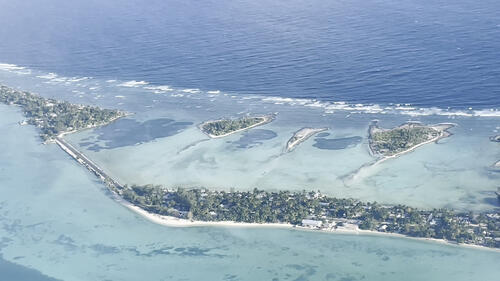
Médecins Sans Frontières/ Doctors Without Borders (MSF) officially launched medical activities in the equatorial Pacific island nation of Kiribati in October 2022. Our team there, including a paediatrician, midwife and general practitioner, support the Ministry of Health and Medical Services to improve maternal and neonatal health outcomes. 

Kiribati is among the most climate-vulnerable places on earth. The people of Kiribati (or i-Kiribati)'s fragile situation is threatened by a changing climate. 

Human health is dependent on the health and sustainability of the environment. Nowhere is this more evident than for people living within the constraints of an island. 

Seventy-five percent of deaths in the Pacific region are due to NCDs, and NCDs are now recognised as the leading cause of health problems in Kiribati. 

The rates of diabetes in Kiribati are high and increasing. Diabetes in pregnant women is of particular concern as the condition can be high risk for mums and babies, who require access to secondary (specialist) care for management during labour, delivery, and after birth. 

MSF’s work in Kiribati aims initially to improve diabetes detection and management and hypertension related to maternal health in the Southern Gilbert Islands, based at Tabiteuea North.
Kiribati

Planetary and public health collide in Kiribati

Kiribati, a group of Pacific islands, is extremely vulnerable to climate change. MSF teams have started working in the country given the challenges people have in accessing healthcare. Project Update - 19 Jan 2023
 
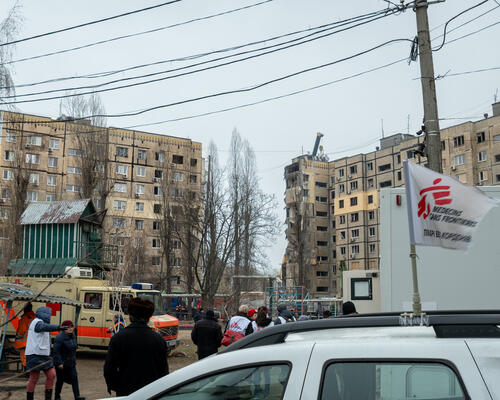
In the three days since an attack on a residential building in central Dnipro killed at least 40 people, teams from international medical organisation Médecins Sans Frontières/Doctors Without Borders (MSF) have been providing survivors with medical care, psychological first aid and kits of essential relief items. In addition to those killed in the blast, 75 people were injured and around 30 people remain missing.
Ukraine

MSF helps survivors of Dnipro blast

Following the attack on a residential building in central Dnipro, Ukraine, MSF teams have been providing survivors with medical care, psychological first aid and essential relief items. Project Update - 16 Jan 2023
 
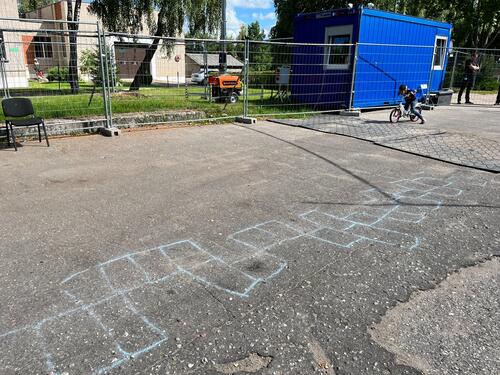
A young boy rides a bike within the container camp in the Refugee Reception Centre (RRC) in Rukla, Lithuania. A guard stands in the background. As of 17th August 2022, 108 people are held in the container camp, including 53 children. Some children are formally detained, and some are de facto detained as both or one of their parents remain in detention.
Lithuania

Concerns for migrant welfare in Lithuania and Latvia as projects close

Despite some concerns over the welfare of migrants and asylum seekers in Lithuania and Latvia, MSF has decided to end operations in both countries due to policies which jeopardise providing care. Project Update - 11 Jan 2023
 
MSF nurse Virginie Abdouramane (right), is talking to a patient at the MSF-supported maternity of the Community Hospital Centre (CHUC), Bangui, Central African Republic, 24 October 2022.
Central African Republic

The forgotten emergency of maternal healthcare in the Central African crisis

A lack of maternal and obstetric care is fuelling a healthcare emergency in Central African Republic. It is unacceptable that women’s and babies’ lives are being lost for reasons that are preventable. Project Update - 10 Jan 2023
 
In Kule refugee camp health centre, MSF runs an inpatient department that admitted during the period from March to November 1.799 patients.
Ethiopia

Providing medical care to people across Ethiopia

MSF responds to emergency medical and humanitarian needs of people in multiple regions of Ethiopia, including in Afar, Amhara, Tigray and Southern Nations regions. Our staff explain how they assist people in need. Project Update - 23 Dec 2022
 
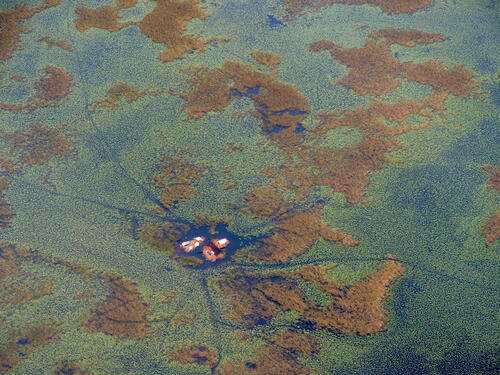
Aerial view of a household on a small island in the middle of the Sudd swamps, near Old Fangak, South Sudan.
South Sudan

Catastrophic floods cause mass displacement and humanitarian crisis

Four consecutive years of flooding have left about two-thirds of South Sudan under water. Humanitarian organisations, UN agencies and governments must step up to address the crisis. Project Update - 19 Dec 2022
 
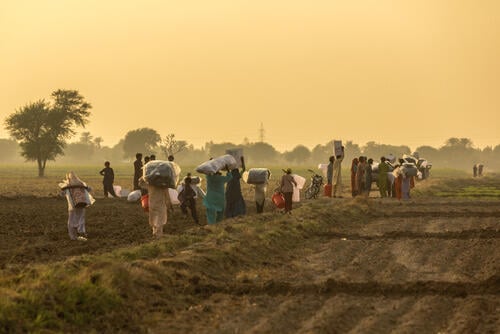
Villagers carry NFIs on their heads, as they are walking through the field to go back to their homes at a village near Sanghar, Sindh province of Pakistan on 16th November 2022.
Pakistan

People remain stranded as winter approaches flood-hit Pakistan

People in Pakistan remain extremely vulnerable since floods have devastated the country and winter approaches; many are unable to return home while malaria and malnutrition are on the rise. Project Update - 16 Dec 2022
 
Chancela Tchaga is posing with Ezéchiel, one of her four children. He opened his left facial arch while playing in the garden and was treated by the MSF medical team of Bria, CAR. Chancela and her family are part of the few returnees, after living five years in the displacement site Pk3 of Bria. They are proud of posing in front of their new house that they fled in 2016 and reconstructed in May 2022, through the pilot program of the UNHCR. 
The Pk3 site in Bria is the largest site of internally displaced people in CAR. In front of the base of the UN mission in the country (MINUSCA), people started to find shelter here back in the end of 2016 to escape armed violence and clashes, opposing factions from former rebel coalition Seleka and anti-Balaka militias.  
Returning home after several years of absence is not easy. Like the rest of the population, after so many years of conflict, they will find it difficult to regain their former life.
Central African Republic

After years of conflict, displaced people struggle to return home in Bria

Project Update - 13 Dec 2022
 
MSF opened a dedicated cholera treatment centre (CTC) in Munigi, Nyiragongo territory, on the 26th of November. Between 26 November and 7 December, 267 patients were admitted, a third of whom were children under five. 

In response to the rapid increase in suspected cholera cases, two additional tents have been set up to accommodate the large number of patients and increase the capacity to 100 beds. Community activities have been also intensified to raise awareness and ensure early detection, as too many patients arrive late, in an already severe state of dehydration.
Democratic Republic of Congo

Cholera rising among displaced people in precarious conditions

Despite repeated calls for an urgent humanitarian response, displaced people in DRC remain in precarious conditions as cholera cases begin to surge. Project Update - 13 Dec 2022
Four mothers posing in a corridor of the Hospital in Bili. All four of them are staying in the hospital with their child, that's suffering from a severe case of malaria. Since the beginning of the project in 2016, the pediatric ward already treated more than 4.000 cases of complicated/severe form of malaria.
Médecins Sans Frontières (MSF)

Independent medical humanitarian assistance

We provide medical assistance to people affected by conflict, epidemics, disasters, or exclusion from healthcare. Our teams are made up of tens of thousands of health professionals, logistic and administrative staff - most of them hired locally. Our actions are guided by medical ethics and the principles of independence and impartiality. We are a non-profit, self-governed, member-based organisation.

Learn more