



3451 Results
 
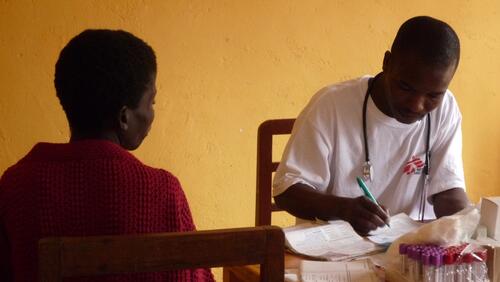
Consultation medicale au centre de sante de Namitembo. *** Local Caption *** La section française travaille dans le district de Chiradzulu, au sud du pays, où près d'une personne sur sept est infectée par le virus du VIH/sida. L'ampleur des besoins, l¿augmentation continue du nombre de patients et la pénurie de personnel de santé, à Chiradzulu comme dans l'ensemble du pays, nous ont poussés à mettre en place de nouvelles approches thérapeutiques. Nous avons simplifié les protocoles de soins et délégué la prise en charge des patients à tous les centres de santé de la zone. De plus, l¿ensemble du personnel du ministère de la Santé a été formé à l'initiation aux ARV et au suivi des patients stables. En 2008, plus de 4 377 patients du district de Chiradzulu ont pu bénéficier d¿un traitement ARV. Au total, depuis le lancement du projet en 2001, ce sont plus de 12 016 patients qui sont suivis par MSF et bénéficient d¿un traitement.
Malawi

Ten years ago, MSF launched ARV treatment for its HIV/AIDS patients

Since the 1990s, the HIV/AIDS pandemic has been a serious public health issue in southern Africa, in general, and in Malawi, in particular. In 1995, MSF launched an HIV/AIDS treatment program. In 2001, the first patients were placed on antiretroviral treatment. As of early 2011, 18,000 patients are now taking these drugs. Project Update - 11 Feb 2011
 
msf-placeholder
Malawi

'If I am here to talk to you today, that's because I am receiving treatment'

"Hello. My name is Fred Minandi. I am 42 years old and I am a farmer from Malawi. I am lucky to be one of MSF's patients benefiting from ARVs." Project Update - 11 Feb 2011
 
msf-placeholder
Kala azar

Fighting kala azar in southern Sudan

Kala azar—or visceral leishmaniasis—is a treatable but largely neglected disease. Southern Sudan is currently facing a massive kala azar epidemic. This is a region where three-quarters of the population has no access to basic medical care, and the health system is unable to deal with an emergency on this scale. Project Update - 10 Feb 2011
 
msf-placeholder
Refugees, IDPs and people on the move

Survival migrants try to improve their living conditions

MSF works in the inner-city slums of Johannesburg, the destination point for many survival migrants seeking opportunity, transit, or simply to hide among Joburg’s millions of inhabitants. But finding safe shelter here is extremely challenging. Project Update - 3 Feb 2011
 
msf-placeholder
Haiti

One year after the Haiti earthquake

Frontline: One year after the Haiti earthquake Project Update - 2 Feb 2011
 
msf-placeholder
HIV/AIDS

Johnson & Johnson / Tibotec AIDS drug licenses leave out too many patients

Licenses just agreed between three generic manufacturers and pharmaceutical company Tibotec, owned by Johnson & Johnson, will keep a promising new AIDS medicine out of the hands of many patients across the developing world, Project Update - 28 Jan 2011
 
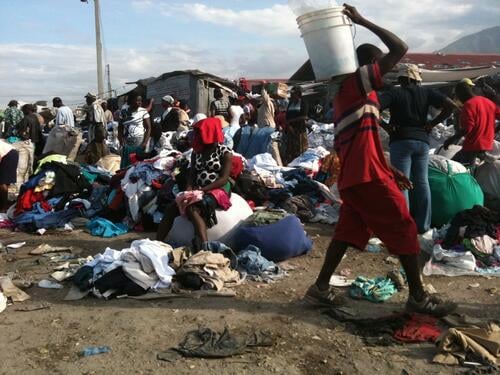
Scene de rue a Martissant
Haiti

On Aid and Reconstruction

One year after the earthquake in Port-au-Prince, a number of observers and actors are questioning the international aid: reconstruction is at a standstill, homeless people are still facing the same situation and the deadly cholera epidemic reminds us that international aid has not helped to improve the very poor sanitation system. Project Update - 28 Jan 2011
 
msf-placeholder
Democratic Republic of Congo

Civilians bearing brunt of increased violence and insecurity in eastern Democratic Republic of Congo says MSF

For years civilians in eastern DRC have suffered sexual violence related to the conflict. But MSF has not provided medical treatment for rape on this scale in South Kivu since 2004. In an already volatile context, MSF is confronted with what appears to be a further deterioration in the situation which directly impacts on the civilian population. Project Update - 28 Jan 2011
 
msf-placeholder
Democratic Republic of Congo

Nomadic herders forced to flee in northern DRC

“They said that the women, children and elderly had come to Niangara to avoid being raped or kidnapped in the bush,” said Azaad Alocco, MSF project coordinator..“Even for nomads used to a hard life, the conditions in their makeshift camp were bad, with no water, no hygiene facilities and even the few bits of plastic sheeting they had for making shelters were stolen.” Project Update - 24 Jan 2011
 
msf-placeholder
Access to medicines

Don't swallow this pill

India should not repeat others' mistakes, or the effect would be felt far
beyond India's borders. The country is the source of the vast majority of drugs used to treat AIDS in developing countries. Affordable medicines produced in India have played a major part in reaching the more than five million people receiving HIV/AIDS treatment across the developing world
today.
Project Update - 20 Jan 2011
Four mothers posing in a corridor of the Hospital in Bili. All four of them are staying in the hospital with their child, that's suffering from a severe case of malaria. Since the beginning of the project in 2016, the pediatric ward already treated more than 4.000 cases of complicated/severe form of malaria.
Médecins Sans Frontières (MSF)

Independent medical humanitarian assistance

We provide medical assistance to people affected by conflict, epidemics, disasters, or exclusion from healthcare. Our teams are made up of tens of thousands of health professionals, logistic and administrative staff - most of them hired locally. Our actions are guided by medical ethics and the principles of independence and impartiality. We are a non-profit, self-governed, member-based organisation.

Learn more