



3451 Results
 
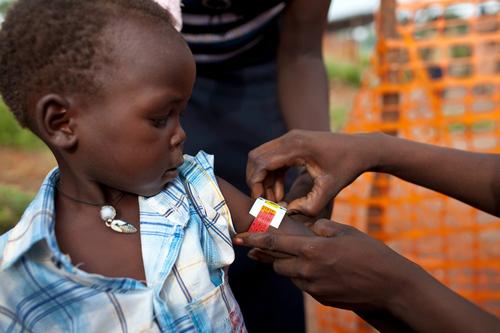
An MSF staff member takes a young boy's Mid-Upper Arm Circumference (MUAC) outside an MSF Outreach Therapeutic Program, Yida, South Sudan, Friday, Sept. 14, 2012. In order to prevent overcrowding at its main hospital, MSF launched three OTPs for routine nutritional screenings throughout the camp. *** Local Caption *** Yida refugee camp, September 2012. Between the beginning of March and mid-July 2012, the population of the Yida camp swelled massively with the arrival of 40,000 additional refugees in increasingly precarious health conditions from South Kordofan?s Nuba Mountains. As the size of the camp increases, the services initially sized for a population of around 15,000 people still require further expansion and continuation of current efforts underway. The camp continues to expand with influx of new refugees, however, the overall numbers of new arrivals are much less in recent months than in the months of Apil and May. People fleeing conflict and food insecurity in Sudan are continuing to arrive daily. Up to 1,000 more people are moving into the camp each week. In the absence of accurate data, the population of Yida can be estimated between 50,000 and 65,000.
South Sudan

Treating child malnutrition in Yida camp

In Yida refugee camp, South Sudan, teams from Médecins Sans Frontières (MSF) have set up outpatient treatment sites for children suffering from malnutrition. Project Update - 26 Nov 2012
 
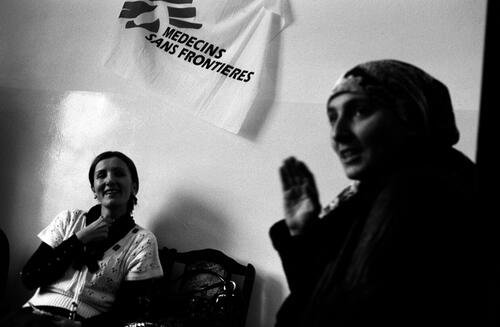
In the consultation room of MSF mental health counselors in the hospital of Malgobek, Ingushetia.
Russia

MSF closes mental health programme in Ingushetia

MSF has closed its mental health programme in Ingushetia where it has provided psychosocial counselling and assistance to survivors of violent trauma for 12 years. Project Update - 23 Nov 2012
 
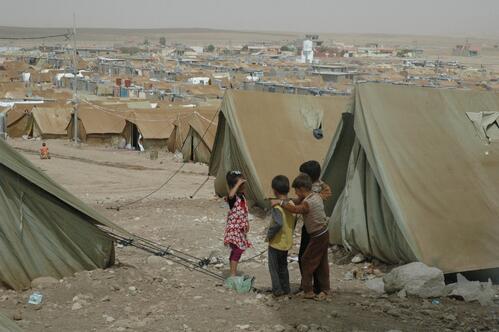
MSF opened in May 2012 a primary health care centre (PHCC) in the Domeez Syrian refugee camp. MSF is the main health actor in the camp and provides medical consultations, mental health care and training for the health staff in the camp.
Iraq

Providing healthcare to Syrian refugees in Domeez camp

As the crisis in Syria intensifies, people continue to flee to neighbouring countries. More then 50,000 Syrians have sought refuge in Iraq, including 42,000 in the Kurdistan region where many live in overcrowded camps. Project Update - 21 Nov 2012
 
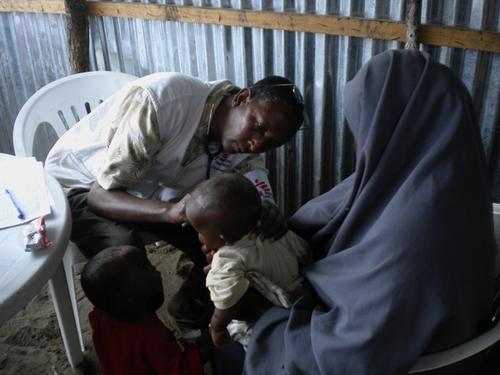
MSF staff doing nutritional screening to the internally displaced population in Warshadaha ambulatory therapeutic feeding center (ATFC) in Mogadishu.
Somalia

MSF nutritional assessment in camps reveals alarming malnutrition rates among children

One in four children living in camps on the outskirts of the Somali capital are malnourished, according to an assessment conducted by MSF. In response to the critical situation, a team from MSF launched an emergency three-day intervention to provide urgent nutritional treatment and on-site medical care to children under the age of five. Project Update - 19 Nov 2012
 
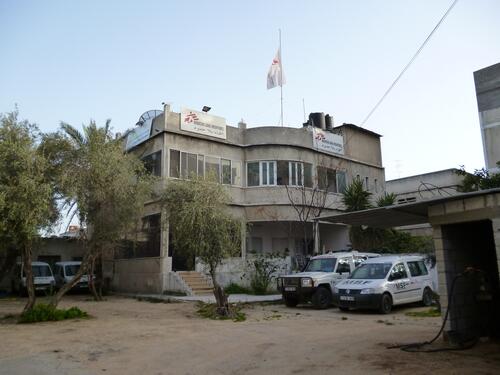
MSF office in Gaza city. *** Local Caption *** The number of people in the Gaza Strip suffering the after-effects of serious injuries has increased in recent years. However, with the embargo currently in effect, it is very difficult to obtain access to appropriate, specialized care. In July 2010, MSF signed an agreement with the Gaza health authorities and opened a reconstructive surgery program.This kind of joint program also provides an opportunity for MSF staff and Gaza doctors to exchange and share medical, surgical and anesthetic techniques, particularly with regard to treating young children.<br/>

Le nombre de personnes souffrant de séquelles de blessures graves a augmenté dans la bande de Gaza ces dernières années. Or, dans ce Territoire sous embargo, il est très difficile d avoir accès aux soins spécialisés et adaptés. En juillet 2010, MSF a signé un accord avec les autorités sanitaires de Gaza et a ouvert un projet de chirurgie réparatrice. Ce type de programme conjoint est aussi l occasion, pour les personnels MSF et les médecins de Gaza, d échanger et de partager des techniques médicales, chirurgicales et anesthésiques, notamment en ce qui concerne la prise en charge des jeunes enfants.
Palestine

New offensive exacerbating fragile humanitarian and public health situation

In the days following the launch of operation “Pillar of Defence”, Médecins Sans Frontières (MSF) donated medicines and other materials reported to be in short supply to Gaza’s central pharmacy. The materials include anaesthetics, surgical medicines and medical kits to treat the wounded. Project Update - 19 Nov 2012
 
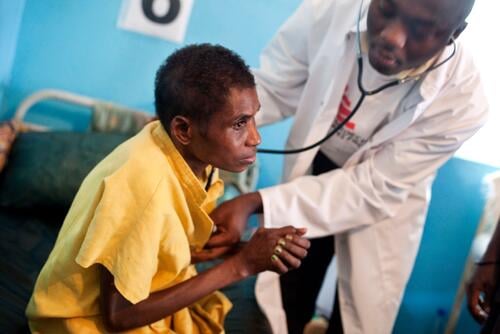
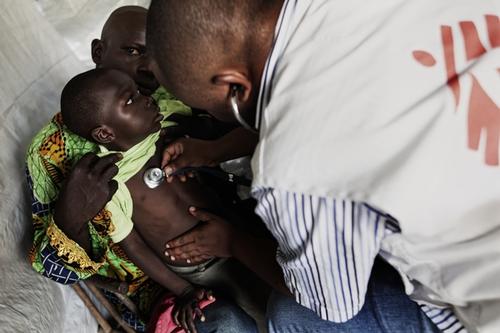
MSF doctor examining a patient in the "Buruli pavilion" in Akonolinga.
Cameroon

Raising awareness about Buruli ulcer

In the town of Akonolinga, in Cameroon, Médecins Sans Frontières (MSF) has been treating patients for Buruli ulcer for the past ten years. Project Update - 16 Nov 2012
 
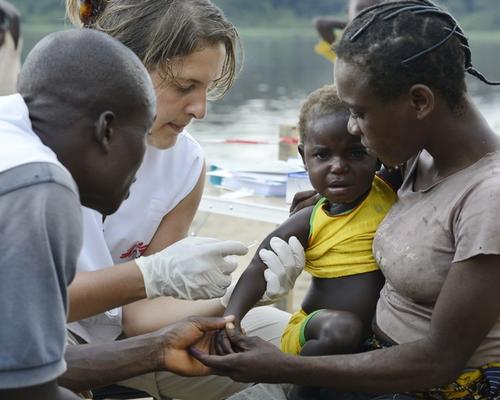
In Congo's rainforest, MSF cured 15.000 pygmies affected by Yaws, a neglected disease, in 3 months (Sept - Oct 2012) using a new therapeutic regime (single dose oral antibiotic)
Yaws is a neglected tropical disease caused by a bacterium that affects the skin, bone and cartilage. Lack of resources, it has never been completely eradicated. Humans are the only reservoir of this bacterial infection. A recent discovery that a single-dose of azithromycin (given orally) can cure the disease has raised the prospects of eradicating yaws altogether. 
It affects many isolated communities whose populations Congo Pigmy North, away from the health care system. 

MSF-Epicentre with OCP decided to launch a universal treatment with azithromycin that can eradicate this illness among Aboriginal people (Pygmies) in the Bétou and Enyellé districts. During two months (in september and october 2012), three MSF teams have traveled on the Ubangi River, which separates the two Congos and trails through the rainforest. 
A real human and logistical challenge to achieve these Pygmy communities in their villages in the rainy season because it is the only time during which they are sedentary.
Democratic Republic of Congo

Treating yaws in the Aka Pygmy population

The Aka Pygmy communities living in northern Congo have been ostracised in their home country for many years. They have almost no access to healthcare and, as a result, are still affected by the neglected disease known as yaws. MSF recently carried out a campaign for treating this disease, which turned out to be both a logistical feat and a world first in medical terms. Project Update - 13 Nov 2012
 
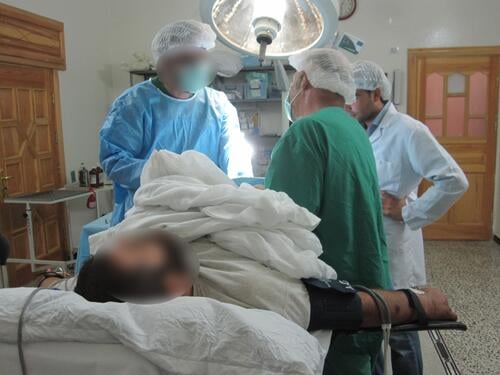
 *** Local Caption *** MSF has been providing surgical care to victims of violence, in a hospital set up in the north of Syria, since June 2012.
Syria

MSF increases medical activities

MSF is increasing its medical activities to help victims of the conflict in Syria. MSF is providing emergency and surgical treatment for the wounded, as well as medical care for people displaced from their homes within Syria and for refugees who have escaped to neighbouring countries. Project Update - 6 Nov 2012
 
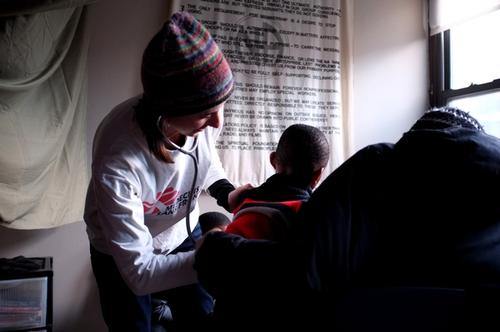
Dr. Lucy Doyle, a physician with Doctors Without Borders, examines a patient in a makeshift medical clinic in a building at the Ocean Village housing complex in Rockaway, Queens, November 5, 2012.  Electrical power, heat and plumbing were cut in the entire five-building complex following Superstorm Sandy.  The organization established the clinic in a room normally used for Narcotics Anonymous meetings.
United States of America

MSF filling gaps in medical aid for people affected by Hurricane Sandy

MSF teams, working alongside local community groups, are providing medical and mental health care to Hurricane Sandy-affected communities in the New York City boroughs of Brooklyn, Queens, and Staten Island, as well as Hoboken, New Jersey. The vast majority of the patients treated by MSF in the shelters and underserved communities have been elderly, homeless, or physically or mentally impaired. Project Update - 5 Nov 2012
 
A young patient is seen by an MSF staff during a mobile clinic. DR Congo, Haut Uele, Dungu area/Nadogolo.
Democratic Republic of Congo

Congolese aid workers return to Pinga

All of the Congolese personnel employed by Médecins Sans Frontières (MSF) in its Pinga project in the North Kivu province of the Democratic Republic of the Congo have now returned to their positions, a month after active fighting between armed groups forced many to flee the area in search of safety. Project Update - 5 Nov 2012
Four mothers posing in a corridor of the Hospital in Bili. All four of them are staying in the hospital with their child, that's suffering from a severe case of malaria. Since the beginning of the project in 2016, the pediatric ward already treated more than 4.000 cases of complicated/severe form of malaria.
Médecins Sans Frontières (MSF)

Independent medical humanitarian assistance

We provide medical assistance to people affected by conflict, epidemics, disasters, or exclusion from healthcare. Our teams are made up of tens of thousands of health professionals, logistic and administrative staff - most of them hired locally. Our actions are guided by medical ethics and the principles of independence and impartiality. We are a non-profit, self-governed, member-based organisation.

Learn more