



3451 Results
 
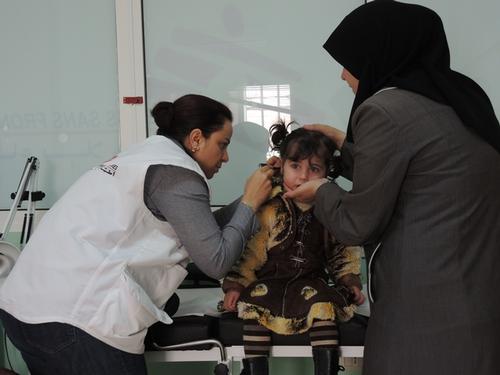
In the Dar-al-Zahraa clinic in Tripoli, Dr Maha Naja from MSF examines a Syrian little girl who came with her mother. 

Dr Maha Naja, MSF: “We see many cases of enuresis (bedwetting) amongst children. We also see a lot of dermatological diseases, like leishmania and scabies that is linked to bad hygiene and the confinement of families in very small living spaces.  We also see other parasitosis, affecting primarily children. There are also nutritional disorders and deficiencies because of the refugees’ big financial problems. As of June, we can expect many gastro-enteritis cases during the period of high humidity and heat, with parasitosis.”
Lebanon

Abundant medical needs among Syrian refugees and victims of local conflict

More than 10,600 Syrian families who have fled their country have taken refuge in Tripoli, Lebanon’s second-largest city, located approximately 30 kilometres from the Syrian border. Its population includes 500,000 Lebanese citizens, Palestinian refugees living in the Baddawi and Nahr el-Bared camps, and, now, more than 42,000 Syrians who have sought refuge in the city. Project Update - 4 Jun 2013
 
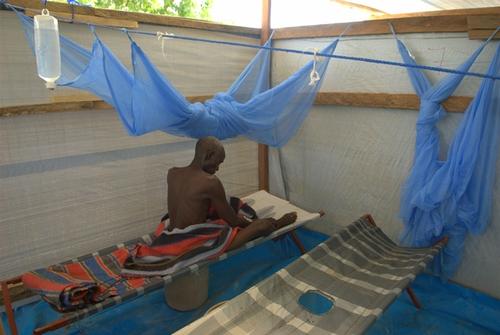
Niger: Zermou; centre de traitement du cholera.
  *** Local Caption ***   MSF et l ONG médicale nigérienne Forsani y gèrent une unité d hospitalisation et soutiennent trois centres de santé du ministère de la Santé nigérien.
Niger

MSF treats cholera patients

Cholera has broken out in northern Niger in an area which is hosting large number of Malian refugees and which was hit by a cholera epidemic last year. Project Update - 23 May 2013
 
Obstetric fistulas are one of the most serious consequences of obstructed labor; it occurs when the soft tissue in the pelvis is compressed by the baby’s head. The lack of blood flow causes the tissue to die, creating a hole between the vagina and bladder, the vagina and rectum, or both. The result is urinary and/or fecal incontinence. Women with fistulas live in shame and are often rejected by their own families and communities.

Since  July 2010, MSF is treating fistulas in the Urumuri center, in Gitega, in the heart of Burundi  and became the first and only center in Burundi to specialize in treating fistulas. Since the opening of the project more than 1000 fistulas surgeries have been performed enabling women to return to normal life and emerge from exclusion. 

Women can receive treatment seven days a week, and MSF has built four houses to accommodate patients before surgery and afterwards, during rehabilitation. At MSF's permanent treatment centers, women receive six months of outpatient follow-up care to ensure the fistula has healed and that continence is maintained.
Project Update

Treating fistula: Prevention or cure?

MSF surgeon Dr Geert Morren talks about the physical and social distress that fistulas can cause, and why the issue needs attention. Project Update - 23 May 2013
 
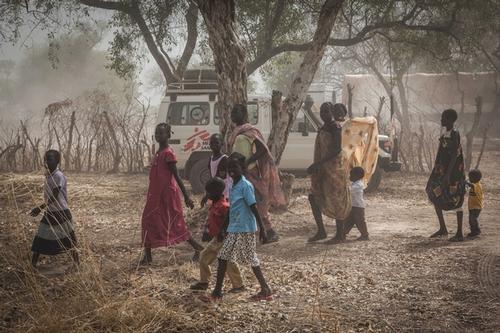
*** Local Caption *** Yida.<br/>
Dans l?Etat d?Unity, au nord du Soudan du Sud, MSF fournit depuis octobre 2011 des soins de santé dans le camp de réfugiés de Yida, où sont installés ceux qui fuient les combats entre les forces armées soudanaises (SAF) et le Mouvement pour la libération du peuple soudanais (SPLM-Nord) dans la province du Kordofan du Sud. A partir d?avril 2012, la population du camp a connu une forte augmentation suite à l?arrivée de nombreux nouveaux réfugiés. En mai 2013, 75,000 personnes vivaient à Yida. La saison des pluies débute et MSF se prépare à une augmentation des maladies infectieuses au cours des prochains six mois. <br/>
Entre mai 2012 et mars 2013, 2,784 enfants sévèrement malnutris ont été soignés dans le programme nutritionnel thérapeutique. Pendant cette même période, les équipes MSF ont également effectué près de 90,000 consultations de santé primaire tandis que l?hôpital MSF installé dans le camp a admis près de 3,000 patients, dont les deux-tiers avaient moins de 5 ans. Les pathologies les plus diagnostiquées sont les infections respiratoires, les diarrhées et le paludisme.
South Sudan

Humanitarian deadlock in Yida

Sudanese refugees are stranded at the centre of complex political agendas that threaten to worsen their dire situation. Project Update - 23 May 2013
 
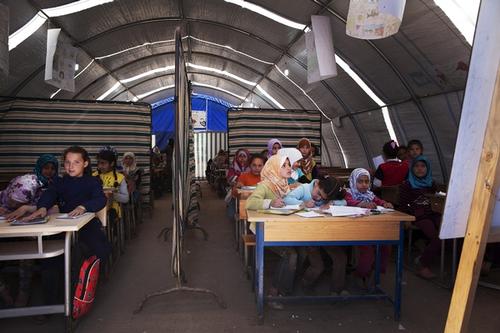
A school in a transit camp in Aleppo province, next to the Turkish border. Around November 2012, 4,000 displaced people were staying in this temporary settlement – in April 2013, there were around 10,000.
Syria

10,000 people at the gates of Turkey

MSF is working in a transit camp in northern Syria with a growing population - from 4,000 to 10,000 internally displaced people in half a year. Project Update - 21 May 2013
 
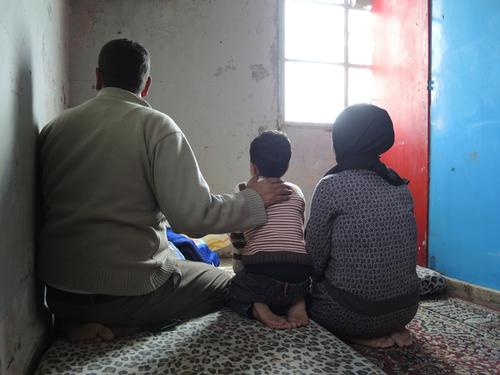
In a small house building, two families live in one room, separated in half: 
Mahmood, Siham and their son Mahmood (6) came from Syria 45 days ago. Mahmood lost two of his five children. “I’m very sad inside but I need to look strong. It’s very difficult. I used to live in Yarmouk camp, I was happy before the crisis started. I used to own a blacksmith shop and help people. But then the camp started to be bombed. My son disappeared. I searched for him everywhere but couldn’t find him. I’m sure he’s dead. One month later, my brother disappeared. I kept looking for them. Seven members of my family were killed by the bombings and shootings. We saw their mutilated bodies. I buried them myself. I also buried my neighbours. My two daughters told me to go to Lebanon, or I would get killed. They are searching for their brother. I don’t know where they live, but they say they are ok. As a Palestinian, I went to seek refuge in a Palestinian camp as I have no family in Lebanon. I have no news of the rest of my family, I’m sure they got killed and this is causing me a lot of sadness”.
Lebanon

From Syria to Ain el-Helweh: Alleviating the suffering of refugees in Saida

MSF runs a mental health program in Ain el-Helweh, in Saida, Lebanon. More and more patients are Palestinian refugees who fled Syria and suffer from a high level of trauma. Project Update - 17 May 2013
 
msf-placeholder
Syria

MSF activities inside the country

Within Syria, the MSF operations are scaling up as fast as is safely possible, but are still limited to four pockets where MSF is able to have teams on the ground running high quality medical activities. Project Update - 8 May 2013
 
msf-placeholder
Syria

An overview of MSF programmes in and around the country

An overview of MSF programmes inside Syria and for Syrian refugees in neighbouring countries. Project Update - 8 May 2013
 
msf-placeholder
Syria

MSF activities for Syrian refugees

Project Update - 8 May 2013
 
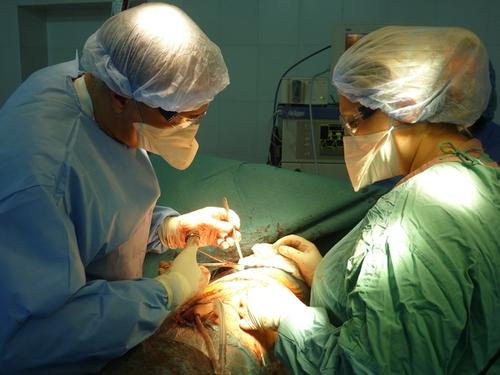
A ‘flying’ MSF tuberculosis (TB) surgery team has successfully completed surgery on six drug-resistant (DR) TB patients in Yeravan, Armenia – the first mobile TB surgery ever carried out by the international humanitarian medical organisation. Surgery used to be a key intervention for TB in the pre-chemotherapy era to remove part or all of a lung affected by the disease. In the 1960s, the development of new anti-TB drugs improved medical treatment outcomes and consequently reduced the use of surgery. However, the emergence of multi-drug resistant (MDR) and extensive drug-resistant (XDR) TB in recent years has seen some patients end up with minimal chances of recovery through medication alone. The relevance of TB surgery has therefore risen again but presents new challenges in high-burden TB countries. <br/>The MSF TB surgery team comprised experienced multi-disciplinary team of a thoracic surgeon, anesthesiologist, operating theatre nurse and a chest physiotherapist, who worked closely to share their skills with Armenian Ministry of Health counterparts.In addition to treating patients who acutely needed operations, the objective of the MSF surgery mission was to improve the procedures and skills of the local surgical team at Armenia’s national TB hospital. The key constraints preventing Armenian health authorities and those in many countries around the world from conducting this kind of surgery include a lack of qualified and experienced surgical staff, as well as a lack of modern operating theatre equipment. <br/>Preparation was key to the success of the visit. Well ahead of the arrival of the team, a multi-disciplinary team comprising MSF and Ministry of Health staff meticulously planned the entire process, including the careful selection of patients for operations and what would be needed in the weeks following the surgery. <br/>Following the success of the initiative, the MSF mobile surgery team aims to conduct regular visits to Armenia to continue to improve the skills and capacity of the local staff and offer patients a chance to reclaim their lives from this devastating disease.
Armenia

MSF mobile TB surgery brings hope to patients

A mobile MSF tuberculosis (TB) surgery mission has successfully completed surgery on six drug-resistant (DR) TB patients in Yeravan, Armenia – the first mobile TB surgery ever carried out by the international medical humanitarian organisation. Project Update - 3 May 2013
Four mothers posing in a corridor of the Hospital in Bili. All four of them are staying in the hospital with their child, that's suffering from a severe case of malaria. Since the beginning of the project in 2016, the pediatric ward already treated more than 4.000 cases of complicated/severe form of malaria.
Médecins Sans Frontières (MSF)

Independent medical humanitarian assistance

We provide medical assistance to people affected by conflict, epidemics, disasters, or exclusion from healthcare. Our teams are made up of tens of thousands of health professionals, logistic and administrative staff - most of them hired locally. Our actions are guided by medical ethics and the principles of independence and impartiality. We are a non-profit, self-governed, member-based organisation.

Learn more