


Ebola disease in DRC: find out how we're responding
Learn more
1993 Results
 
msf-placeholder
Bangladesh

MSF focuses on Bangladesh's remote coastal areas affected by Cyclone Sidr

The teams will provide treatment for health problems linked to the cyclone, problems such as diarrhoea, dysentery, respiratory and skin infections as well as minor injuries. Project Update - 29 Nov 2007
 
msf-placeholder
Bangladesh

Water needs are the priority in Bangladesh

"In the islands we visited, water sources have been contaminated and latrines have been flooded,: said Marchant. "People have to look for undamaged sources or even drink unclean water. Access to drinkable water is a common concern in these areas, but the cyclone made the situation even worse." Project Update - 28 Nov 2007
 
msf-placeholder
Bangladesh

MSF teams assessing cyclone affected area

Project Update - 22 Nov 2007
 
msf-placeholder
Mexico

Medical consultations and distribution of material at Mexico flood scenes

Twelve days after the flooding began, displaced families continue to wait for a drop in water levels, allowing them to finally return home. A distribution is in process for 2,600 other families. Project Update - 14 Nov 2007
 
msf-placeholder
Democratic Republic of Congo

Ebola work in DRC coming to an end

Since the Ebola outbreak was officially declared on September 10, the MSF team has been working around the clock to isolate and treat those infected and try to halt a further spread of the deadly disease. Project Update - 6 Nov 2007
 
msf-placeholder
Thailand

The situation of the Lao Hmong refugees in Petchabun

MSF is calling upon the government of Thailand to halt forced repatriation proceedings against 7,500 ethnic Hmong refugees from Laos who are currently confined to a camp controlled by the Thai military in the northern village of Huai Nam Khao in Petchabun province. Project Update - 31 Oct 2007
 
msf-placeholder
Democratic Republic of Congo

No new Ebola cases in Kampungu after incubation period runs its course

Kampungu was a difficult location to control an outbreak because it does not have any electricity or running water - water was brought in by jerry cans carried by the local population. There was no normal hospital infrastructure but nevertheless, MSF was able to provide care to the patients with facilities adapted to needs. Project Update - 25 Oct 2007
 
msf-placeholder
Democratic Republic of Congo

In Ituri, civilian populations are still subjected to sexual violences and high levels of brutality

Military operations linked to the pacification process have been, and are still, a source of direct violence against civilian populations, such as rapes, brutality, house destructions, looting and induced displacement of populations. Project Update - 24 Oct 2007
 
msf-placeholder
Malnutrition

Food is not enough - Without essential nutrients, millions of children will die

Food is Not Enough, MSF's new malnutrition campaign is advocating for a global scale-up of therapeutic ready-to-use food (RUF) for the most at risk children and further efforts to use supplemental RUF to prevent children from becoming dangerously malnourished in the first place. MSF is also highlighting the need for increased research and development into a range of therapeutic products. Project Update - 10 Oct 2007
 
msf-placeholder
Malnutrition

Food Is Not Enough - What MSF is calling for

Project Update - 10 Oct 2007
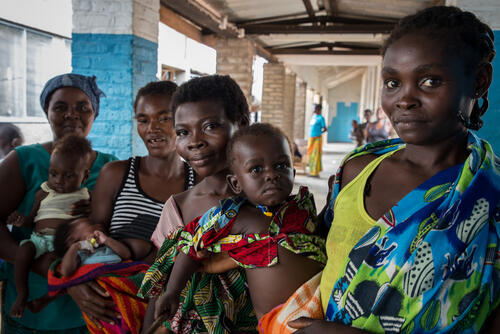
Four mothers posing in a corridor of the Hospital in Bili. All four of them are staying in the hospital with their child, that's suffering from a severe case of malaria. Since the beginning of the project in 2016, the pediatric ward already treated more than 4.000 cases of complicated/severe form of malaria.
Médecins Sans Frontières (MSF)

Independent medical humanitarian assistance

We provide medical assistance to people affected by conflict, epidemics, disasters, or exclusion from healthcare. Our teams are made up of tens of thousands of health professionals, logistic and administrative staff - most of them hired locally. Our actions are guided by medical ethics and the principles of independence and impartiality. We are a non-profit, self-governed, member-based organisation.

Learn more