


Ebola disease in DRC: find out how we're responding
Learn more
1993 Results
 
msf-placeholder
Myanmar

MSF first response in Myanmar to Nargis cyclone

The Nargis cyclone, affecting several areas of Myanmar, caused the death of at least 10,000 people and brought about severe physical damage. Three days after the cyclone, large parts of the population remain without drinking water, food and shelter. Project Update - 6 May 2008
 
msf-placeholder
Access to medicines

MSF calls for more ambitious R&D and political leadership

"What we need to see is a wider, more ambitious framework for R&D and political leadership, in particular from WHO. The negotiations have left the greater part of the job undone." Project Update - 3 May 2008
 
msf-placeholder
Chad

As MSF treats wounded in N'djamena, Chad, tens of thousands of people flee the city

Since yesterday morning, there has been no fighting in the capital but MSF has been unable to access the other hospitals as the roads are blocked by the mass of people fleeing the city. Project Update - 2 May 2008
 
msf-placeholder
Kenya

Kenya's new calm for displaced is complicated by the rainy season

While there are no accurate figures, many thousands of people are still living in camps for displaced people scattered around the country. Most fled their homes during the violence that followed Kenya's disputed election in December 2007, although some were displaced before that, due to land clashes and outbreaks of violence between different groups. Project Update - 18 Apr 2008
 
msf-placeholder
Sudan

Giving birth is deadly

MSF runs a clinic with maternity wing and mental health care unit in dusty Kalma Camp, the biggest IDP camp in the world. The son, in white, and other family members bringing their sick mother by donkey cart to hospital, clinic.
In 2006, the MSF teams looked after 2,500 women, but this figure rose to 6,800 last year. And the MSF workers hope that word about their services will continue to get around, as it did in the case of Angelina's village.
Project Update - 18 Apr 2008
 
msf-placeholder
South Africa

MSF provides essential health care to Zimbabwean migrants in South Africa

In December, 2007, MSF began providing essential health care to Zimbabwean migrants in the South African border town of Musina in Limpopo province, and in capital, Johannesburg. The Zimbabwean population in South Africa is estimated beyond the one million mark. Project Update - 7 Apr 2008
 
msf-placeholder
Tuberculosis

New priorities, new challenges

Francis Varaine is the co-ordinator of MSF's Tuberculosis Working Group. In this interview, he underlines the urgency of identifying new diagnostic means and treatments suited to MSF's operating environment. He also discusses MSF's priorities for 2008. Project Update - 25 Mar 2008
 
msf-placeholder
Somalia

MSF international staff return to selected locations in Somalia

MSF reiterates its outrage at the attack in Kismayo, which appears to have been a targeted assault on humanitarian aid workers. Project Update - 23 Mar 2008
 
msf-placeholder
Democratic Republic of Congo

MSF treats wounded during outbreak of violence in Bas-Congo, western DRC

But many wounded, some seriously, are currently out of reach and urgently need medical care. Project Update - 21 Mar 2008
 
msf-placeholder
Sudan

Refugees in Birak, Chad, provide details of the violence in Darfur

"We cannot return in Sudan because of insecurity. We cannot stay here because we don't have any food and water. If some organisation bring us to a camp, we will go," said a refugee who has set up shelter close to the village of Figuera. Project Update - 19 Mar 2008
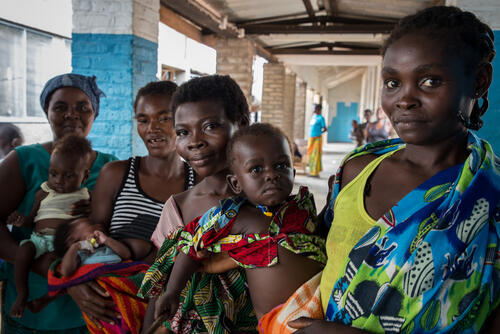
Four mothers posing in a corridor of the Hospital in Bili. All four of them are staying in the hospital with their child, that's suffering from a severe case of malaria. Since the beginning of the project in 2016, the pediatric ward already treated more than 4.000 cases of complicated/severe form of malaria.
Médecins Sans Frontières (MSF)

Independent medical humanitarian assistance

We provide medical assistance to people affected by conflict, epidemics, disasters, or exclusion from healthcare. Our teams are made up of tens of thousands of health professionals, logistic and administrative staff - most of them hired locally. Our actions are guided by medical ethics and the principles of independence and impartiality. We are a non-profit, self-governed, member-based organisation.

Learn more