



3451 Results
 
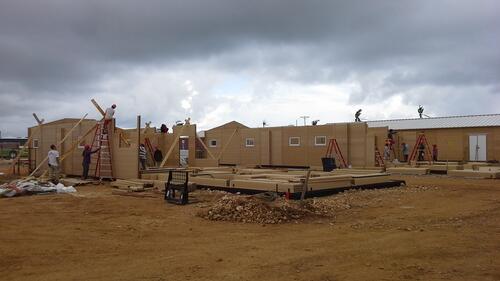
MSF as started building a prefabricated hospital in Guiuan which will take patients out of the tents – unsuitable in the rainy season – until a permanent hospital can be built. The hospital, designed to last up to five years, will provide maternity care and surgery as well as inpatient and outpatient services. It is due for completion in June, when MSF will leave Guiuan, handing the hospital over to the Ministry of Health to run.
Philippines

Six months after the typhoon

In the six months since Typhoon Haiyan, MSF provided care for emergency and everyday health problems Project Update - 8 May 2014
 
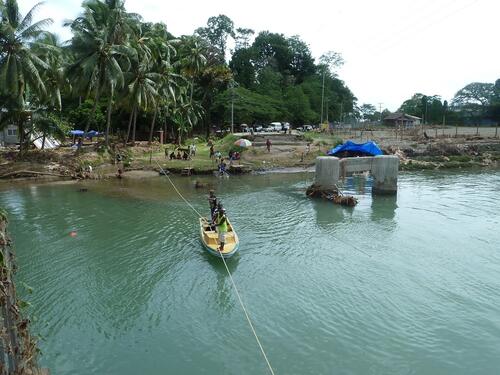
In early April 2014, floods in Honiara swept away riverside communities, brought down bridges and destroyed roads. Twenty-three people died, according to official sources.
Solomon Islands

MSF provides care to flash flood victims

MSF is providing medical care in the Solomon Islands to people displaced from their homes by floods Project Update - 8 May 2014
 
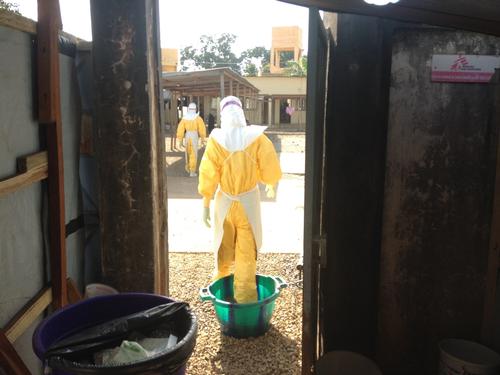
MSF staff walk into the area where there are patients who are either suspected or confirmed as having Ebola. Since late March MSF has been working in the south east of the country and in the capital, helping health authorities tackle the virus, which had not been seen in the West African country before the 2014 outbreak.
Ebola and haemorrhagic fevers

MSF remains vigilant in Ebola outbreaks in Guinea and Liberia

Although the Ebola epidemic has been contained, the outbreak is not yet over. Project Update - 2 May 2014
 
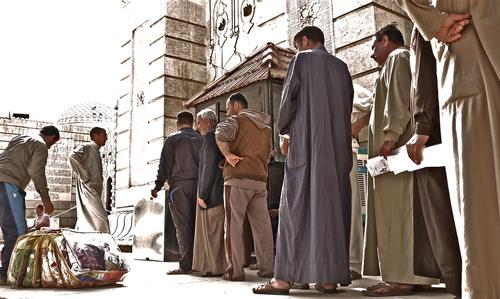
Violence in Anbar province, western Iraq, has caused some 380,000 people to flee their homes, with more than 18,000 people seeking refuge in Tikrit, the capital of neighbouring Salah al-Din province, over the past month. Despite a very volatile security situation in Tikrit, a MSF team is providing the displaced people with relief items and assessing their medical needs.
Iraq

MSF provides aid to people displaced by violence from Anbar province

MSF provides aid to people displaced by violence from Anbar province Project Update - 30 Apr 2014
 
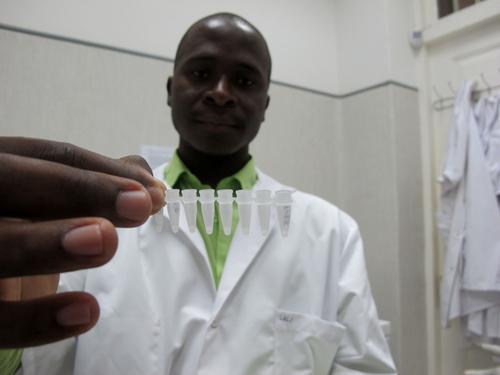
In Maputo, Mozambique, Jose Macamo hospital. Viral load monitoring has been used for years in Western countries, and is recommended by the World Health Organization as the gold standard of care for HIV. Contrary to the CD4 test that gives only an indirect indication of the disease’s progression, this technology calculates precisely how much virus is present in the patient’s body. It allows physicians to detect right away how well the ARV treatment is working, if the patient is not taking his drugs properly or has developed resistance to the first line of HIV drugs. 
A few months ago, when MSF – with support from UNITAID – introduced the machine in the hospital, 25 years old Ilidio was handpicked by his supervisor from the Mozambican Ministry of Health to be one of the three lab technicians trained to operate the machine, and he’s quite proud to show off his delicate handling of the state-of-the-art technology. “I had heard of it at school, and it was very exciting to go from theory to practice”, he says.
Mozambique

Bringing high-end care to those who need it most

MSF introduced viral load monitoring in Mozambique last year, the gold standard of care for HIV patients. Project Update - 30 Apr 2014
 
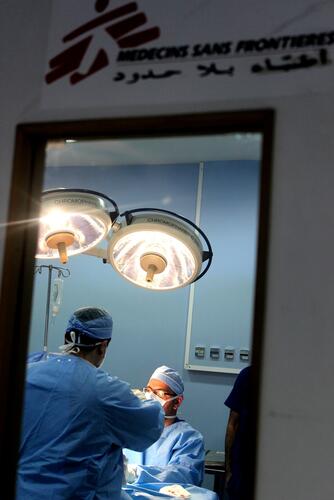
Since the Amman Reconstructive Surgery Project was set up in 2006, over 3,000 patients from the region have arrived at project. The project has received patients from Iraq, Gaza, Yemen and Syria.
Jordan

MSF Reconstructive Surgery Project in Amman Continues to Support Victims of Violence from Iraq

Despite the complexity of the overall situation in Iraq, and particularly in Anbar province, MSF continues to offer reconstructive surgical care to victims of violence in Anbar and from all over Iraq. But the security situation is posing huge challenges. Project Update - 29 Apr 2014
 
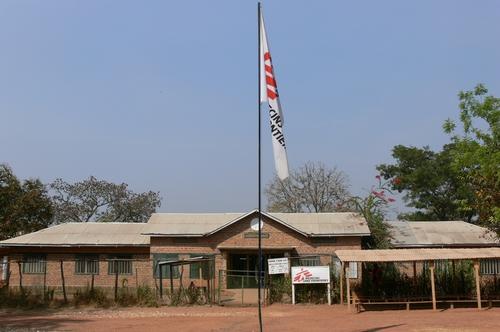
MSF fistula camp in Boguila, CAR: Exterior of main hospital in Boguila. 
Approximately two million women in Africa suffer from a fistula, which is a hole between the vagina and the bladder or rectum, through which urine or feces leak continuously. Fistulas can be caused by prolonged obstructed labor and childbirth or sexual violence in addition to lack of medical facilities. Women with fistulas are often outcasts from their communities because of the smell associated with their incontinence, and in some cases they are abandoned by their husbands. Chances for women to have their fistula repaired are slim, as many hospitals or health clinics do not have the proper instruments or knowledge and skills to carry out such a procedure.
Central African Republic

Three MSF workers among sixteen unarmed civilians killed at Boguila Hospital

16 civilians, including 3 MSF staff were killed during an armed robbery on MSF hospital grounds Boguila Project Update - 28 Apr 2014
 
msf-placeholder
HIV/AIDS

Proof that the project is working

Video: HIV. Proof that the project is working. Project Update - 28 Apr 2014
 
msf-placeholder
Malaria

Another weapon in the fight against malaria

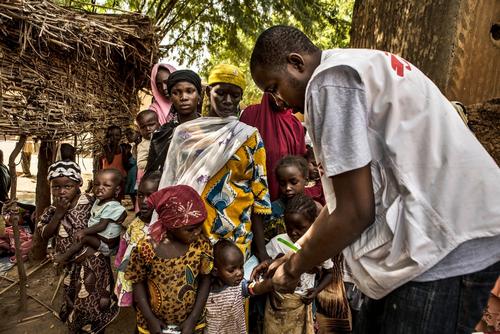
Seasonal malaria chemoprevention (SMC) in Niger Project Update - 25 Apr 2014
 
Tounfafi, a village of 6,000 people, is one of the sites within the Madaoua district where seasonal malaria chemoprevention (SMC) has been implemented in Niger.
The combination of malnutrition and malaria is fatal. Both diseases pose a threat to younger children between June and October. It is a critical period because of the so-called hunger gap in between harvests when child malnutrition increases and because during the rainy season malaria cases are more frequent.
In 2013, MSF and the Ministry of Health jointly implemented seasonal malaria chemoprevention for the first time in Niger - a strategy that consists of administering a full anti-malarial treatment course during the seasonal malaria peak to children between 3 and 59 months of age. During these four months, children take three amodiaquine tablets and one sulfadoxine/pyrimethamine tablet for three days each month.
Malaria

Seasonal Malaria Chemoprevention - “It’s not a miracle cure, but it is an effective preventative strategy”

Seasonal Malaria Chemoprevention - “It’s not a miracle cure, but it is an effective preventative strategy” Project Update - 25 Apr 2014
Four mothers posing in a corridor of the Hospital in Bili. All four of them are staying in the hospital with their child, that's suffering from a severe case of malaria. Since the beginning of the project in 2016, the pediatric ward already treated more than 4.000 cases of complicated/severe form of malaria.
Médecins Sans Frontières (MSF)

Independent medical humanitarian assistance

We provide medical assistance to people affected by conflict, epidemics, disasters, or exclusion from healthcare. Our teams are made up of tens of thousands of health professionals, logistic and administrative staff - most of them hired locally. Our actions are guided by medical ethics and the principles of independence and impartiality. We are a non-profit, self-governed, member-based organisation.

Learn more